Dent Repair Techniques for Panels With Limited Rear Access
Assessing the Dent and Access Limitations
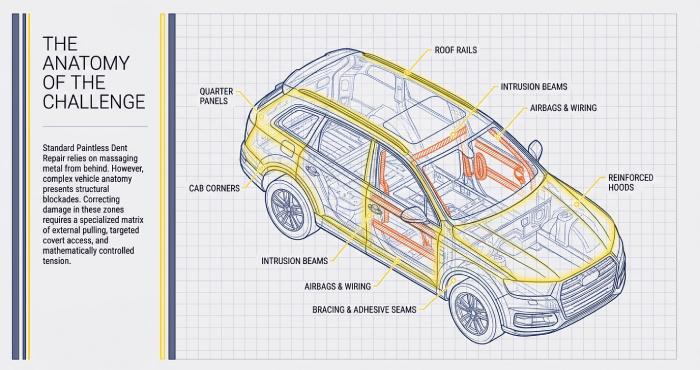
Panels with limited rear access—such as roof rails, quarter panels, double-walled doors, cab corners, and reinforced hoods—require a different dent repair strategy than open-backed panels. In standard paintless dent repair, a technician works from behind the metal and slowly massages the low area back into shape. When rear access is blocked by bracing, airbags, intrusion beams, or adhesive seams, the repair process may rely on a careful mix of external pulling, specialized tools, controlled tension, and finishing work.
For owners comparing paintless dent repair options, the key is understanding whether the damage can be corrected while preserving the original paint. A skilled PDR technician will evaluate the depth, sharpness, location, paint condition, and metal stretch before recommending minor dent repair, door ding removal, hail damage repair, or a more traditional auto body repair approach.
Initial vehicle inspection and damage assessment
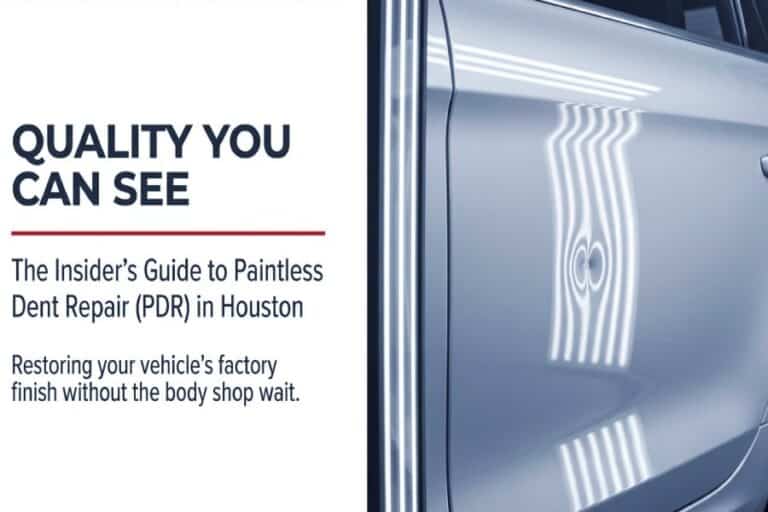
A proper vehicle inspection begins with lighting. PDR lights or reflection boards reveal distortion that ordinary shop lighting often hides. During damage assessment, professional technicians check whether the dent has a soft, rounded profile or a sharp impact point. Soft dents are typically better candidates for paintless dent repair, while creased dents, cracked paint, or stretched metal may require body & paint work.
Deciding between PDR, body & paint, and collision repair
Not every dent belongs in the same repair category. Dent Repair can include paintless dent repair, conventional auto body repair, auto refinishing, and collision repair. The right path depends on whether the original paint is intact and whether the metal can return to shape without repainting.
PDR works well for minor dents, door dings, and hail damage because it preserves the original paint and avoids fillers or refinishing. If paint is damaged, corrosion is present, or a panel edge is crushed, traditional body repair may be more suitable. A professional shop can assess the damage, provide a clear estimate, and explain available insurance support when needed.
Glue Pulling and External Dent Repair Methods
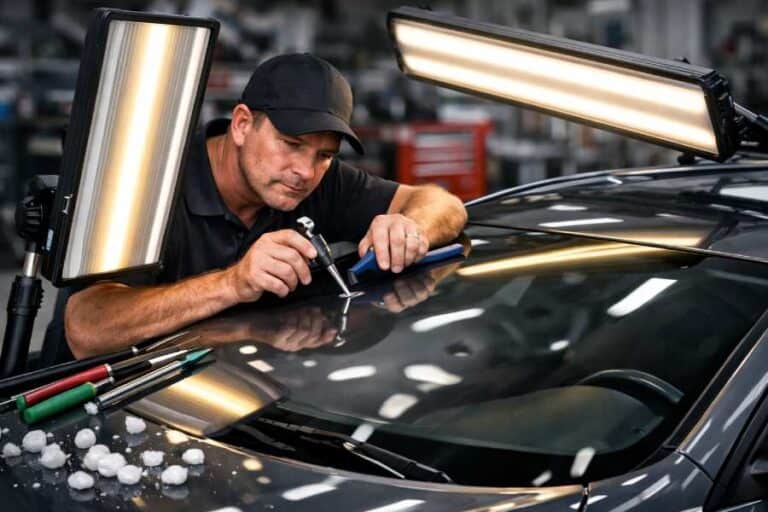
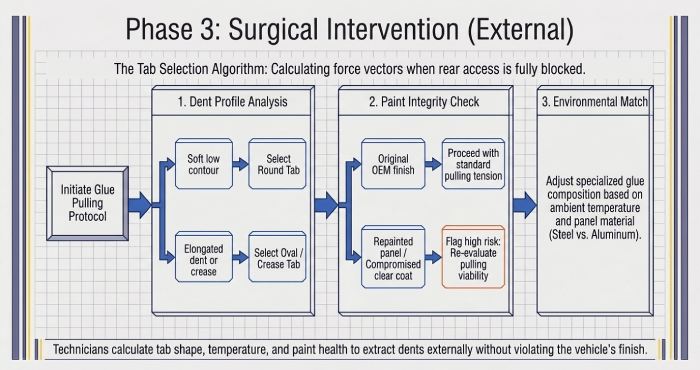
When rear access is limited, glue pulling allows technicians to work on dents from the outside. Specialized glue tabs can lift the damaged area while helping preserve the original paint when the finish is suitable for the technique. The technician selects an appropriate tab, controls the pulling force, and carefully reduces any resulting high spots. This method can be useful for hail damage, door dings, and other minor dents where traditional rear access is difficult.
Glue-tab selection, pull direction, and paint safety
Tab shape matters. Round tabs may work well for soft lows, while oval or crease tabs help address longer dents. The glue type changes with temperature, panel material, and paint condition. Heat may be used to improve glue performance, but excessive heat can compromise paint or trim.
An experienced PDR technician will carefully inspect the panel and determine whether the paint is suitable for glue pulling. Older repainted panels, previous refinishing, or a compromised clear coat can increase the risk of paint lifting during the repair. A professional assessment helps identify these risks before work begins and ensures the repair method is appropriate for the vehicle.
Glue pulling is especially useful for fast service on small dents, but it also supports large-scale hail damage repair. For hail-damaged vehicles, external pulling can reduce repair time and support a quick turnaround compared with conventional auto body repair and repainting.
Managing hail-damaged vehicles and insurance workflow
Hail damage repair can involve many dents across roofs, hoods, deck lids, and rails. When access is limited, technicians may combine glue pulling with rod work. A professional repair shop can explain the repair process and, when applicable, provide guidance about insurance claims and payment options. Customers should also ask about repair warranties and coverage for qualifying PDR work.
Using Specialized Rods, Picks, and Access Points
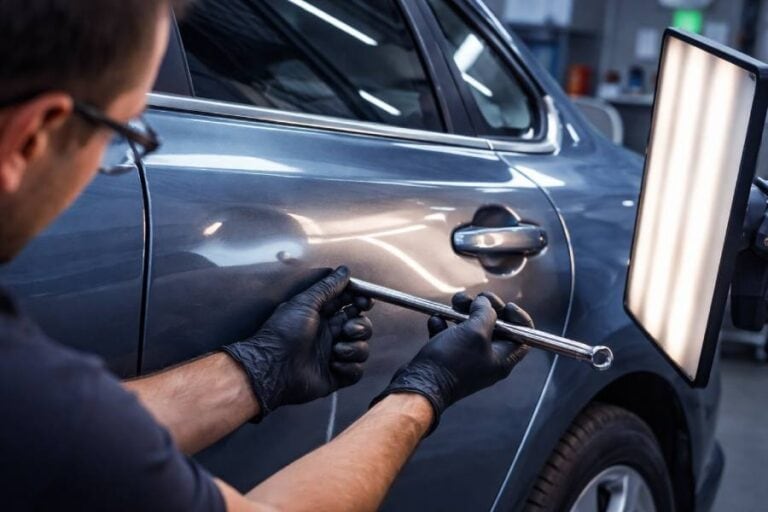
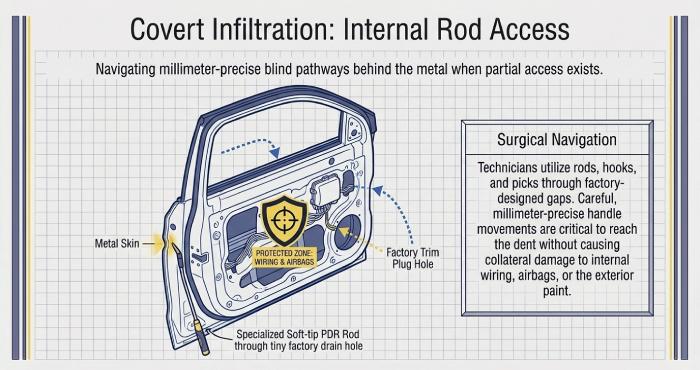
When some rear access is available, technicians can use rods, hooks, picks, and soft-tip tools to reach the dent. Careful movements are important because small handle changes can greatly affect the panel. Access may come through window openings, drain holes, speaker openings, factory plugs, or trim gaps. Hail damage repairs may combine rod work with glue pulling around braces and supports.
Protecting wiring, trim, and the original paint
The goal of paintless dent repair is to preserve paint and avoid invasive procedures. That means protecting the original paint on the outside while also preventing damage to components behind the panel. When access is too risky, glue pulling may be safer than forcing a rod behind a brace.
Heat, Tension, and Tap-Down Techniques for Controlled Panel Shaping
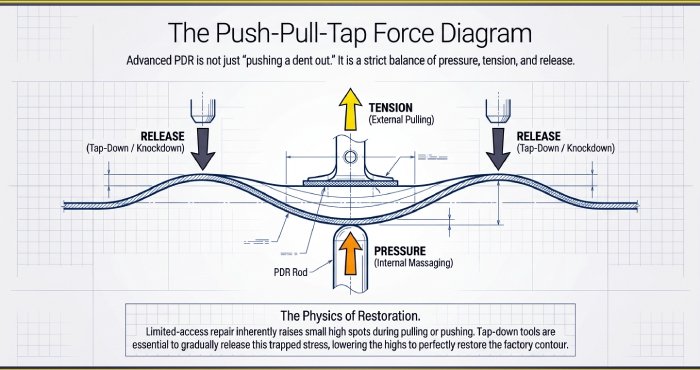
Advanced PDR is a balance of pressure, heat, tension, and release. Limited-access dent repair often raises small high spots during glue pulling or rod work. Tap-down tools and knockdowns allow the technician to lower those highs gradually, restoring the panel’s contour.
Heat can make metal and paint more flexible, especially in cold conditions. However, it must be controlled. Too much heat can damage clear coat, trim, or adhesives. Too little heat may make the panel less responsive. This is why paintless dent repair requires training, not guesswork.
Controlled pressure for factory-finish results
Factory-finish results come from incremental movement. A technician may perform dozens of small pulls, pushes, and tap-down passes rather than one aggressive correction. This approach supports non-invasive repair, helps preserve paint, and maintains vehicle appearance.
For door dings and precision dent repairs, technicians use reflection lighting from multiple angles to evaluate the repaired area. A properly completed PDR repair should blend naturally with the surrounding panel while preserving the vehicle’s original paint and avoiding sanding, fillers, or repainting when the damage is suitable for paintless repair.
Finishing, Quality Checks, and When to Refer to a Professional
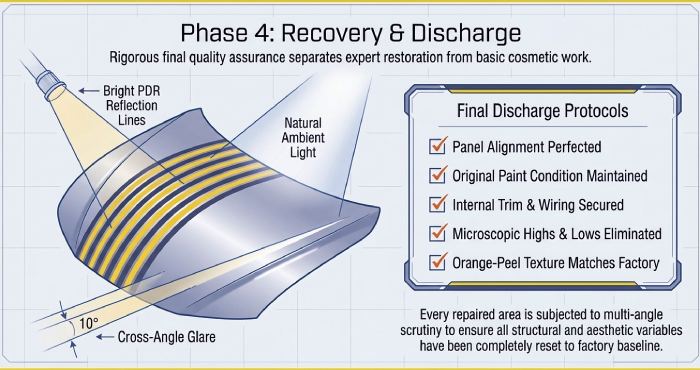
Finishing is where expert dent repair separates itself from basic cosmetic work. The technician checks the panel under bright PDR lighting, natural light, and cross-angle reflections. Any remaining highs, lows, crowns, or texture changes are corrected before delivery.
Final quality checks, warranties, and referral decisions
A proper final inspection includes panel alignment, paint condition, trim fitment, and reflection accuracy. If the damage cannot be corrected with PDR, honest professional technicians should refer the vehicle for body shop repair, collision repair, or auto refinishing. This protects the customer and ensures timely repair rather than forcing an unsuitable method.
Before choosing a repair shop, ask about the inspection process, repair estimate, insurance claim assistance, and any warranty provided for the completed work. A reputable PDR technician should explain the recommended repair method, expected results, and any limitations before starting the repair. This is especially important for hail-damaged vehicles and dents in complex, limited-access areas.