11 Factors That Influence the Cost of Auto Dent Removal Services
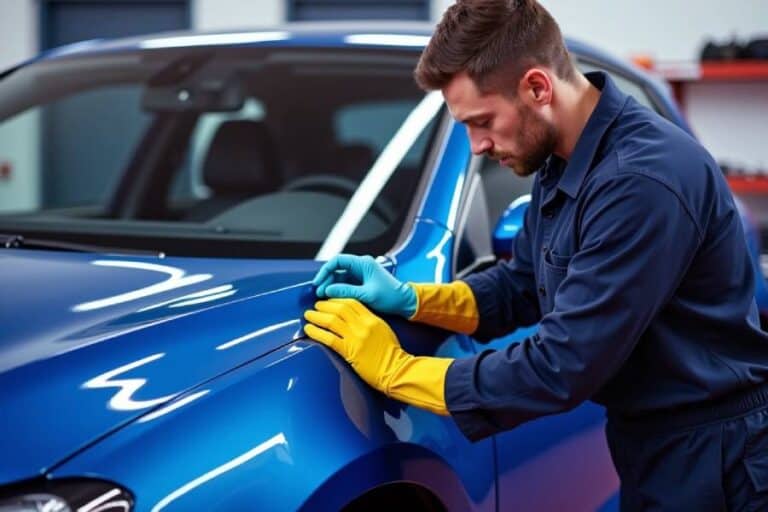
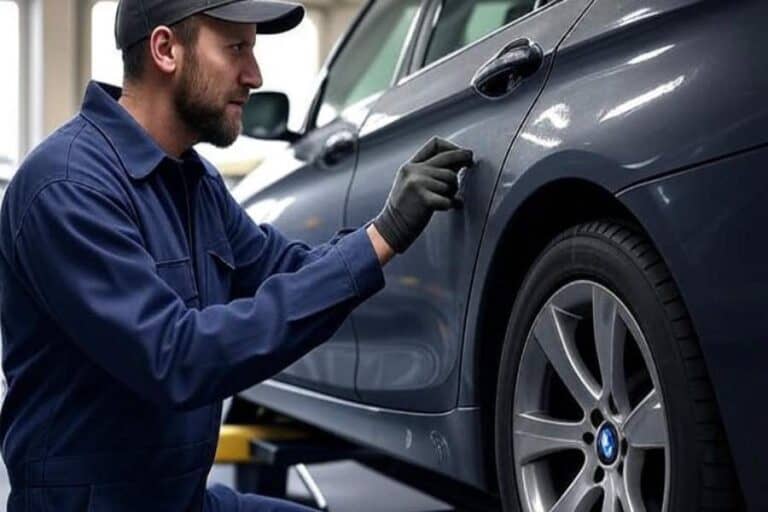
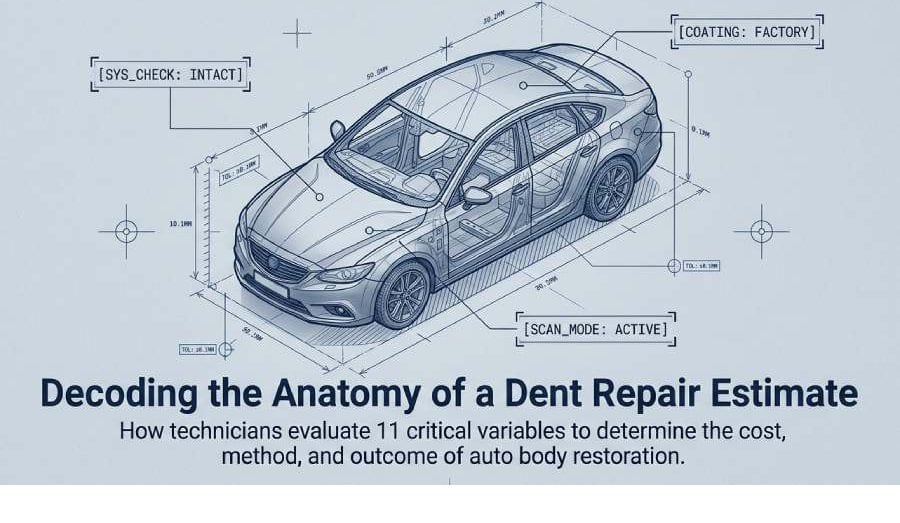
Understanding the cost of a dent removal service starts with knowing what technicians evaluate when they inspect vehicle dents. Whether you need paintless dent removal, traditional dent repair, mobile dent repair, or a more involved auto body repair, pricing depends on the size, depth, location, material, paint condition, and service format. For many vehicle owner situations, paintless dent repair is the most cost-effective and eco-friendly option because it can restore appearance while protecting the original paint, original finish, and factory coating.
Dent Characteristics That Shape Pricing
Factor #1: Size of the Dent
The size of the car dent is one of the first things a repair technician evaluates. Small door dings, shopping cart damage, and minor car dents are usually less expensive because they require less time and fewer adjustments with PDR rods. Larger vehicle dents take more effort to massage back into place, especially when the panel has stretched. Paintless dent removal is often ideal for minor dents, but a wider dent and ding area may require additional panel repair time.
Factor #2: Depth and Severity of the Damage
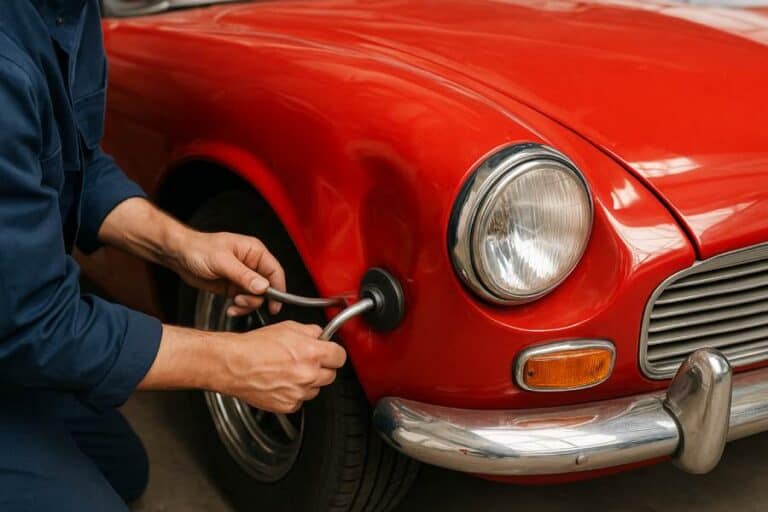
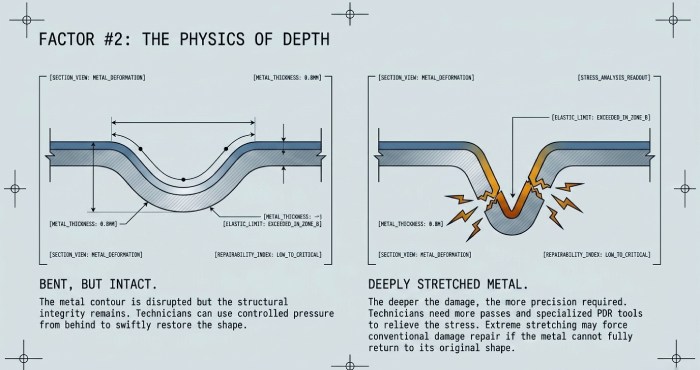
A shallow car dent is typically easier to repair than a sharp crease or deeply stretched metal. The deeper the damage, the more precision the dent repair process requires. In paintless dent repair, expert technicians use controlled pressure from behind the panel to restore the contour. Severe dent and ding damage can raise the cost because the technician may need more passes, specialized PDR tools, or even conventional damage repair if the metal cannot fully return to shape.
Factor #3: Location of the Dent on the Vehicle
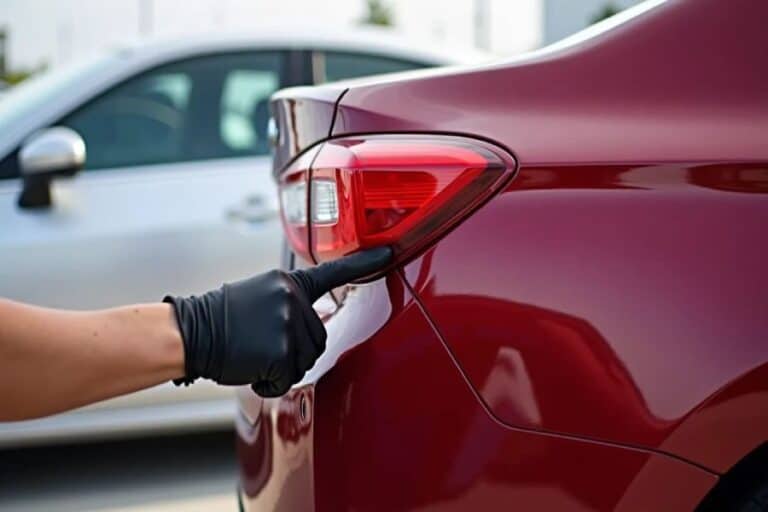
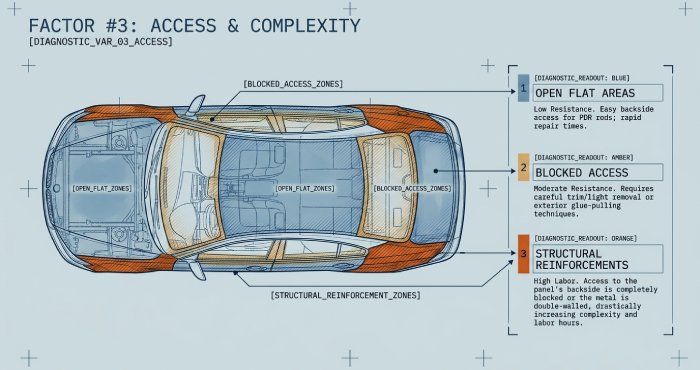
Where the car dent sits matters. Dents on flat, open areas are usually easier to access than car door dents near bracing, body lines, edges, or quarter panels. Vehicle dents located near reinforced structures often require more careful metal shaping tools and more labor. A dent removal service may charge more when the repair technician must remove trim, lights, or interior panels to reach the damaged area.
Factor #4: Number of Dents Needing Repair
A single dent and ding repair is usually priced differently than multiple vehicle dents across several panels. Hail damage, for example, may involve dozens or hundreds of minor dents. In these cases, paintless dent removal is often a preferred body shop alternative because it is fast and efficient compared with repainting every panel. However, the total cost increases with the number of dents, even when the per-dent rate becomes more efficient.
Repair Method, Paint Condition, and Vehicle Construction
Factor #5: Type of Dent Removal Method Required
The repair method greatly affects the cost of dent repair. Paintless Dent Repair (PDR) is usually more affordable when the paint is undamaged because it preserves the factory finish and avoids sanding, fillers, and repainting. However, traditional dent repair may be required for dents with cracked paint, scratches, or collision damage, as it involves additional work such as filling, paint matching, and refinishing, which increases overall costs.
Factor #6: Vehicle Make, Model, and Body Material
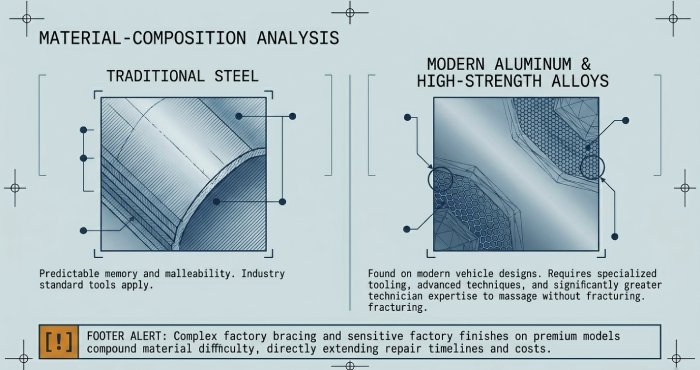
The make, model, and body material of a vehicle can affect dent repair costs. Aluminum panels and modern vehicle designs often require specialized tools, advanced techniques, and greater expertise than traditional steel panels. Vehicles with complex bracing, sensitive factory finishes, or limited panel access may take longer to repair, which can increase the overall cost of auto dent removal.
Factor #7: Paint Condition and Whether Repainting Is Needed
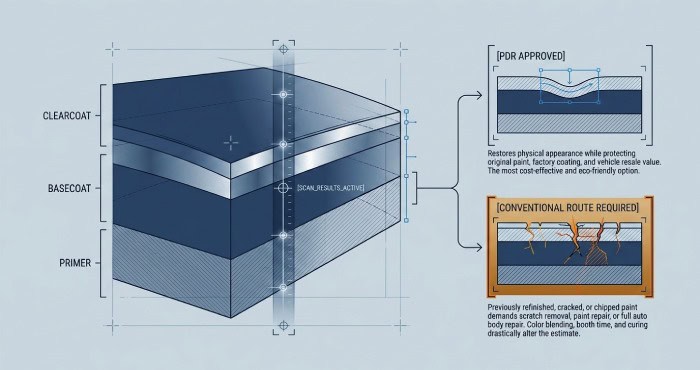
Paint condition can determine whether paintless dent repair is possible. If the original finish is unbroken, paintless dent removal can often restore appearance while protecting resale value. If the paint is cracked, chipped, or previously refinished, the repair may require paint repair, scratch removal, or full auto body repair. Repainting adds cost because it involves color blending, paint matching, materials, booth time, and curing. For vehicle dents with intact paint, mobile paintless dent repair is usually the more cost-effective option.
Access, Skill Level, and Service Format
Factor #8: Accessibility of the Damaged Area
Accessibility affects how long the dent removal service takes. If a repair technician can easily reach the backside of the panel, mobile dent repair may be completed quickly. If the dent sits behind crash bars, door intrusion beams, glued panels, or tight structural areas, the job becomes more complex. Some vehicle dents require trim removal, careful tool selection, or glue-pulling techniques from the outside. Limited access can increase labor even for minor dents.
Factor #9: Labor Rates and Technician Experience
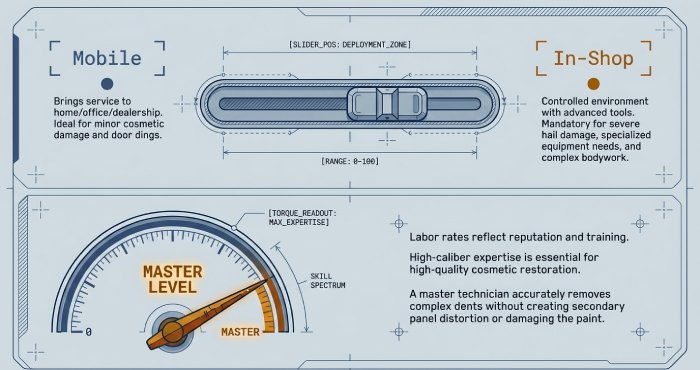
Labor rates for paintless dent repair often reflect a technician’s experience, training, and reputation. Skilled professionals can remove dents more accurately without damaging the paint or creating panel distortion, making their expertise especially valuable for complex repairs, hail damage, and high-quality cosmetic restoration.
Factor #10: Mobile Service vs. In-Shop Repair
Mobile paintless dent repair offers added convenience by bringing the service directly to your home, office, or dealership, making it ideal for minor dents, door dings, and small cosmetic damage. However, for larger dents, severe hail damage, or repairs that require specialized equipment, an in-shop facility is often the better choice due to its controlled environment, advanced tools, and ability to handle more complex bodywork.
Insurance and Out-of-Pocket Cost Considerations
Factor #11: Insurance Coverage and Out-of-Pocket Costs
Insurance can significantly affect what a customer pays for auto dent removal. Comprehensive coverage may apply to hail damage, storm-related dents, vandalism, or certain accidental damage. If the repair cost is lower than the deductible, paying out of pocket for paintless dent removal or mobile dent repair may make more sense. If multiple vehicle dents are involved, especially after a hailstorm, filing a claim may be the better financial option.
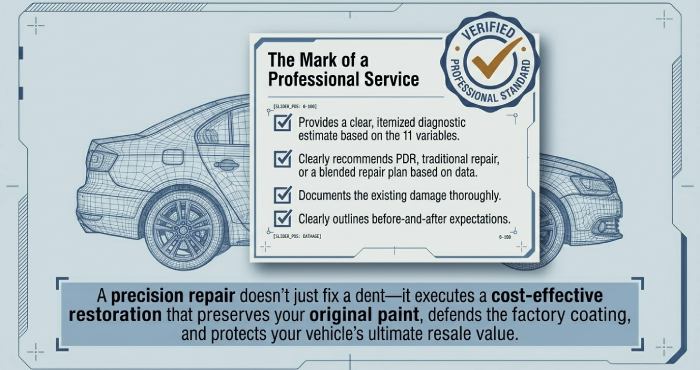
A professional dent removal service should provide a clear estimate that explains whether paintless dent repair, traditional dent repair, or a blended repair plan is recommended. Good technicians document the damage, show before and after expectations, and explain how the repair will affect car appearance and resale value. In many cases, mobile paintless dent repair provides a cost-effective, efficient repair that helps fix dents while preserving the original paint, original finish, and factory coating.