When the Sky Attacks: The Art of Undoing Hail Damage with PDR
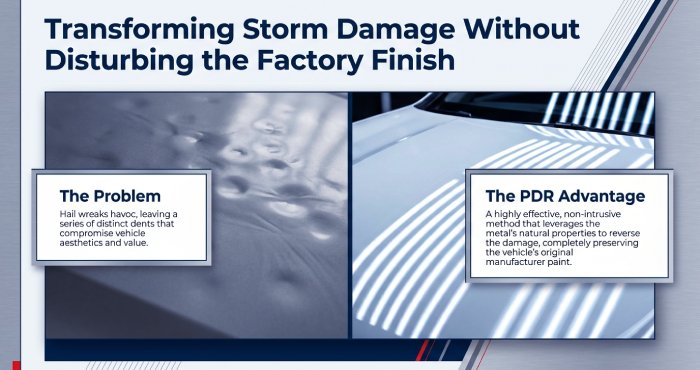
Hailstorms can wreak havoc on vehicles, resulting in a series of unsightly dents that give them a damaged appearance. Paintless Dent Repair (PDR) provides an effective, non-intrusive method for fixing these dings while preserving the vehicle’s original paint. This contemporary technique transforms storm-related damage into a subtle reminder of nature’s impact.
Hail Meets Metal: Identifying Damage and When Paintless Dent Repair Is the Best Option
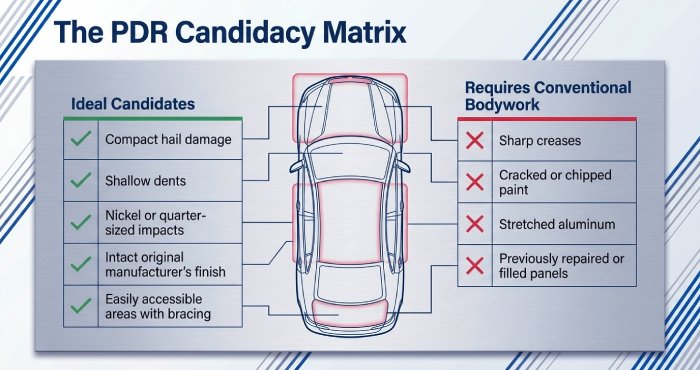
Once the storm has passed, examine your vehicle in a shaded area with angled paintless dent repair (PDR) lights. Identify and mark each dent, giving priority to the roof, hood, trunk, and upper doors. Small dents, roughly the size of a nickel or quarter, are prime candidates for PDR, and even larger dents may be eligible if the paint remains intact.
- PDR is most effective when the original manufacturer’s finish is undamaged, taking advantage of the metal’s memory to restore its shape without the need for fillers or repainting, thus maintaining the factory finish.
- Ideal situations for this process include: compact hail damage, shallow dents, and areas that are easily accessible with bracing.
However, it is less effective on sharp creases with cracked paint, stretched aluminum, or panels that have been repaired previously.
How PDR Fixes Hail Dents: Tools, Access Methods, and the Metal Memory at Work
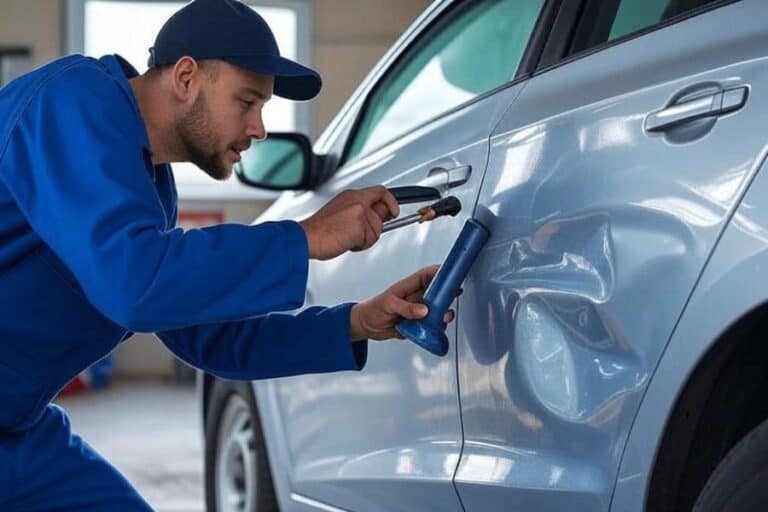
Hail dent removal relies on a blend of science, skill, and pdr tools. Technicians use professional tools to apply controlled pressure behind the panel and precise taps on the surface to neutralize crowns. The PDR method avoids disturbing the finish, making it the go-to for auto hail repair when paint remains intact.
Tools, Access, and Lighting
Pros combine:
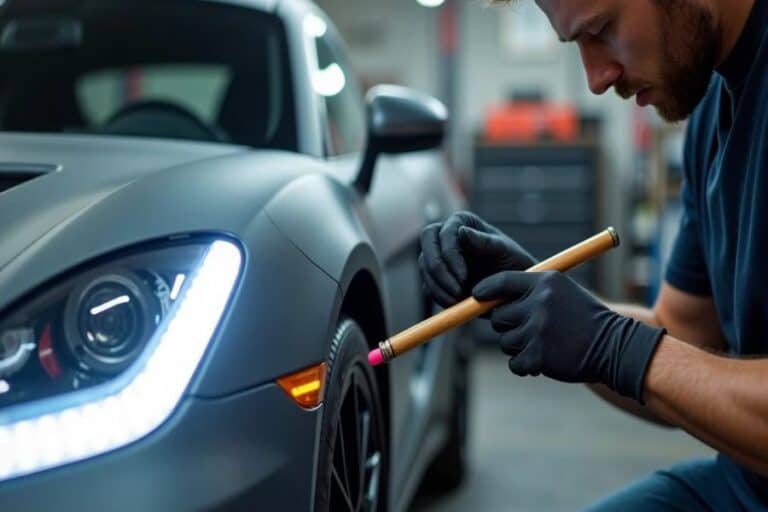
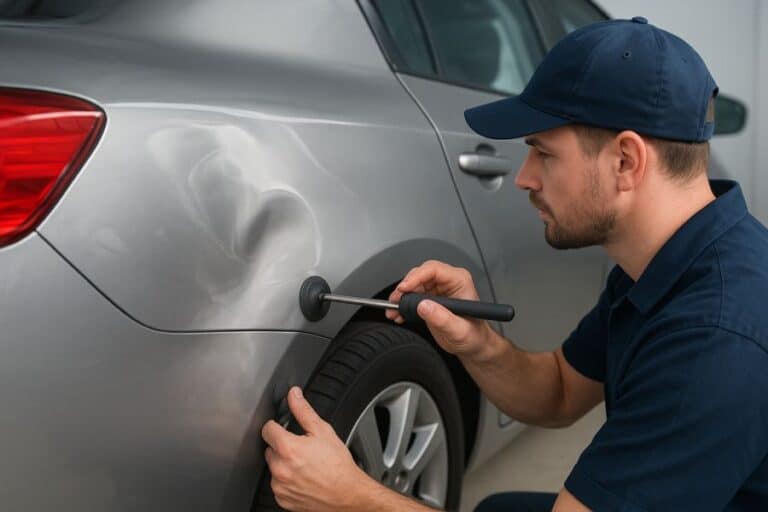
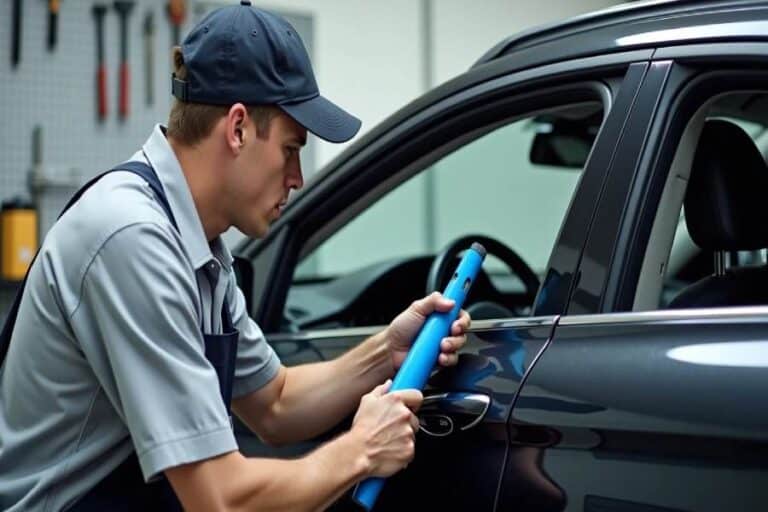
- pdr tools for pushing dents out from behind—rods with special tips tailored to steel or aluminum—and a special pdr tool for tight channels or under bracing areas.
- Glue-pulling tabs for areas without access, supported by tool leverage and accurate knockdowns.
- PDR lights or portable lights for dent repair to visualize waves and read the panel.
- Protection devices to keep braces and edges safe during panel dent repair and brace dent removal.
Access methods include removing trim, headliners, and inner panels for roof and hood work. Under bracing demands finesse; the right tip shape, tool leverage, and micro-movements remove hail dents gradually. The aim is uniform auto dent removal without over-pushing.
Metal Memory, Dent Size, and Technique
Metal flexibility lets steel and aluminum return to form when stress is relieved properly. Skilled technicians blend pushing dents out with tap-down work to relax crown tension. This is why pdr for hail damage excels on common hail patterns:
- Nickel sized dent and quarter sized dent: typically fast, clean results.
- Oversized dent with stretched center: requires careful heat management and slower cycles, sometimes a hybrid approach.
Because the surface is never abraded, PDR maintains paint protection. Done correctly, paintless dent removal restores reflections so precisely that even YouTube replays under PDR lights can’t reveal prior damage.
After the Storm: Estimating, Insurance, and the Step-by-Step PDR Workflow for Hail
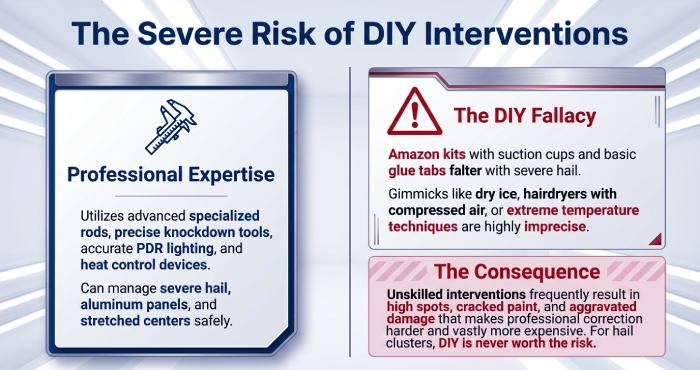
Start your hail damage claim by documenting dents with photos and measurements, then file with your insurer, who often prefers Paintless Dent Repair (PDR) for its cost efficiency and ability to preserve the factory finish.
- Estimation: Technicians evaluate the dents’ locations, sizes, and densities, using software that complies with insurer guidelines.
- Procedure: Disassemble the vehicle → position lighting → either push or glue-pull out the dents → blend the repair → conduct a quality inspection → reassemble the parts → polish the surface.
- Communication: Repair shops liaise with insurance companies regarding any additional costs and hidden damages.
- Caution for DIY: Techniques like using a hairdryer with compressed air, dry ice, or suction devices may shift minor dents but are imprecise and could potentially aggravate the damage. For optimal results, it’s best to consult a professional PDR service.
Hail Claim Process Checklist
- File your auto hail damage claim promptly with photos and panel notes.
- Schedule a PDR estimate; ask for a written scope of hail damage repair and turnaround.
- Approve the plan; your shop liaises with insurance companies on supplements.
- Monitor milestones: disassembly, push/repair, quality control, reassembly, delivery.
Cost, Turnaround, and Results: What to Expect from PDR vs. Conventional Body Repair
- Cost: Generally, paintless dent repair (PDR) tends to be less expensive than standard auto body repairs. However, extensive hail damage can raise costs depending on the number of panels, the size of the dents, and the materials used.
- Turnaround: Typically, PDR tasks are finished in just a few days, in contrast to traditional repair methods, which can take weeks because of the time needed for painting and curing processes.
- Results: PDR brings back a factory-like appearance without damaging the original paint, whereas conventional techniques often require color matching and blending.
Choosing the Right PDR Technician and Maintaining Your OEM Finish
Selecting a Skilled PDR Technician and Caring for Repairs to Maintain OEM Finish
- Qualifications and Reputation: Verify their credentials, such as membership in NAPDRT, and check reviews on platforms like Google, Facebook, and LinkedIn. Also, request to see authentic before-and-after images taken under PDR lighting.
- Experience with Hail Damage: Inquire about their experience with severe hail, access to braces, aluminum panel repairs, and roof or hood work. Technicians like Steven from Excel Dent Removal in Minnesota are adept at managing comprehensive hail damage claims and repairs.
- Transparent Pricing: Ensure they provide clear estimates, coordinate with insurance, and offer realistic timelines. Beware of fly-by-night operators; stick with established PDR businesses or reputable regional experts.
DIY vs. Professional Tools
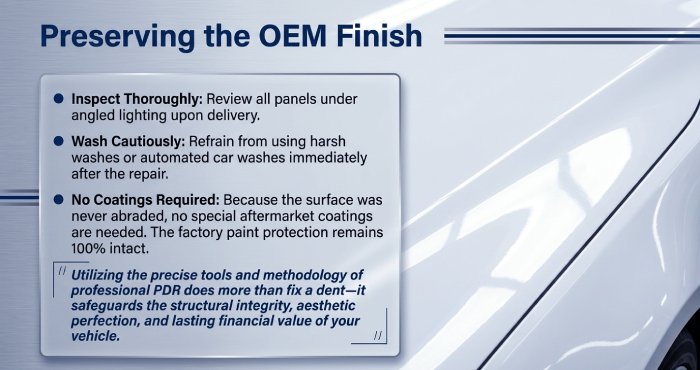
- DIY Kits: While Amazon’s DIY dent repair kits (including suction cups and glue tabs) can sometimes address minor, shallow dents, they often falter with severe hail damage.
- Professional Equipment: Skilled technicians utilize advanced tools such as specialized rods, knockdown tools, heat control devices, and PDR lighting for accurate, full-panel repairs.
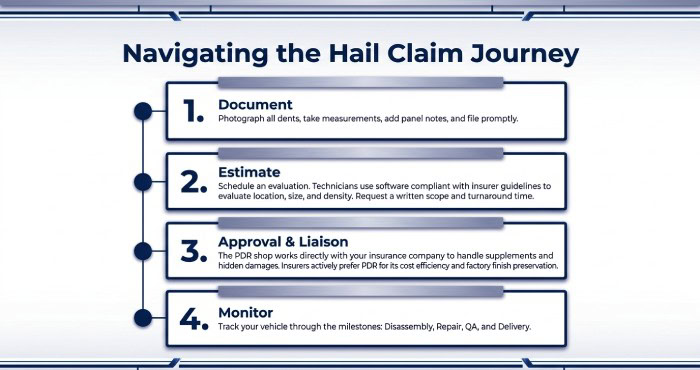
- Post-Repair Maintenance: After receiving your vehicle, inspect the panels under angled lighting. Refrain from using harsh washes or automated car washes for a while. No special coatings are needed, as the OEM paint is intact.
- Practical Advice for Hail Damage Repair: Steer clear of unreliable DIY methods like dry ice or extreme temperature techniques, as they can result in high spots. For hail clusters, professional PDR is the safest and most effective approach.
Utilizing the right techniques, tools, and thorough documentation ensures a pristine paintless dent repair that maintains the factory finish and value of your vehicle.