How Mobile PDR Handles Dents on Vehicles With Body-Side Moldings
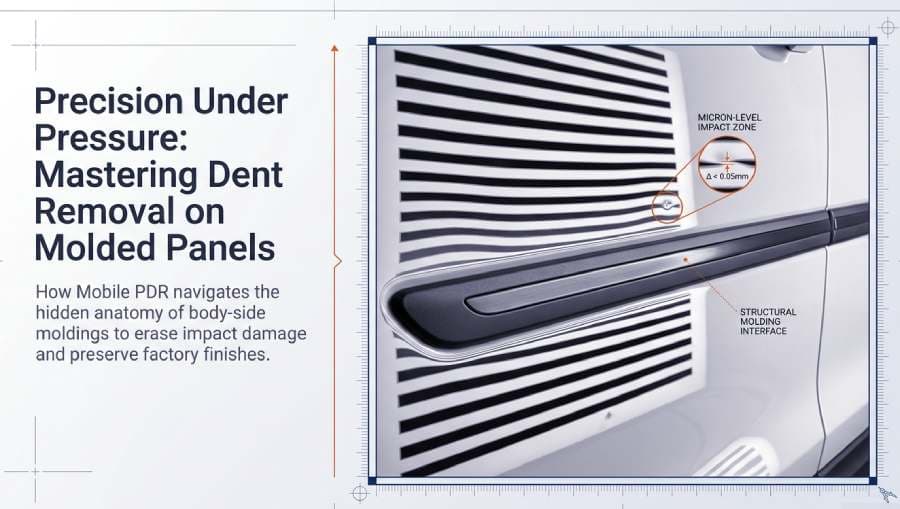
Vehicles with body-side moldings require a more careful approach than flat, open panels. Moldings can hide impact points, block tool access, trap stress in the metal, and make lighting reads more difficult. For that reason, mobile dent removal on molded doors, quarter panels, and fenders depends on precise inspection, controlled pressure, and an understanding of trim attachment systems. A skilled mobile technician uses paintless dent repair methods to restore the panel while preserving the factory finish whenever possible.
For drivers comparing options such as a body shop, detail shop, or Paintless Dent Repair, mobile dent repair is often a practical body shop alternative because it brings professional dent removal and service at your location.
Why Body-Side Moldings Make Dent Repair More Complex
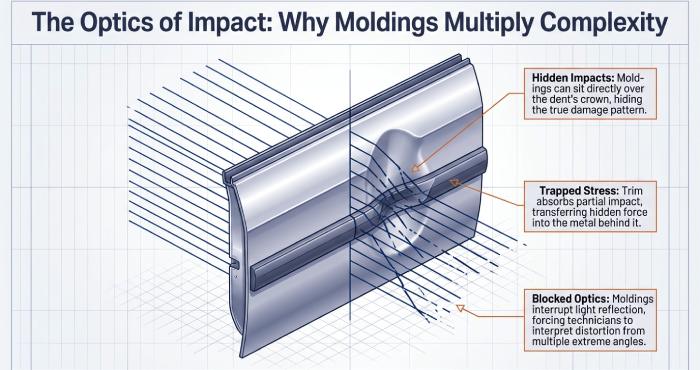
Body-side moldings are designed to protect the vehicle surface, break up styling lines, and reduce cosmetic damage from parking-lot impacts. However, when a dent forms near, above, below, or behind a molding, dent repair becomes more complicated. The molding may sit directly over the crown of the dent, making it harder to identify the full damage pattern. In other cases, the trim absorbs part of the impact and transfers force into the metal behind it.
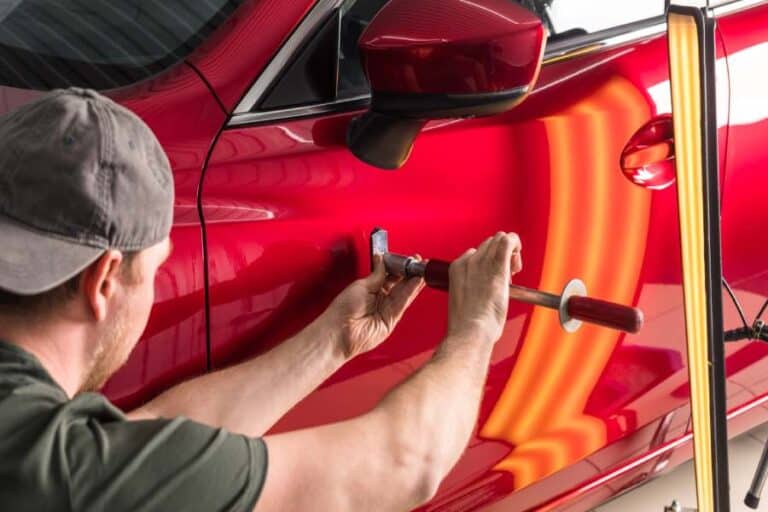
Paintless dent repair depends on reading light distortion across the panel. Moldings interrupt that reflection, so the mobile technician must interpret the dent from multiple angles. This is especially important for auto dent removal on doors where the molding runs through the center of the panel. If the dent crosses the trim line, the dent removal process may require access behind the molding, controlled glue pulling, or custom tooling.
How Mobile PDR Technicians Inspect Moldings and Dent Access Points
Before starting mobile dent repair, the technician studies the panel, molding location, paint condition, and impact direction. This inspection helps determine whether paintless dent repair can be performed with no painting required. The goal is to restore vehicle appearance while protecting the factory finish and avoiding unnecessary trim replacement.
Mapping the Damage Before Touching the Trim
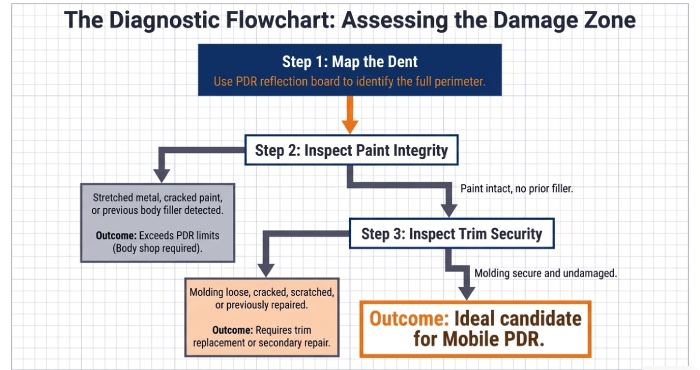
A thorough damage assessment includes checking whether the molding itself is loose, cracked, scratched, or previously repaired. The mobile technician may use a PDR light, reflection board, or line board to map the dent. Onsite dent removal requires accuracy because the technician is working in a driveway, parking lot, dealership, or workplace rather than a controlled shop booth.
During the inspection, the technician considers several access points: door jamb openings, window channels, factory holes, inner panel openings, tail lamp pockets, and wheel-well liners. This step determines whether auto dent repair can be completed from behind the panel or whether glue-pull paintless dent removal is safer.
What the Technician Looks For
The technician checks for stretched metal, cracked paint, chipped clear coat, loose molding adhesive, and signs of previous body filler. If the molding is directly over the dent, the dent repair estimate may include temporary trim removal or added labor for protected access.
Common PDR Techniques Used Around or Behind Body-Side Moldings
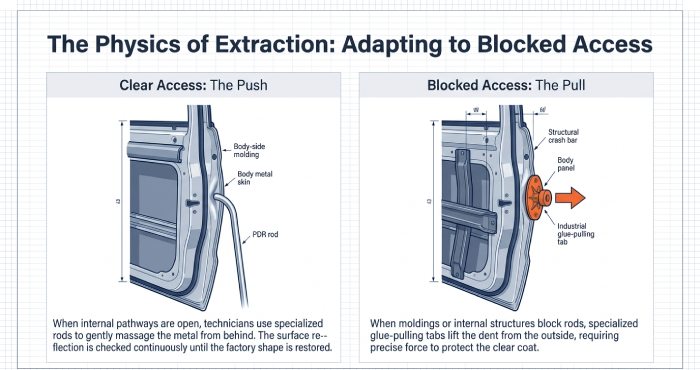
Paintless dent repair uses specialized methods to move metal gradually back to its original shape. Around body-side moldings, the technician may combine pushing, tapping, glue pulling, and blending. The right approach depends on whether the dent is accessible and whether the molding can safely remain in place.
Access, Glue Pulling, and Blending
When access is clear, technicians use rods or special tools to gently push the dent from behind. They check the panel’s reflection until the surface looks smooth. This method works well for paintless dent removal when moldings do not block access.
If access is blocked, glue pulling can lift the dent from the outside. This method is common in hail damage repair and door ding repair. Technicians may use custom tools for tight spaces. A skilled mobile dent removal service protects the paint and molding while avoiding excessive pressure.
When Moldings Must Be Removed, Protected, or Replaced During Service
Not every molding needs to be removed for dent removal. In fact, leaving the trim in place is often safer if there is adequate tool access and the molding is secure. However, removal may be necessary when the dent sits directly under the trim, when adhesive blocks access, or when the molding is already damaged.
Protecting Adhesive, Clips, and the Factory Finish
If removal is needed, the technician carefully warms the molding and removes the adhesive. This helps protect the factory paint. Old clips or tape may need replacement. Cracked or bent moldings may also require new parts.
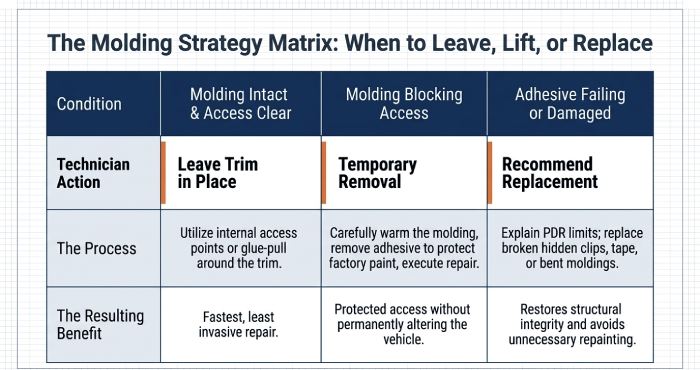
After hail or collision damage, hidden clips may break. A mobile dent removal service can repair dents within PDR limits. For damaged trim, a body shop may be needed. A reliable technician explains the limits of paintless dent repair and avoids unnecessary repainting.
Benefits of Choosing a Mobile Dent Removal Service for Molded Vehicle Panels
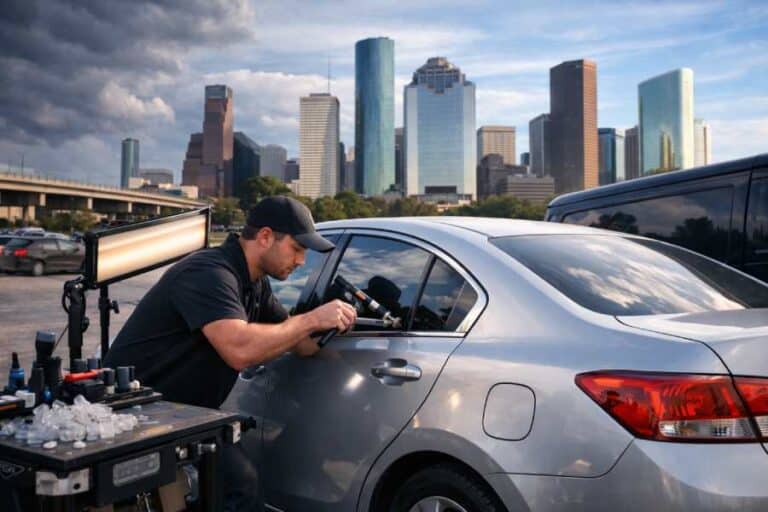
For eligible dents near body-side moldings, mobile PDR offers the convenience of on-site service. DentWerx serves drivers across Houston and nearby communities, with repair options depending on panel access, trim condition, and paint integrity. This mobile car repair model supports a painless process, especially when customers need dent removal near me and want service at your location.
The main benefits include:
- Preserved factory finish: Paintless dent repair and paintless dent removal avoid sanding, filler, and repainting when the paint is intact.
- Convenient mobile service: Mobile dent repair brings onsite dent removal directly to the customer.
- Efficient scheduling: Mobile dent repair offers a convenient way to arrange dent removal at your home or workplace.
- Cost-effective repair: Auto dent removal through PDR is often less expensive than conventional auto dent repair.
- Professional results: A trained mobile technician can deliver professional dent removal with custom tooling and careful lighting.
- Customer confidence: Many providers offer free estimates, a free quote, satisfaction guaranteed policies, and strong customer satisfaction reviews.
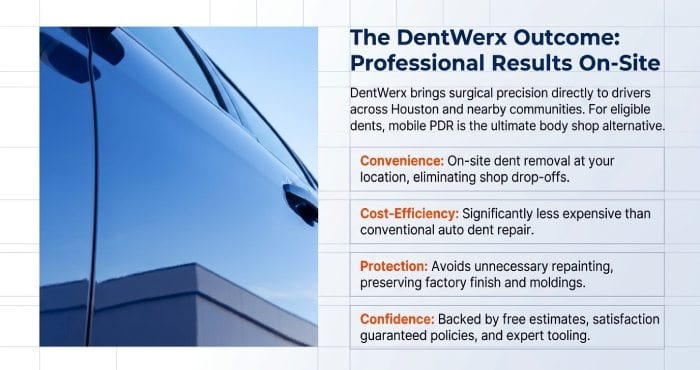
A skilled technician can repair molded panels without damaging the trim. Mobile dent removal is a practical body shop alternative for car dents and hail damage when the paint remains intact. It restores the vehicle’s appearance without unnecessary repainting.