
9 Details That Can Change the Difficulty of Auto Dent Removal
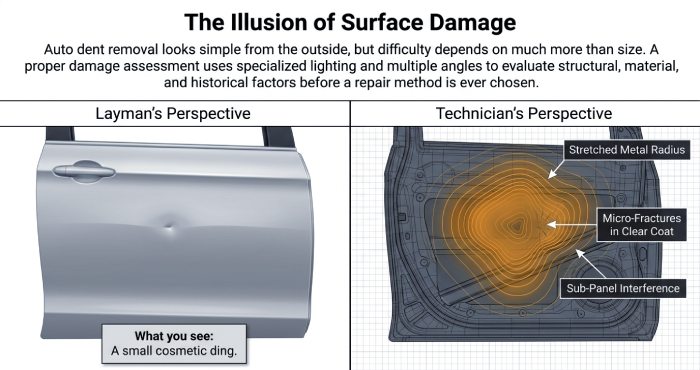
Auto dent removal can look simple from the outside, but the difficulty depends on much more than whether a dent “looks small.” A trained technician considers the metal, paint, access points, damage extent, and the best repair method before recommending paintless dent repair, conventional auto body repair, or a blended repair plan.
For drivers comparing paintless dent repair with traditional dent repair, understanding what affects the repair process can make it easier to evaluate their options. Whether the damage involves hail, a parking-lot ding, a car door dent, or a more complex collision, a proper damage assessment helps determine the most appropriate repair method while preserving the vehicle’s original finish whenever possible.
Why Dent Difficulty Varies Before Repair Begins
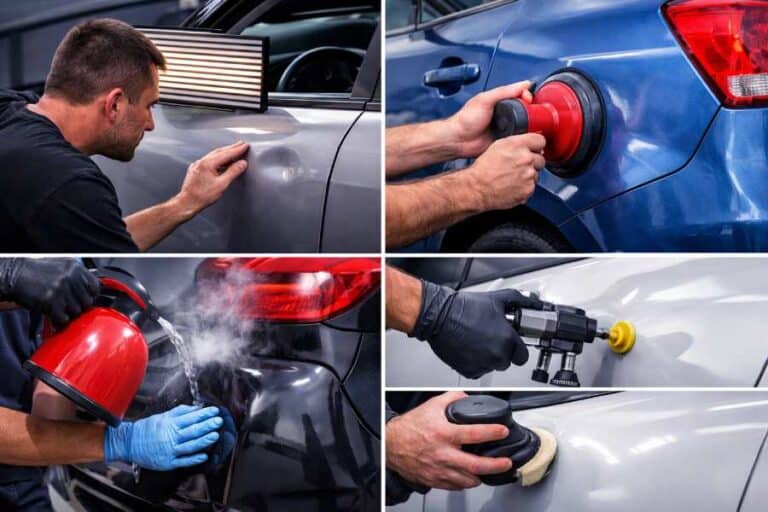
A professional assessment process starts with looking at the dent from multiple angles under specialized lighting. Qualified technicians evaluate whether PDR is possible, whether paintless techniques can restore the panel, or whether collision repair and repaint work are needed.
Damage Assessment, Estimate, and Insurance Considerations
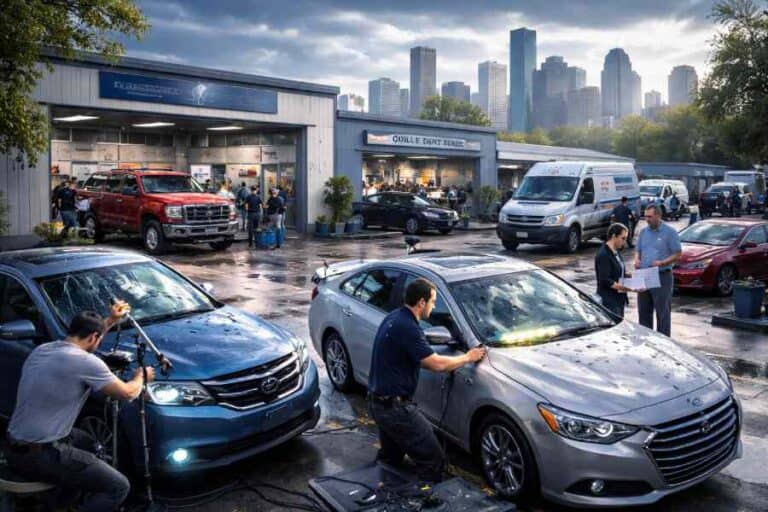
A detailed damage assessment supports an accurate estimate, especially for hail damage repair or extensive dent removal. Insurance companies and auto insurance adjusters often rely on documentation from dent repair specialists or auto body repair shops to determine coverage.
Detail #1: The Size of the Dent
Small Dings Versus Large Panel Damage
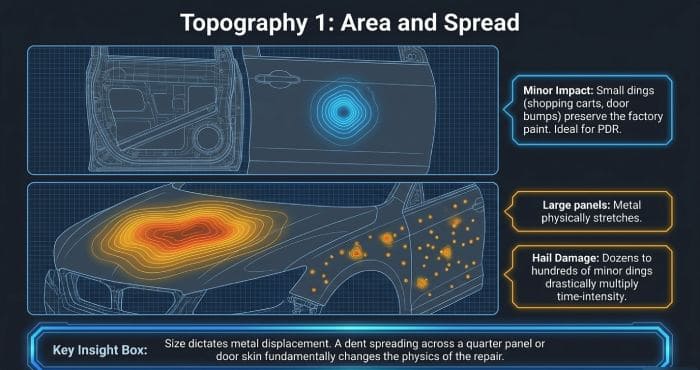
Small dings from shopping carts, door bumps, or light hail are often ideal for paintless dent repair. These repairs can usually preserve the vehicle’s original factory paint when the paint remains intact and the panel is suitable for PDR.
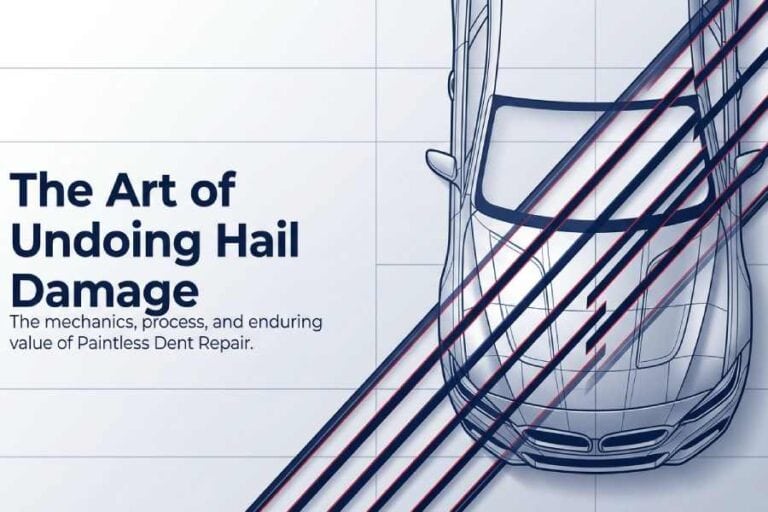
Larger dents, however, can stretch metal panels. When a dent spreads across a hood, roof, quarter panel, or door skin, dent removal becomes more complex. Hail damage even hundreds of dingsrepair can involve dozens or , making the overall repair process more time-intensive even if each individual dent is minor.
Detail #2: The Depth and Sharpness of the Impact
Sharp Impacts, Creases, and Stretched Metal
Sharp dents, deep dings, and creases are harder because the metal has been displaced more aggressively. If the impact point is tight, the technician must gradually massage the metal back without creating high spots or cracking paint.
Different vehicle manufacturers use different panel materials and construction methods, so the panel’s characteristics can affect how a technician approaches the repair.
Detail #3: Where the Dent Is Located on the Vehicle
Edges, Braces, and Car Door Dent Repair
Car door dent repair is common, but difficulty depends on whether the technician can reach the back side of the panel. Door beams, intrusion bars, trim, wiring, and window mechanisms can block tool access. Dings along body lines require precise shaping to restore the original contour.
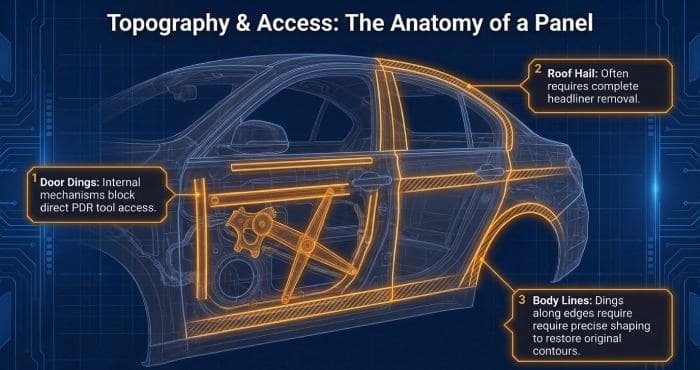
Dents on hoods and trunks may allow better tool access, while roof dents from hail damage repair may require headliner removal. Auto dent removal near seams, wheel arches, or pillars often requires advanced PDR skills or a combined auto body repair approach.
Detail #4: Whether the Paint Is Cracked, Chipped, or Scratched
Paint Condition Determines Whether PDR Is Enough
If the paint is not cracked, chipped, or deeply scratched, paintless techniques may restore the dent while keeping the factory paint intact. This is why PDR is popular for hail damage repair, minor dings, and fast service needs.
When Repaint and Minor Scratch Repair Enter the Process
If a dent includes cracked paint, exposed metal, or deep scratches, minor scratch repair or repaint may be necessary. In that case, dent repair specialists may recommend a hybrid repair process: first perform dent removal to reshape the panel, then use refinishing to protect the surface.
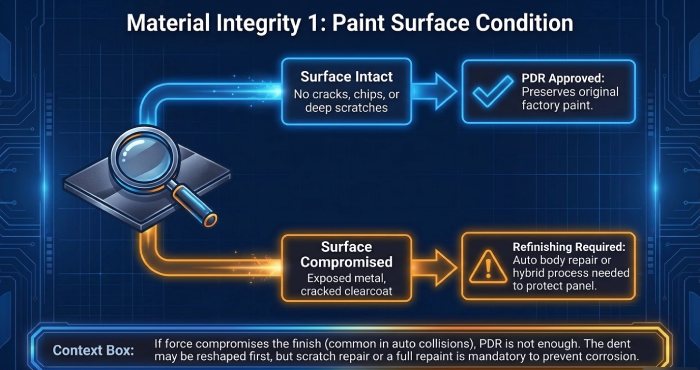
This is common after an auto collision or when a car has been hit with enough force to compromise the finish. Insurance may cover the work depending on the policy, deductible, and documented damage extent.
Details #5 and #6: Metal Type and Repair Access
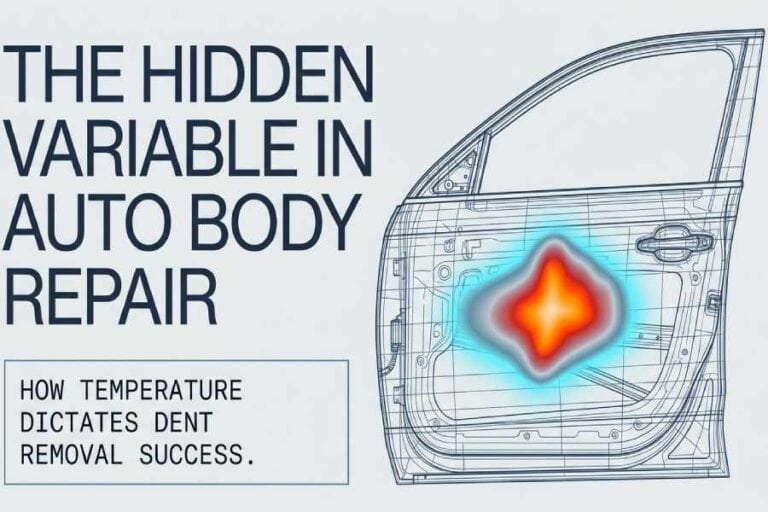
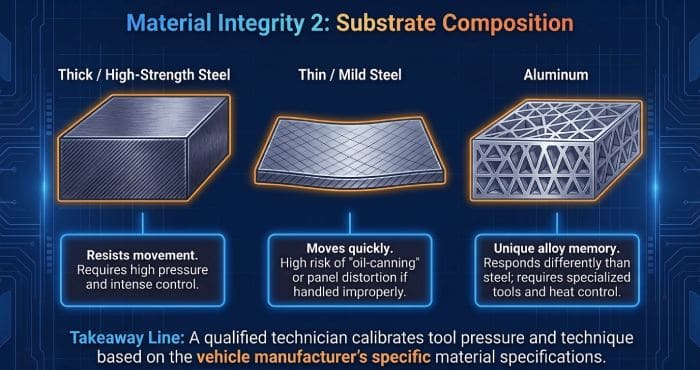
Modern vehicles use different materials, including mild steel, high-strength steel, and aluminum. The metal type affects tool pressure, heat control, and how the panel responds during dent removal.
Detail #5: The Type and Thickness of the Vehicle’s Metal
Thicker metal panels can resist movement, requiring more controlled pressure during PDR. Thin panels may move quickly but can also oil-can or distort if handled improperly. Aluminum panels can respond differently from steel and may require specialized tools, techniques, and technician experience.
A qualified technician chooses the repair method based on the vehicle, the panel design, and the manufacturer’s material specifications.
Detail #6: Access to the Back Side of the Dent
Paintless dent repair usually works by accessing the back of the dent and gently pushing the metal into shape. If access is blocked, the technician may remove trim, lights, liners, or interior panels.
When rear access is limited, glue-pull PDR may be used from the outside. However, glue pulling depends on strong paint adhesion. Older paint, previous repaint work, or body filler can make this approach risky. That is why a proper assessment process is essential before starting auto dent removal.
Details #7, #8, and #9: Paint Age, Previous Repairs, and the Right Repair Method
Detail #7: The Age and Condition of the Vehicle’s Paint
The condition of the vehicle’s paint can affect whether PDR is appropriate. A well-maintained factory finish may tolerate controlled dent manipulation, while older, damaged, or previously refinished paint may be more susceptible to cracking or lifting. Sun exposure, oxidation, previous repairs, and existing paint damage can all influence how safely the panel can be repaired.
Preserving the manufacturer’s finish is one of the biggest advantages of paintless dent repair. A professional repair specialist will evaluate whether the paint can tolerate pressure, especially on older vehicles or collectible models where original condition matters.
Detail #8: Previous Repairs or Body Filler in the Damaged Area
Previous collision repair can complicate dent removal. If the damaged area contains body filler, primer, or aftermarket repaint work, the panel may not respond predictably. Glue pulling can lift weak paint, and pushing from behind may crack filler.
Detail #9: The Repair Method Needed for the Best Result
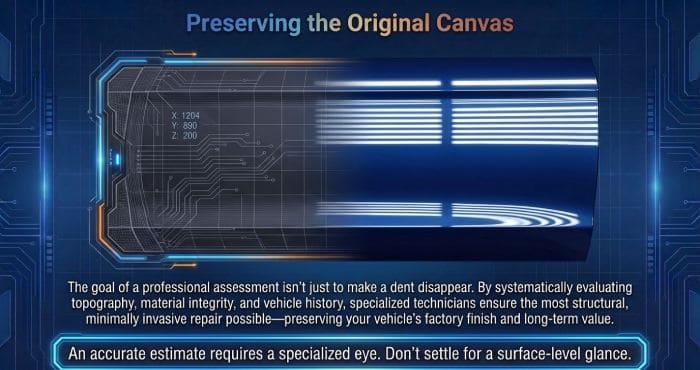
The best repair method depends on all the details above. Paintless dent repair is often ideal for dings, hail damage repair, shallow dents, and panels with intact factory paint. Traditional auto body repair may be better for cracked paint, torn metal, severe creases, or auto collision damage.
In some cases, a blended repair plan is best: PDR first to reduce filler use, followed by minor scratch repair or repaint only where necessary. This approach can also reduce the amount of filler and refinishing required while preserving as much of the original panel and finish as possible.