How Temperature Changes Affect Auto Body Dent Repair Results
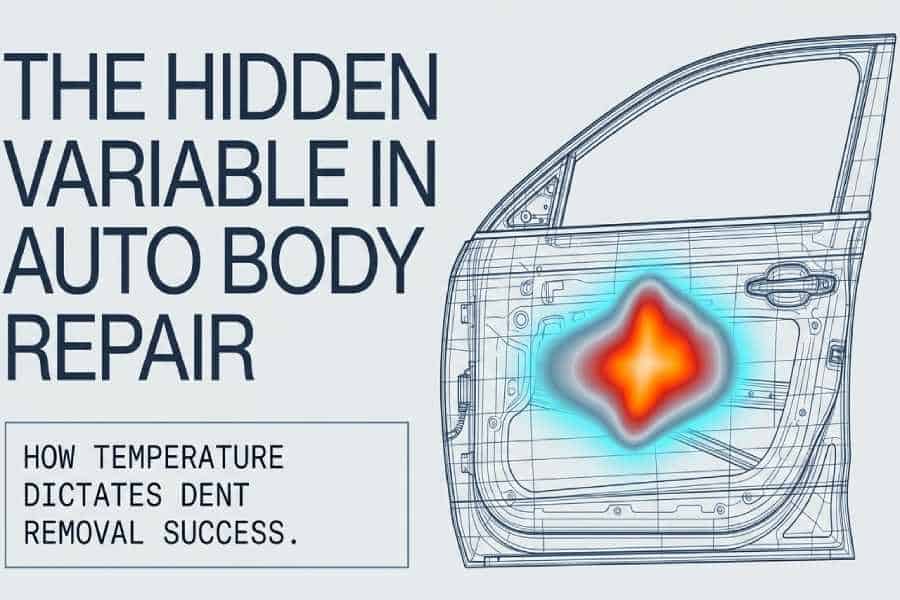
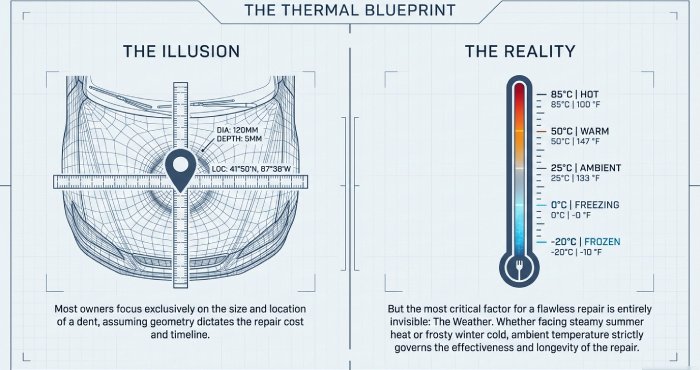
When addressing auto body dent repair, many car owners tend to concentrate on factors such as the size of the dent, its position, and the repair costs. Nonetheless, an essential element that is frequently ignored is temperature. Regardless of whether it’s steamy summer or frosty winter, temperature significantly impacts the effectiveness and longevity of a dent repair.
Recognizing how temperature affects materials, tools, and methods can aid you in making more informed choices regarding the timing and approach for fixing your vehicle. In this article, we will delve into how variations in temperature influence the outcomes of auto body dent repairs and what both technicians and car owners should consider.
The Science Behind Metal and Temperature
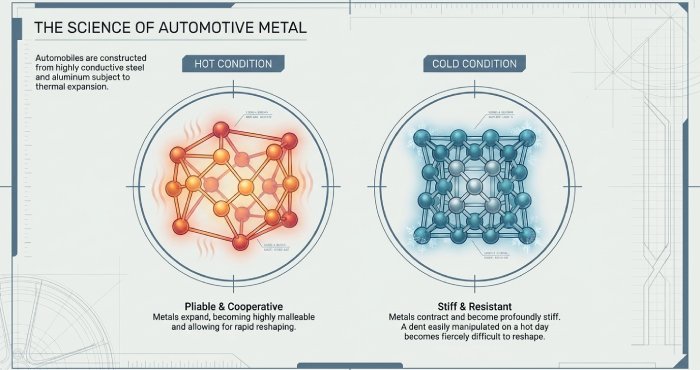
Automobiles are largely constructed from metals such as steel and aluminum, which undergo expansion and contraction as temperatures fluctuate. This characteristic, referred to as thermal expansion, significantly affects the results of dent repairs.
When the weather is warm, metals are more pliable and easier to work with. Conversely, in chilly conditions, they become stiff and harder to reshape. As a result, a dent that can be quickly repaired on a hot day may prove much more difficult to fix when it’s cold. For repair professionals, grasping this property is crucial for achieving accurate outcomes.
Paint Flexibility and Temperature Sensitivity
Contemporary automotive paint systems are engineered for resilience, yet they remain vulnerable to temperature changes.
Hot Weather
When temperatures rise:
- The paint exhibits increased elasticity.
- It can slightly expand without risk of cracking.
This quality is beneficial for methods like paintless dent repair (PDR), which aims to reshape the metal while preserving the paint’s integrity.
Cold Weather
In lower temperatures:
- The paint tends to become fragile.
- It is at a greater risk of cracking or chipping during repairs.
- Even slight pressure during dent removal may result in noticeable damage.
Consequently, many technicians prefer to conduct dent repairs in environments where they can control the temperature.
Impact on Paintless Dent Repair (PDR)
Paintless dent repair (PDR) is highly affected by temperature fluctuations. This technique reshapes the metal without the need for repainting, so it relies on both the metal and paint being pliable.
Advantages of Warmer Conditions for PDR:
- Greater ease in adjusting the metal
- Lower chances of paint cracking
- Quicker repair times
Difficulties in Cold Conditions:
- Increased resistance from the metal
- Greater risk of damaging the paint
- A slower, more careful repair approach is necessary
To mitigate cold effects, technicians frequently employ heat guns or infrared lamps to warm the area before starting the repair. This process helps restore the flexibility of the metal and paint.
Glue Pulling Techniques and Temperature
Another frequently used technique for repairing dents, particularly when access to the rear of the panel is restricted, is glue pulling. This method involves attaching a tab to the dent with specialized adhesive and then pulling it outward.
Temperature significantly impacts the effectiveness of this process:
In Hot Conditions:
- The glue can become overly soft.
- Pulling strength is diminished.
- Tabs may come off too soon.
In Cold Conditions:
- The adhesive may not adhere correctly.
- There’s a higher risk of adhesive failure.
- Dent removal may be less effective.
To achieve the best possible outcome, technicians need to manage the temperatures of both the panel and the adhesive carefully. Many professionals keep their materials in climate-controlled areas to maintain consistent performance.
Tool Performance and Temperature Effects
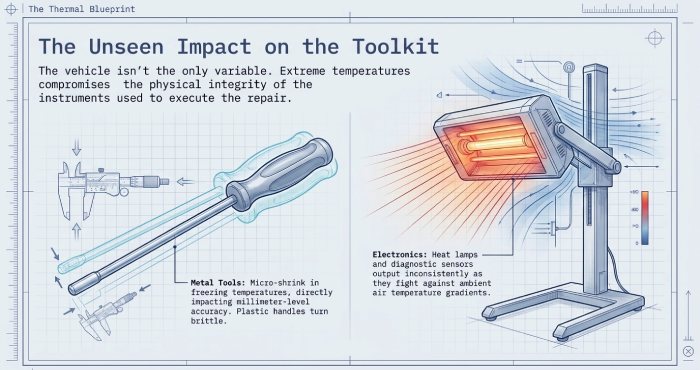
Temperature influences not only the vehicle but also the instruments utilized for dent repairs. In colder conditions, metal tools might shrink, which can affect their accuracy. Plastic parts could become fragile and susceptible to damage.
Additionally, electronic devices like heat lamps may behave differently based on the surrounding temperature. Skilled technicians modify their methods in response to these variations, guaranteeing that their tools work effectively in any weather.
Environmental Conditions and Repair Quality
Temperature is frequently linked with various environmental elements such as humidity and sunlight, both of which can affect the effectiveness of repairs.
Excessive Heat and Direct Sunlight
- May cause panels to become excessively warm, resulting in excessive softness
- Can lead to uneven material expansion
- Might result in overcompensation when fixing dents
Chilly and Humid Conditions
- Heighten the possibility of condensation
- Can disrupt the effectiveness of adhesives and finishes
- May delay the repair timeline
Due to these factors, professional dent repair establishments usually work indoors to maintain controlled conditions for reliable results.
Why Professional Repair Matters More in Extreme Temperatures
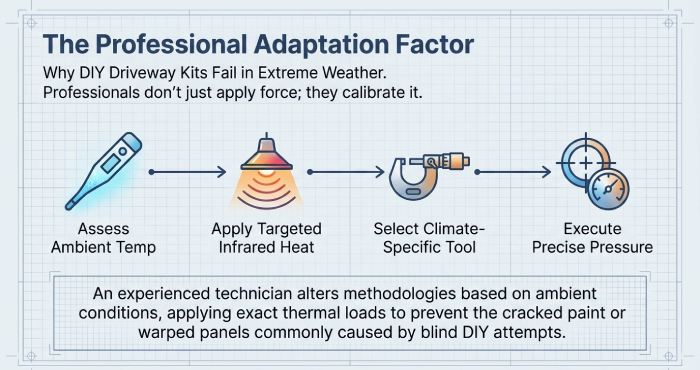
Although do-it-yourself dent repair kits are readily accessible, the impact of temperature on the process highlights the need for professional skills. An experienced technician knows how to:
- Modify their approach depending on temperature fluctuations
- Determine the appropriate amount of heat to use and when to apply it
- Select the right tools and techniques for optimal outcomes under various circumstances
Without this expertise, particularly in extreme temperature situations, attempting repairs can result in lasting damage, such as cracked paint or warped panels.
Tips to Ensure the Best Dent Repair Results
For optimal results in dent repair, keep these points in mind:
1. Opt for a stable environment: Indoor repairs in a climate-controlled area lead to more reliable outcomes.
2. Steer clear of harsh weather: If you can, plan repairs for days with mild temperatures.
3. Collaborate with seasoned experts: Experienced technicians are adept at navigating temperature-related issues.
4. Address repairs promptly: Although timing is important, postponing repairs can result in complications like rust.
5. Inquire about the repair techniques: Knowing whether paintless dent repair (PDR) or traditional methods are employed can clarify how temperature may influence the repair process.
Conclusion
Temperature plays a crucial yet frequently overlooked role in the process of auto body dent repair. It affects everything from the malleability of metals and paints to the effectiveness of adhesives and tools used. Generally, warmer conditions facilitate safer and more efficient dent repairs, particularly for paintless techniques. Conversely, colder environments necessitate additional precautions, specialized tools, and a higher level of expertise to achieve comparable results.
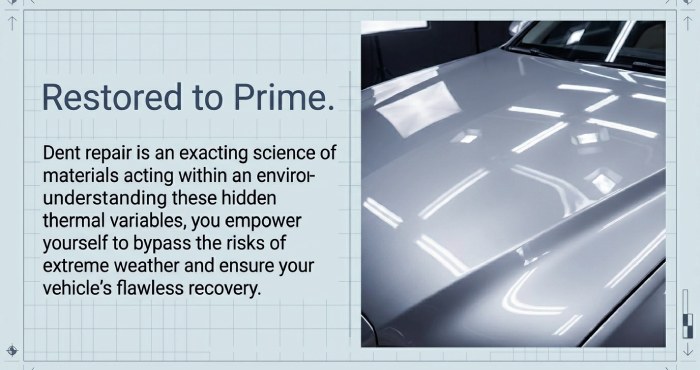
For car owners, the main point to grasp is straightforward: the effectiveness of your dent repair relies not only on the skills of the technician or the methods employed but also on the environmental conditions during the repair. By recognizing the significance of temperature, you can make informed choices and ensure your vehicle is restored to its prime after the repair process.