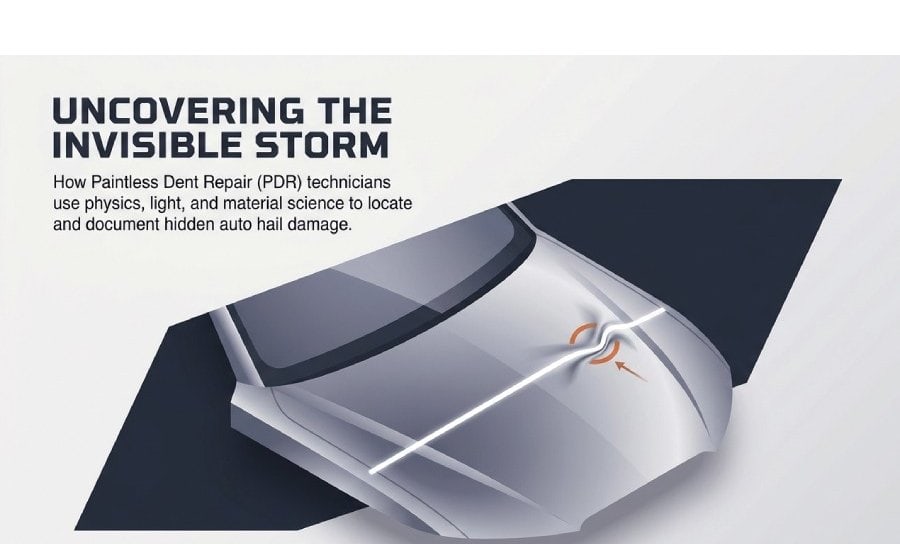
How PDR Technicians Locate Hidden Hail Damage on Vehicles
Why Hail Damage Is Often Hard to See: Understanding Light, Paint, and Panel Curvature
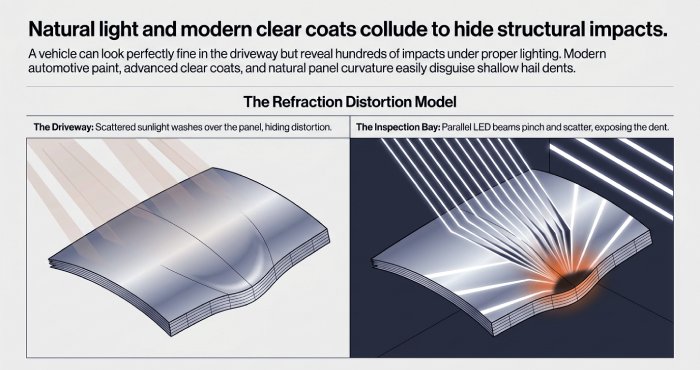
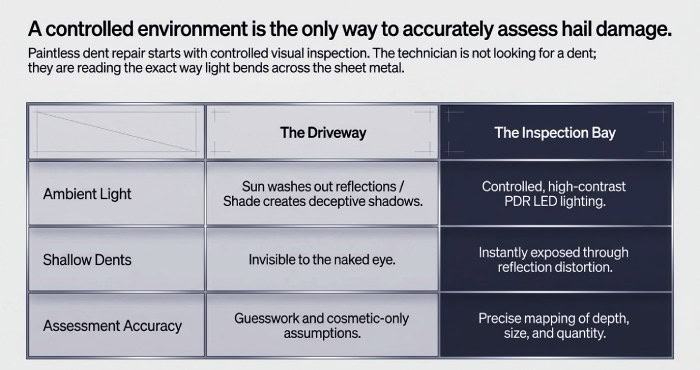
Hidden hail damage is one of the main reasons a vehicle can look “mostly fine” in a driveway but show dozens—or even hundreds—of impacts under proper inspection lighting. A trained PDR technician understands that hail damage is not always obvious because modern automotive paint, clear coat, panel curvature, and ambient light can disguise a shallow hail dent. On a bright day, reflections may wash over the vehicle panel and hide minor dents. In a shaded area, the same hail dent may appear only as a small distortion in the paint reflection.
This is why professional paintless dent repair starts with controlled visual inspection rather than guesswork. In paintless dent removal, the technician is not simply looking for a “dent”; they are reading the way light bends across the metal. A small car dent on a curved fender, a bodyline crease dent on a door, or an aluminum hood dent may only become visible when the reflection line breaks, waves, or pinches.
PDR, or paintless dent repair, is especially effective for auto hail damage because it preserves the factory finish while restoring the original shape of the sheet metal. Unlike traditional auto body repair, which may involve sanding, filler, primer, and repainting, paintless dent removal uses controlled pressure, glue pull dent tools, and specialized metalwork techniques to massage the damage back into place. For consumers researching paintless dent repair, it is important to understand that visibility is the first step in every accurate dent assessment.
Technicians also consider dent size, dent depth, and panel material. Minor dents may disappear from view at certain angles, while large dents or major hail damage can create broader distortion across the hood, roof, trunk lid, or quarter panel. Deeper dents may require more time, especially when braces or reinforcements limit access to the damaged area.
Initial Vehicle Walkaround: Identifying Obvious Dents and High-Risk Impact Areas
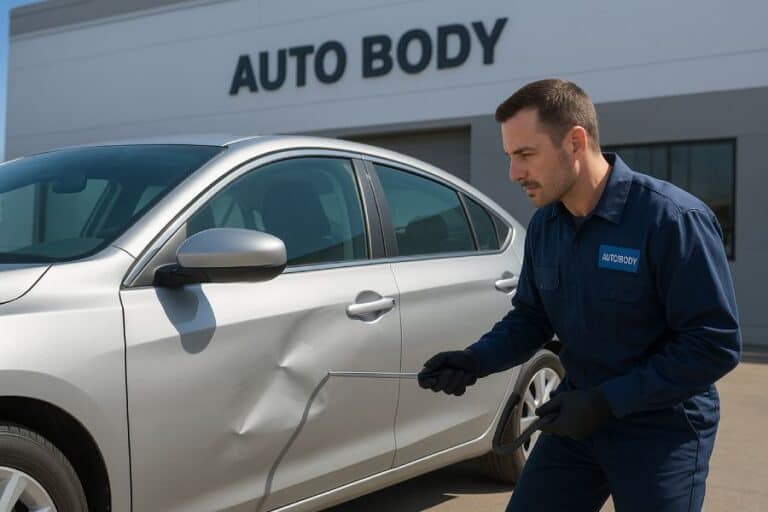
The repair process usually begins with a structured walkaround. A professional paintless dent repair technician circles the vehicle slowly, looking for obvious hail damage, cracked paint, sharp impacts, and high-risk zones. The hood, roof, trunk lid, upper door frames, roof rails, fenders, and tops of quarter panels typically receive the most hail storm damage because they face upward or outward during a storm.
During this first pass, the technician may mark visible hail dent locations with removable indicators or use a digital estimating platform. This helps estimate hail damage accurately and separates cosmetic hail dent removal from more complex dent repair situations. For example, an aluminum hood dent may respond differently than a steel roof dent, and a car door dent near a body line may require a different PDR approach than a shallow dent in the center of a flat panel.
A quality auto hail repair inspection also checks for signs that the vehicle may need more than dent removal. If the paint is fractured, if a panel edge is kinked, or if the metal is overstretched, the technician may recommend limited auto body repair or sheet metal repair. However, most hail damage repair is an ideal fit for PDR when the paint remains intact.
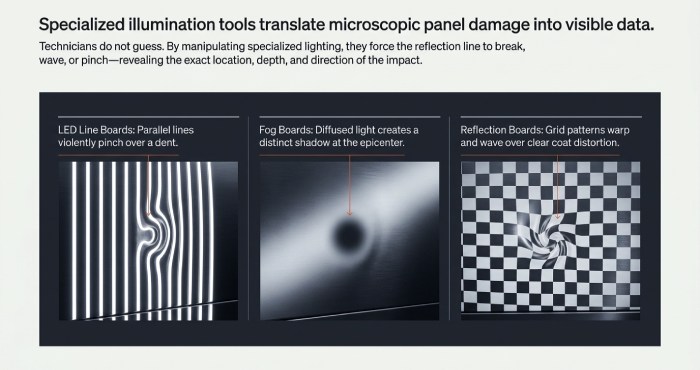
Using PDR Lighting and Reflection Boards to Reveal Hidden Dents
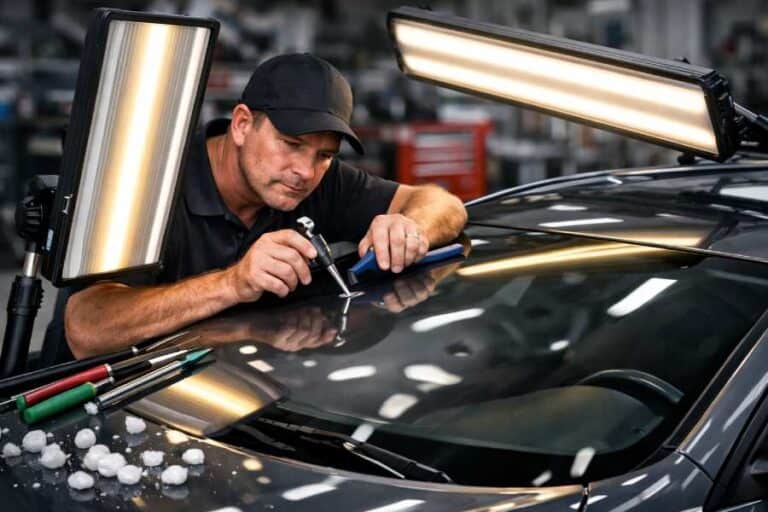
After identifying visible impacts, technicians use PDR lights, LED line boards, fog boards, and reflection boards to reveal hidden hail dents. These tools show the dent’s exact location, depth, and direction, helping technicians choose the safest repair method.
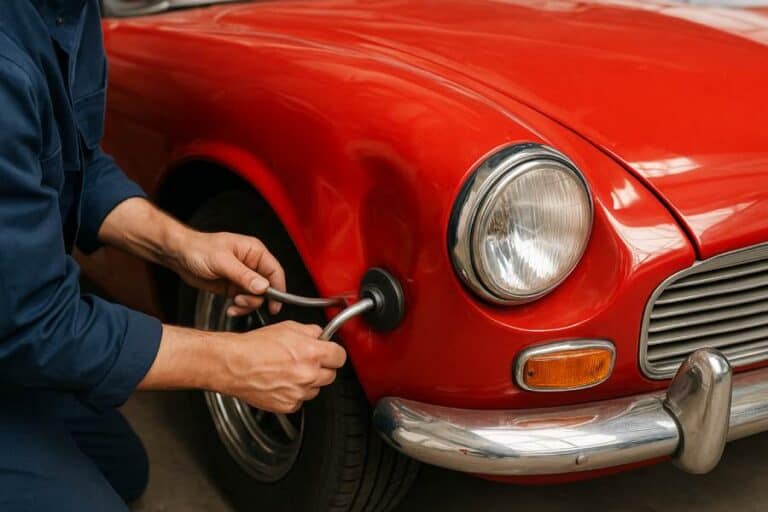
Unlike DIY hail repair kits, professional PDR relies on trained inspection, precise lighting, and controlled techniques. Technicians may use push tools when rear access is available or glue-pull tools when braces block access, restoring the panel without damaging the original paint.
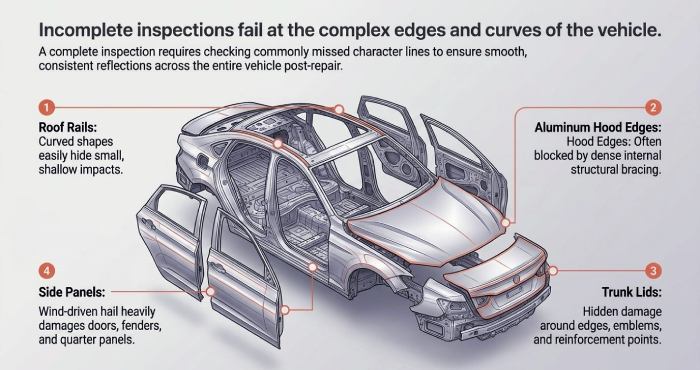
Inspecting Commonly Missed Areas: Roof Rails, Hood Edges, Trunk Lids, and Body Lines
Once the lighting is set up, technicians inspect commonly missed areas such as roof rails, hood edges, and trunk lids. Roof rails can hide small dents because of their curved shape, while an Aluminum Hood may have a Brace that limits tool access. In these areas, technicians may use careful dent repair techniques or glue-pull tools. Trunk lids are also checked around edges, emblems, and reinforcement points to ensure smooth, consistent reflections after repair.
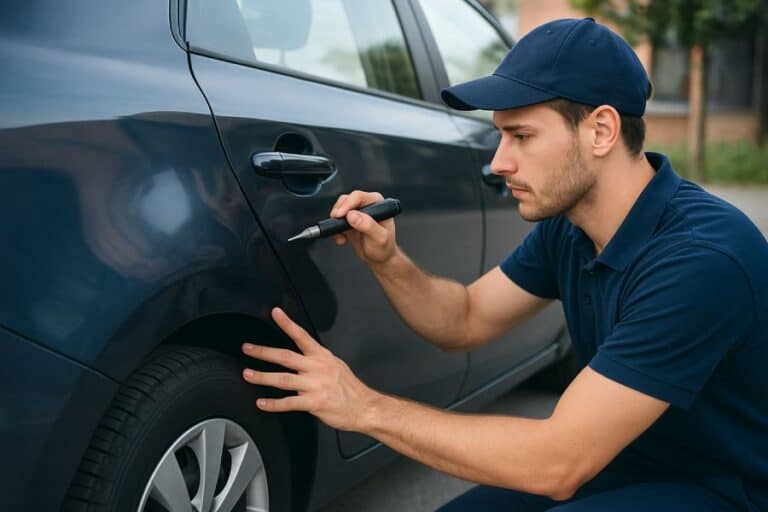
Body lines and side panels require special attention because even minor dents can distort sharp character lines. Experienced paintless dent removal technicians use precise metalwork techniques to restore these areas properly. In states such as Texas, wind-driven hail can also damage doors, fenders, and quarter panels, making a complete auto hail repair inspection essential for identifying all visible and hidden damage.
For vehicle owners researching pdr for hail damage, this step explains why two vehicles from the same storm may have very different repair costs. Dent size, panel material, impact angle, access, and the number of hidden dents all influence the final hail damage repair plan.
Documenting Damage for Accurate PDR Repair Estimates and Insurance Claims
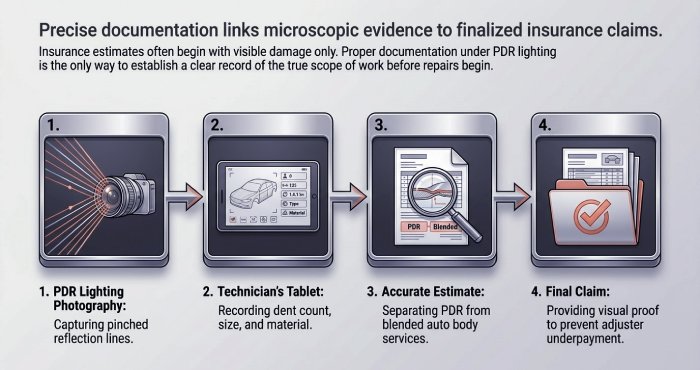
Proper documentation is the final inspection step before dent removal begins. A professional paintless dent repair technician records the number of dents per panel, categorizes dent size, notes aluminum versus steel panels, identifies any large dents or deep dent repair concerns, and flags areas where standard PDR access may be blocked. This documentation supports accurate PDR estimates, repair cost estimation, and hail damage claims.
Photos are usually taken under PDR lighting so the insurance adjuster can see the same hidden hail damage the technician sees. Some shops also create panel-by-panel diagrams and upload images to estimating systems. A reputable hail repair company will document whether the vehicle needs paintless dent removal only, limited auto body repair, or a blend of services.
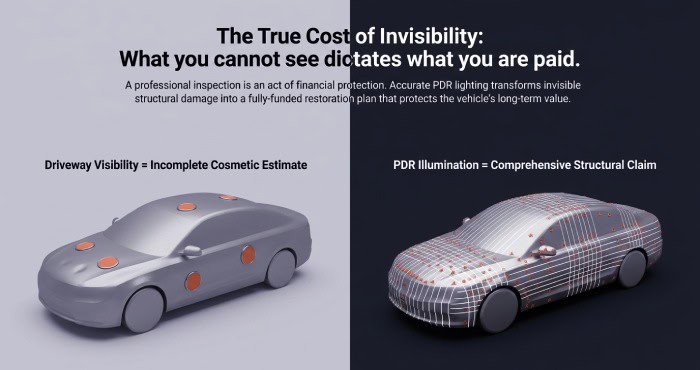
This level of detail matters because insurance estimates often begin with visible damage only. Once the vehicle is placed under lights, additional hail dent locations may be found. Accurate documentation helps prevent underpayment and ensures the repair process includes every damaged vehicle panel. It also protects the customer by creating a clear record of the auto hail repair scope before work begins.
The goal of hail damage repair is not just to remove the obvious dents; it is to restore vehicle appearance as completely as possible while preserving the original paint. With professional paintless dent repair and a careful inspection, technicians can identify hidden hail damage, restore affected panels, and preserve the vehicle’s original factory finish.