How Previous Restoration Work Affects Classic Car Dent Repair
Why Restoration History Matters Before Dent Repair
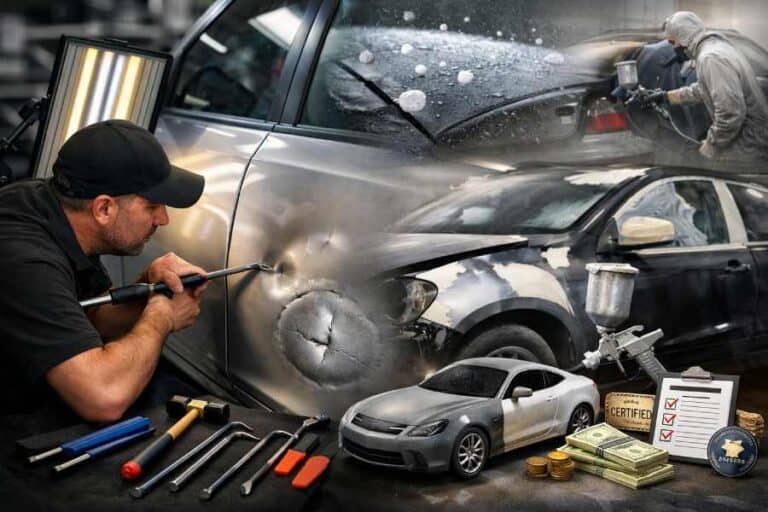
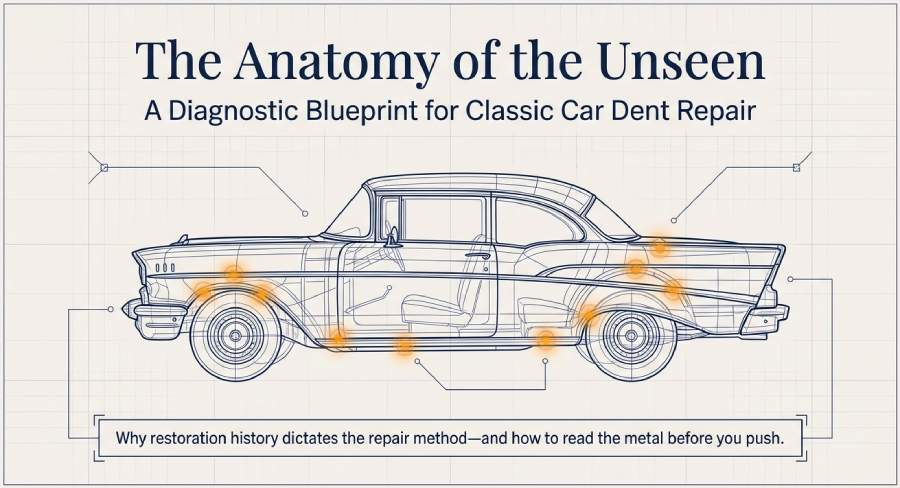
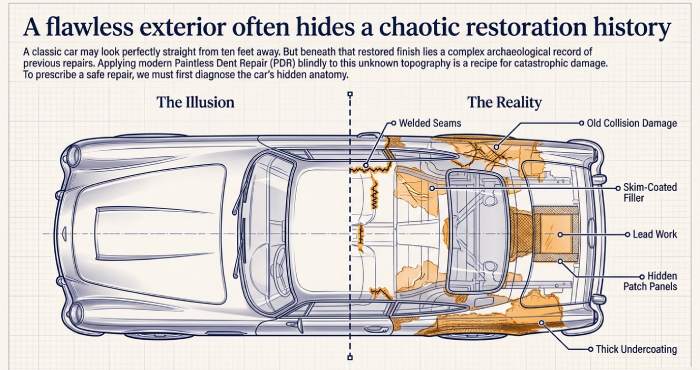
Previous restoration work can significantly affect the approach to classic car dent repair. A classic car may look straight from ten feet away, but beneath the restored finish there could be old collision damage, skim-coated filler, welded seams, lead work, undercoating, or hidden patch panels. That is why an experienced dent repair technician reviews the vehicle’s restoration history before determining whether paintless dent repair or another repair method is appropriate.
Classic car dent repair is different from repairing a late-model daily driver because old cars often have thick metal panels, hand-formed contours, and finishes that may not tolerate aggressive pressure. Across vintage Fords, Chevrolets, GMC trucks, Model A hot rods, and other custom classics, metal thickness, panel construction, and flexibility can vary significantly from one panel to another.
Restoration records can help determine whether paintless dent repair is a suitable option. If the vehicle has sound original steel and a stable finish that can tolerate controlled movement, PDR may be effective for appropriate dents. However, lacquer paint, brittle or cracked finishes, and thick layers of primer or previous coatings can increase the risk of paint damage during repair. A technician should also consider the owner’s goals, whether they want an inconspicuous repair or a more conservative approach that preserves patina, originality, or an older restoration.
How Paint Layers, Body Filler, and Primer Affect Repair Options
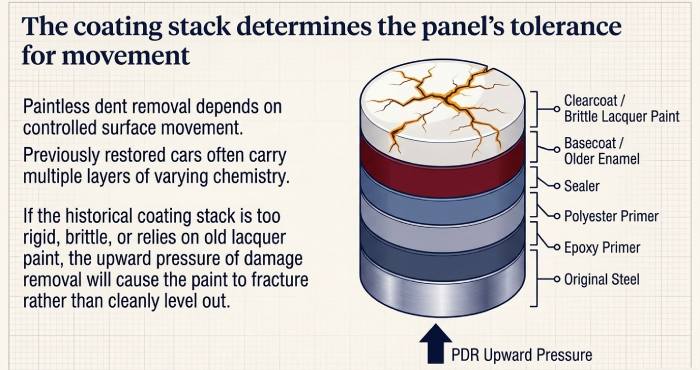
Paint thickness is one of the first concerns in classic car dent repair. A previously restored antique car may have multiple layers of epoxy primer, polyester primer, sealer, basecoat, clearcoat, older enamel, or lacquer paint. Each layer changes how the surface reacts when PDR tools are used behind a body panel dent. Paintless dent removal depends on controlled movement; if the coating stack is too rigid, damage removal may cause paint damage instead of clean surface leveling.
Body filler is another major variable. Filler can hide a low area, a crease along a body line, or uneven metalwork from an earlier classic car restoration. When pressure is applied behind a filled dent, the filler may crack, separate, or create a visible halo. This is why an auto body shop may use paint gauges, magnet tests, careful lighting, and panel tapping before choosing between paintless dent removal and conventional body panel repair.
High crown panels and low crown panels react differently under previous restoration materials. High crown panels, such as rounded fenders and upper quarter sections, usually have more natural strength and may respond well to PDR tools if the restored finish is stable. Low crown panels, such as door skins, roof sections, bedsides, or a classic truck tailgate, can oil-can or distort if stretched metal was never properly corrected. On low-crown panels, damage removal may require careful metal shaping, panel leveling, or controlled shrinking before final finishing.
Thick metal panels on old cars can be both helpful and difficult. The benefit is that thick metal panels often resist sharp distortion and may hold their shape better after careful manipulation. The downside is that thick metal panels can require more leverage, better panel access, and specialized pdr tools. If the panel has hidden filler, poor primer adhesion, or brittle paint, even careful paintless dent removal can become risky.
A previously restored finish also affects decisions about touch up, blending, and repainting. Minor damage removal may preserve the finish, but cracked paint or lifted primer may require an auto body shop to perform body panel repair instead of pure Paintless Dent Repair. In many cases, the best classic car dent repair plan combines paintless dent removal, traditional tools, and selective refinishing.
Challenges Caused by Prior Panel Replacement, Metalwork, Rust, and Structural Issues
Prior panel replacement can complicate classic car dent repair more than the dent itself. Replacement panels may have a different metal thickness than the original part, especially on an antique car that has received reproduction quarters, door skins, floors, or a rear body panel. Weld seams, brazed joints, lap repairs, and old metalwork can create hard spots that resist pdr tools and soft spots that move too easily.
A classic truck, for example, may have a replaced bedside, repaired classic truck tailgate, or hidden welds behind undercoating. A Classic Chevy or 1953 Chevy Truck may have patch panels near the lower fenders, cab corners, or tail light area. Tail light removal, emblem replacement, plastic piece removal, and removing screws and bolts may be necessary to improve panel access before damage removal begins. Without that access, paintless dent removal can be limited or impossible.
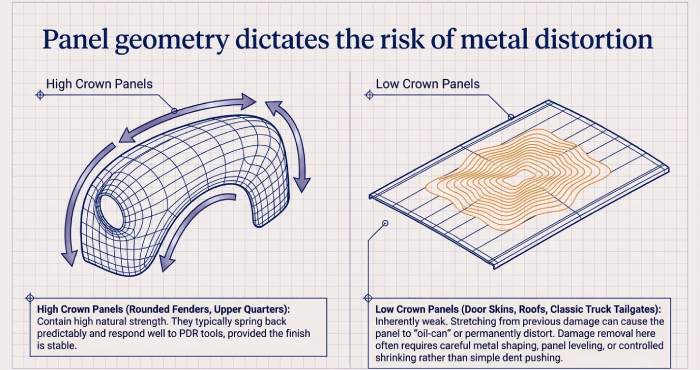
Metal shaping history matters as well. If a previous builder used a hammer and dolly, shrinking disk, proshaper shrinking disk, or torch shrinking to correct stretched steel, the panel may already be work-hardened. That affects metal pliability and changes how the dent responds. High crown panels may spring back predictably, while low crown panels may flex across a wider area and require surface leveling beyond the visible dent. A roof panel dent on a chopped custom or a Model A hot rod may need a different repair sequence than a small body panel dent on a factory fender.
Inspecting for Hidden Rust, Weak Metal, and Structural Issues
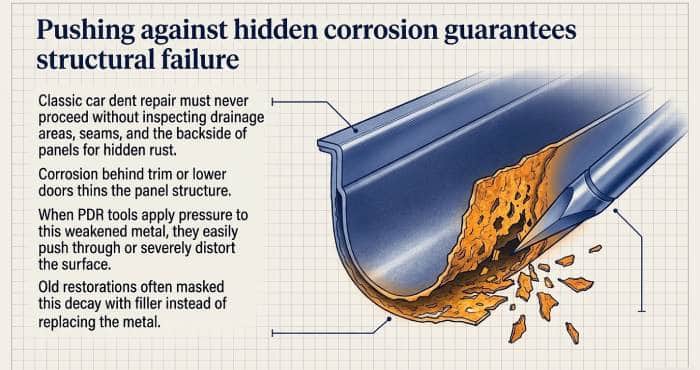
Before any damage removal begins, the technician should inspect for hidden rust, weak metal, and structural concerns. Rust behind trim, undercoating, lower doors, wheel openings, and the rear body panel can make classic car dent repair unpredictable. If corrosion has thinned the panel, PDR tools may push through weak metal or distort the surface. This is especially important on an antique car where previous restoration work may have covered rust with filler instead of replacing metal.
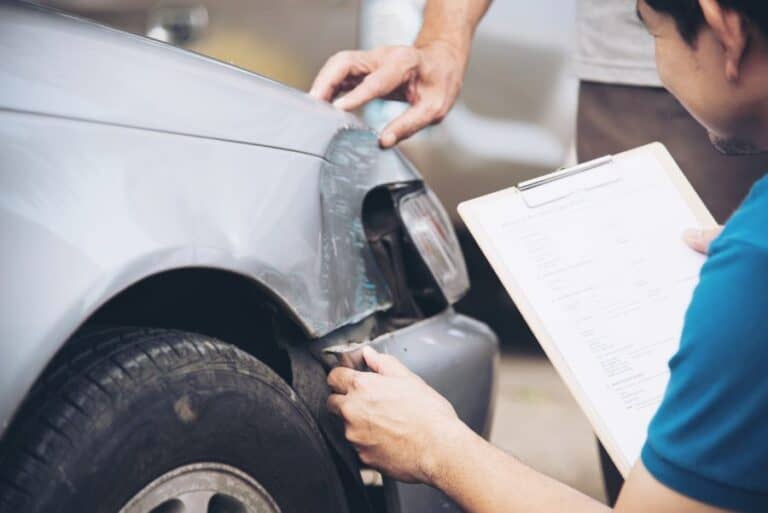
A professional auto body shop will often inspect the backside of the panel, check drainage areas, look behind the tail light, and evaluate seams before committing to paintless dent removal. On high crown panels, rust may be localized around mounting points or trim holes. On low crown panels, rust and stretched metal can combine to create broad waviness that requires body panel repair rather than simple dent pushing.
For a previously restored antique car, classic car dent repair should never be treated as a one-size-fits-all service. Thick metal panels, high crown panels, low crown panels, old lacquer paint, prior restoration materials, and hidden repairs all influence the safest path. A skilled auto body shop evaluates the complete history of the car before deciding whether paintless dent removal, traditional tools, or full body panel repair will deliver the best result.