Why Minor Dent Repair Requires More Precision Than You Might Expect
Why Small Dents Are More Complex Than They Appear
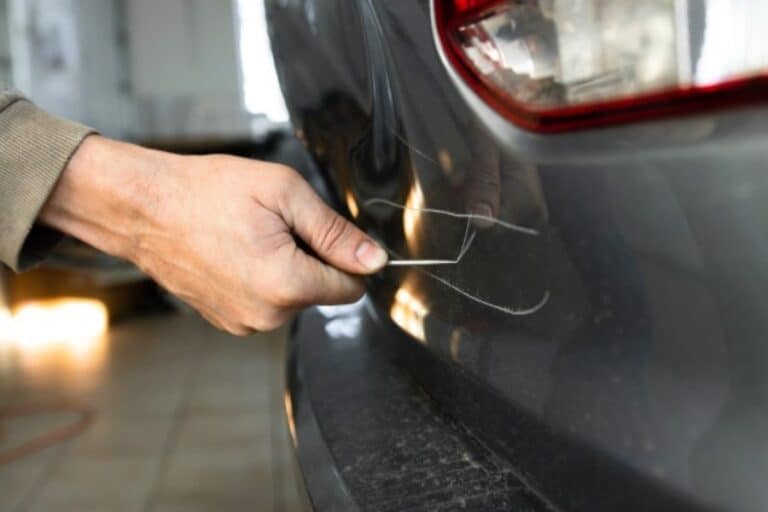
Minor dent repair can look deceptively simple from the outside: a small depression, a visible ding, a few minutes of work, and the panel appears restored. In reality, professional dent repair depends on reading metal movement, paint stress, panel tension, access points, and reflection distortion with extreme accuracy. Even ordinary door dings can involve stretched metal, pressure crowns, hidden high spots, or a subtle crease dent that changes the entire repair approach.
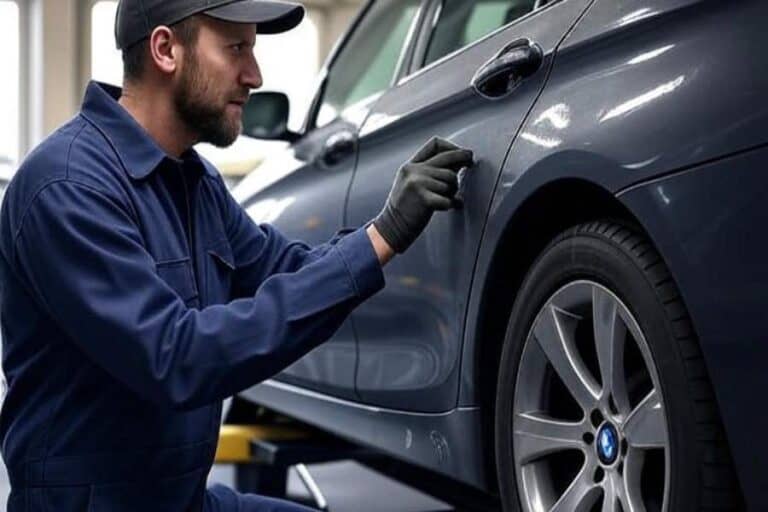
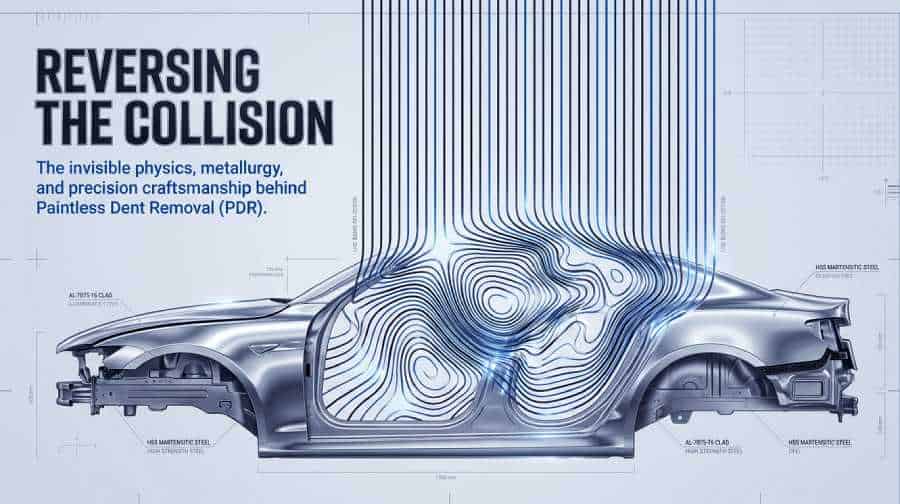
This is why car dent repair is not just about “popping out” a dent. True dent removal means returning the panel as closely as possible to its original shape without damaging the finish. In modern paintless dent removal, often called PDR, the technician works from behind or outside the panel using controlled pressure, glue pulling, tapping, and precision lighting. When done correctly, paintless dent removal can produce excellent car repair results with no filler and no paint required.
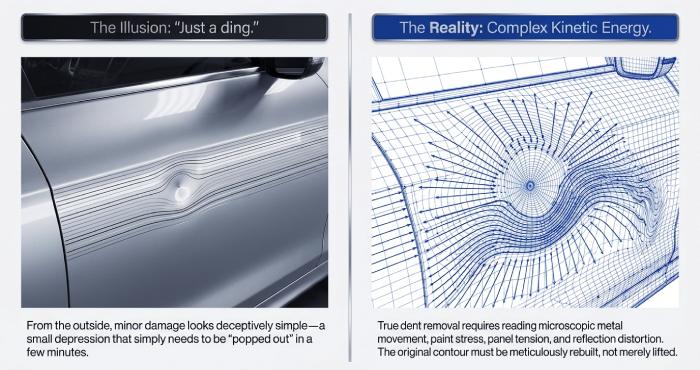
Small dings and dents are especially demanding because the defect may be shallow but highly visible under the right light. A door edge impact, trolley mark, or leasecar return dent can sit on a bodyline, near a front arch repair area, or across a curved fender. Bodyline dent repair and crease dent repair require more skill than a round dent on a flat panel because the original contour must be rebuilt, not merely lifted.
How Paint, Panel Shape, and Metal Memory Affect Repair Accuracy
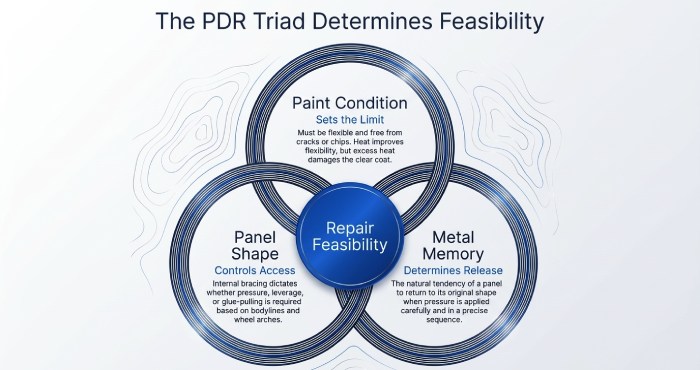
Paint Condition Sets the Repair Limit
Paintless dent removal works best when the original paint is intact, flexible, and free from cracks or chips. During a PDR assessment, technicians check for previous repainting, clear coat damage, sharp impact marks, and other issues that could affect the finish. When the paint can be preserved, paintless dent repair offers an effective way to remove minor dents while maintaining the vehicle’s factory appearance.
Panel Shape Controls Access and Pressure
Panel shape and internal structure determine which tools and techniques are suitable for dent removal. Fender dents, door dings, roof rail damage, and wheel arch dents may require different approaches depending on access, bracing, and bodyline positioning. Professional technicians select appropriate rods, glue tabs, pulling tools, and controlled leverage to restore the panel without causing additional damage.
Metal Memory Determines How the Dent Releases
Metal memory allows a vehicle panel to move toward its original shape when pressure is applied carefully and in the correct sequence. Technicians gradually lift low spots, release tension around creases, and use tap-down techniques to correct high spots and restore the surface. This controlled process is particularly important for bodyline dent repair and crease dent repair, where excessive pressure can stretch the metal and affect the final finish.
The Role of Lighting, Tools, and Technique in Precision Dent Removal
Reading the Dent With Line Boards and Reflection
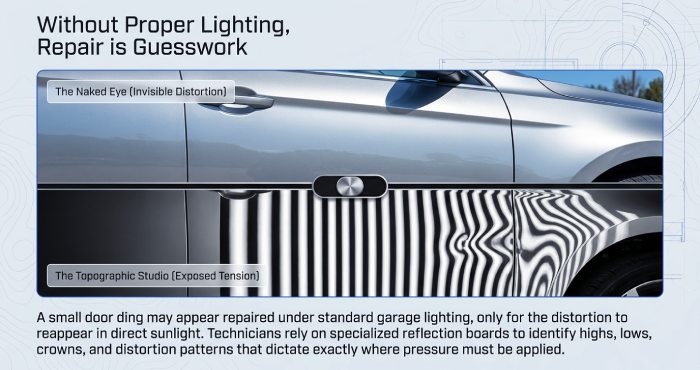
PDR technicians use specialist lights and reflection boards to identify highs, lows, crowns, and distortion patterns that may not be visible to the naked eye. These reflections help determine where pressure should be applied and when the repair is complete. Without proper lighting, dent removal can become guesswork. A small door ding may appear repaired under garage lighting but become visible again in direct sunlight. This is why professional minor dent repair requires careful inspection from multiple angles to achieve a smooth, consistent finish.
Choosing the Right Repair Tools for the Panel
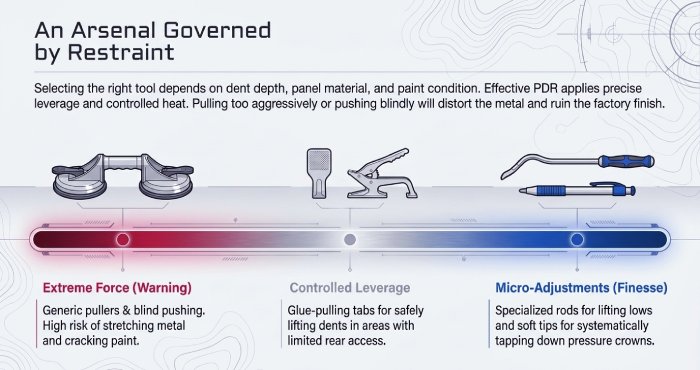
The right repair tools depend on the dent’s depth, panel material, accessibility, and paint condition. For car dent repair, technicians may use specialized rods, knockdowns, glue-pulling tabs, soft tips, dent pullers, and blending hammers. Each tool serves a specific purpose and requires controlled application. Pulling too aggressively can create high spots, distort the metal, or damage existing paintwork. Professional dent repair relies on selecting suitable tools and applying precise pressure rather than using excessive force.
Applying PDR Techniques Without Overworking the Metal
Effective PDR involves gradual adjustments rather than forceful movements. Technicians make small, controlled pushes and pulls to restore the panel’s original shape while maintaining its surface finish. Crease dent repair, deep dent removal, and bodyline dent repair may require alternating between lifting low areas and carefully reducing high spots. This detailed process helps prevent additional distortion and supports a smooth, natural-looking result.
Heat, Glue, and Leverage Need Restraint
Heat, glue, and leverage must be applied carefully during paintless dent removal. Controlled heat can improve paint flexibility, while glue pulling helps lift dents from panels with limited rear access. However, excessive heat can damage the clear coat, and aggressive pulling or incorrect leverage can create additional distortion. Precision dent removal requires technicians to understand when to push, pull, tap down, or stop to protect the paint and restore the panel correctly.
Common Mistakes That Can Turn Minor Dent Repair Into Major Bodywork
Mistake: Pulling Too Hard or Pushing Blind
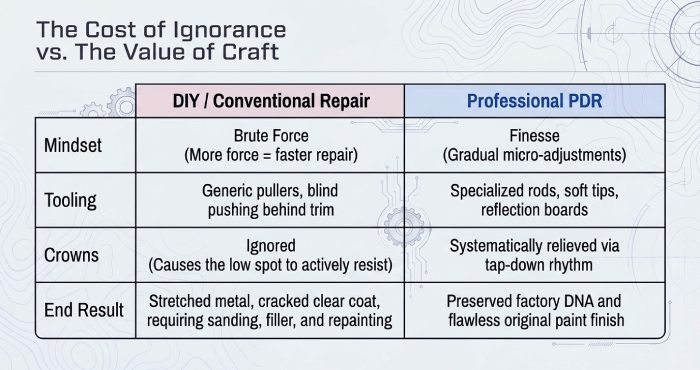
The most common mistake in DIY dent repair is assuming more force means faster repair. Pulling too hard with Amazon dent repair tools, pushing blindly from behind a trim panel, or using an unsuitable dent pulling tool can stretch metal, crack paint, or create raised spots. What began as minor dent repair can quickly become conventional car body repairs involving sanding, filler, primer, and repainting.
Another common mistake is ignoring the crowns around the dent. Many dings and dents are surrounded by displaced metal. If those crowns are not relieved, the low area will resist movement. This is especially true in bodyline dent repair, crease dent repair, car arch dent repair, and fender dent repair.
When to Choose Professional Minor Dent Repair Over DIY Fixes
Professional minor dent repair is recommended for dents on bodylines, sharp creases, panel edges, and valuable vehicles. It is also ideal for lease car returns and situations where preserving the original paint without filler or repainting is important. Complex damage usually requires an experienced technician.
Although basic DIY methods may work for simple dents, professional PDR delivers more reliable results for deep dents, large dents, and repeated door dings. The right technique restores the panel’s shape, protects the factory finish, and minimizes unnecessary bodywork.