10 Auto Body Dent Repair Myths That Could Cost You Time and Money
Misunderstandings about auto body dent repair can turn a simple cosmetic repair into a larger, more expensive problem. Drivers often delay dent removal, attempt unsafe DIY methods, or assume every dent requires repainting. In reality, modern paintless dent repair, also called PDR, can restore many panels without disturbing the factory finish—when the damage qualifies.
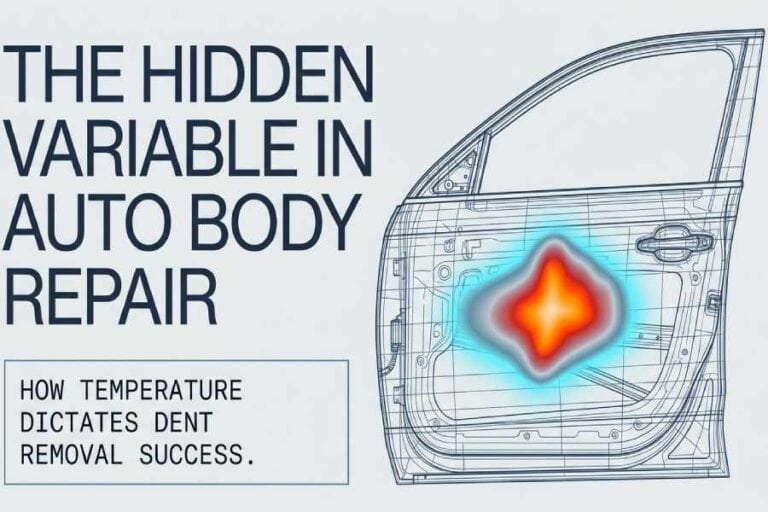
A reputable auto body shop should inspect the damage and explain whether paintless dent repair (PDR) or traditional body repair is the right solution. Understanding how temperature changes can affect vehicle panels can also help you make an informed repair decision.
Myths 1–2: Small Dents Don’t Need Repair and DIY Kits Work Just as Well as Professionals
Myth 1: Small dents are only cosmetic
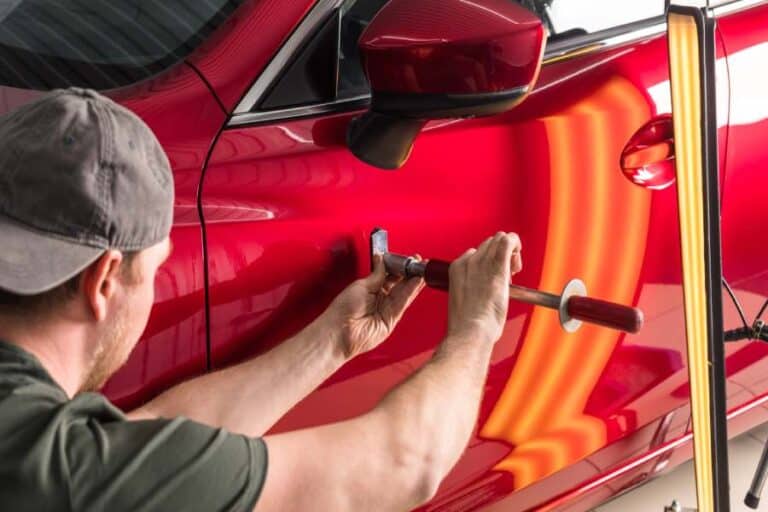
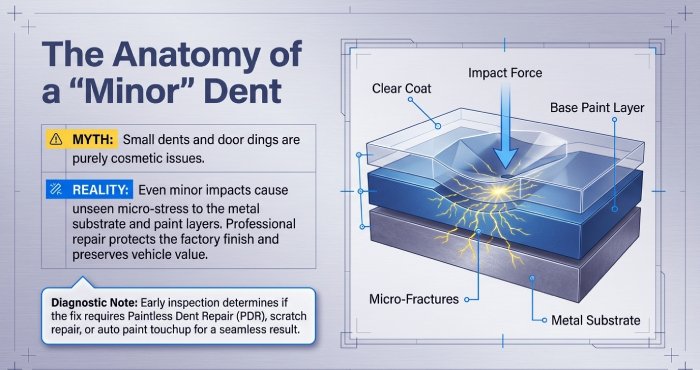
Even minor dents and door dings can damage paint and metal. Professional auto body dent repair helps protect the finish and vehicle value. When paint is intact, PDR offers a quick solution for door ding removal.
Why early inspection matters
A dent repair technician can determine whether PDR, scratch repair, or auto paint touchup is needed for a clean, seamless result.
Myth 2: DIY dent kits work just as well as professionals
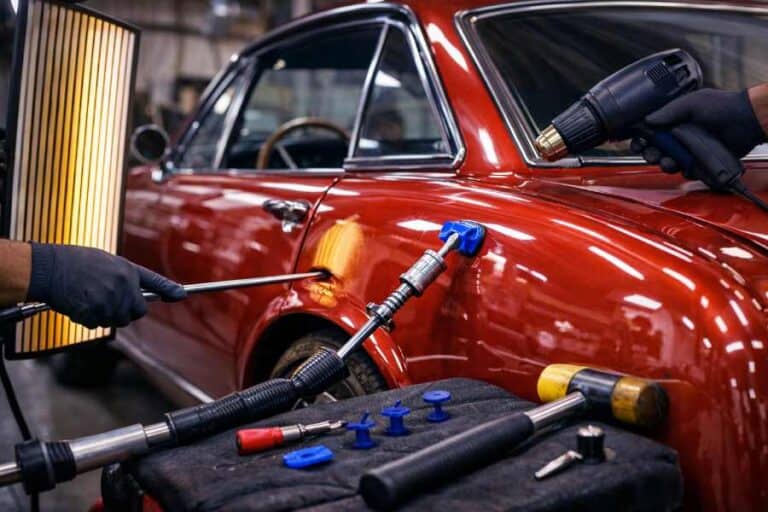
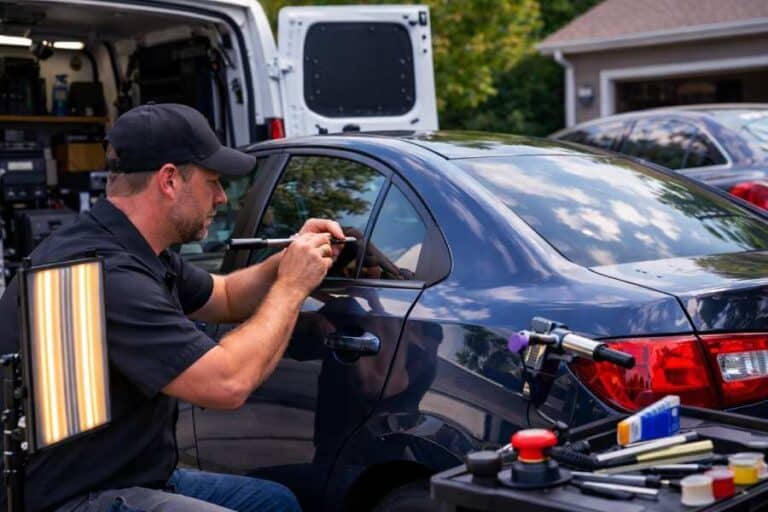
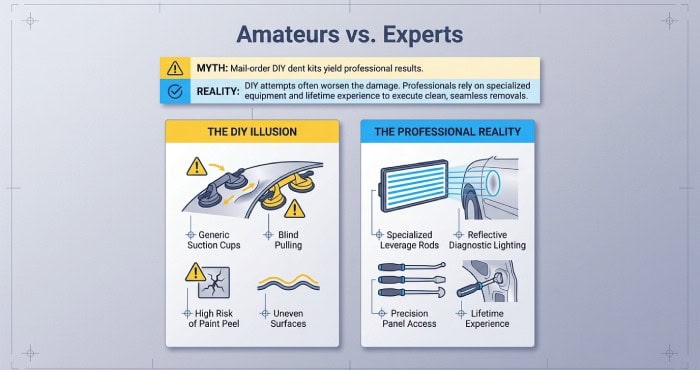
DIY dent repair kits may seem convenient, but they can worsen dents, damage paint, or leave uneven surfaces. Professional PDR technicians use specialized tools, proper lighting, panel access, and experience to achieve better results. They can also determine whether paintless dent repair is suitable or if traditional auto body repair, scratch repair, auto paint touchup, windshield chip repair, or headlight restoration is needed.
Myths 3–5: Paintless Dent Repair Is Always Possible, Insurance Won’t Cover Dents, and Repairs Always Take Days
The truth about PDR, coverage, and repair time
Paintless dent repair is excellent, but it is not magic. PDR works best when the paint is intact, the metal is not overstretched, and the technician can access the backside of the panel. Severe creases, sharp impacts, and dents near panel edges may require conventional auto body dent repair, scratch repair, auto paint touchup, or repainting.
For a broader industry perspective, many drivers research Paintless Dent Repair before deciding whether PDR, repainting, or full auto body repair is appropriate.
Myth 3: Paintless dent repair is always possible
While paintless dent repair and PDR are preferred for many minor dents, they are not always the correct method. If there is cracking, chipped paint, or deep distortion, a technician may recommend paint matching, refinishing, or more advanced bodywork.
Myth 4: Insurance never covers dents
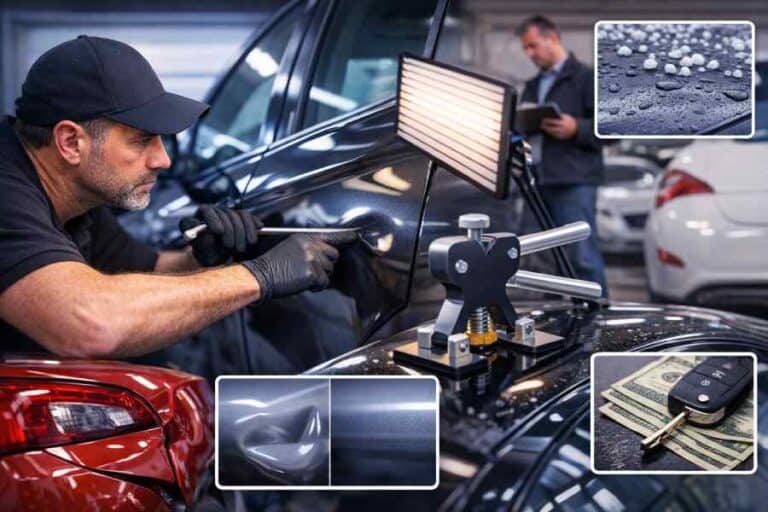
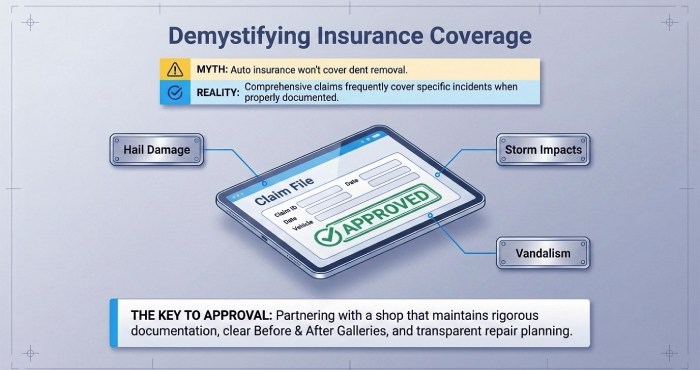
Many insurance claims do cover hail damage repair, storm damage, vandalism, or dents from covered incidents. Because hail damage repair can involve dozens of impacts across the hood, roof, and trunk, documentation matters. A shop with a Before and After Gallery, before and after photos, and a clear Review Section can support the claims process.
Myth 5: Dent repairs always take days
Not every repair requires a long shop stay. Many door dings, small dents, and PDR jobs can be completed with same-day service or a fast turnaround. Some providers offer a Quick Quote, quick quote, or free estimate so you understand timing and price before scheduling vehicle service.
Myths 6–8: All Dent Repair Shops Are the Same, Cheap Repairs Save Money, and Repainting Is Always Required
Quality, equipment, and repair planning matter
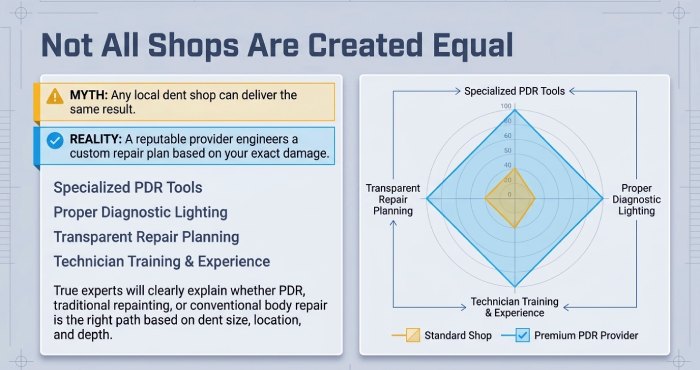
Not all dent repair shops provide the same level of service. A reputable provider will inspect the damage, explain your repair options, and recommend the most appropriate solution based on the condition of the vehicle. In Las Vegas, this may include paintless dent repair (PDR) for suitable dents or traditional body repair when the damage is more severe.
Myth 6: All dent repair shops are the same
An experienced auto body shop uses proper lighting, specialised tools, and trained technicians to assess and repair vehicle damage. A reputable dent repair provider should clearly explain whether paintless dent repair (PDR), repainting, or conventional body repair is appropriate for the damage. This helps vehicle owners choose a repair method based on the dent’s size, location, depth, and paint condition.
Myth 7: Cheap repairs always save money
The lowest quote is not always the most affordable option in the long run. Poor dent removal can leave ripples, damaged paint, mismatched color, or visible filler that may require additional repairs. Instead of choosing a shop based solely on price, compare the repair cost, technician experience, warranty, and quality of previous work.
Myth 8: Repainting is always required
Many dents do not need repainting. If the factory finish is undamaged, paintless dent repair may restore the panel without color blending or refinishing. However, when scratches are present, scratch repair, auto paint touchup, and touchup paint may be necessary. Advanced paint matching helps keep repaired areas consistent with the surrounding finish.
Myths 9–10 and Conclusion: Dents Don’t Affect Resale Value, You Can Wait to Fix Them, and How to Choose the Right Repair Option
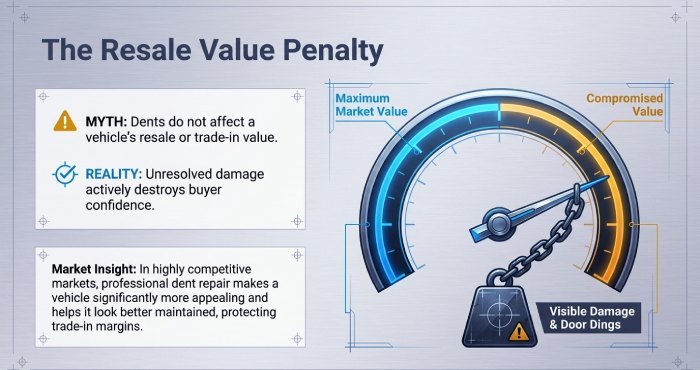
Myth 9: Dents do not affect resale value
Dents and door dings can reduce a vehicle’s visual appeal and may affect buyer confidence when it is time to sell or trade it in. Professional auto body dent repair can restore the panel’s appearance and help the vehicle look better maintained. In competitive markets such as Las Vegas, properly completed dent repairs can make a vehicle more appealing to potential buyers.
Myth 10: You can wait to fix dents
Waiting can increase repair complexity. A small dent with cracked paint may become corrosion. A windshield chip may spread into a larger crack. Unrepaired hail damage repair needs may reduce trade-in value. Even simple door dings can become harder to correct if the panel is later damaged again.
How to choose the right repair option
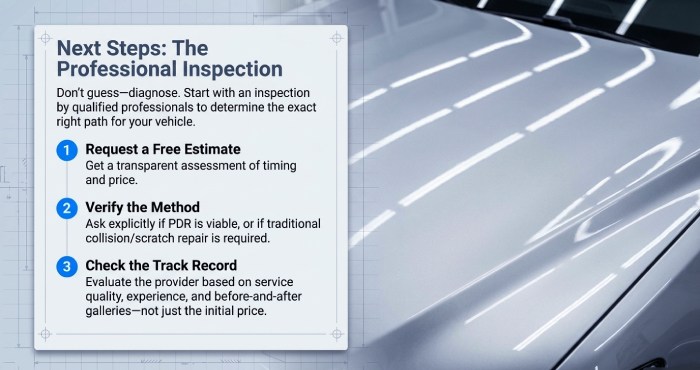
Begin with an inspection by qualified dent repair professionals to determine the most appropriate solution for your vehicle. Ask whether the damage requires PDR, conventional auto body dent repair, car dent removal, scratch repair, auto paint touch-up, windshield chip repair, headlight restoration, or collision repair. Request a free estimate, examine before-and-after photos of previous work, and evaluate the provider based on service quality, experience, and results—not just the price.