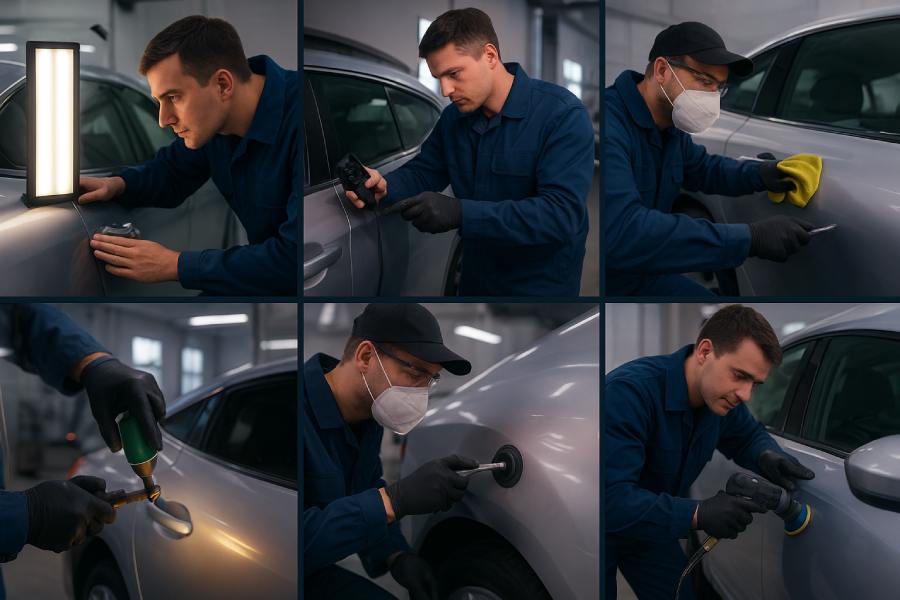
9 Steps To A Flawless Car Dent Repair By Professionals
Managing dents on your vehicle can be annoying, whether they result from small collisions, parking errors, or unexpected hits. Although attempting to fix them yourself might be appealing, turning to professionals guarantees a pristine result that preserves your car’s look and worth. This guide outlines nine crucial steps for achieving impeccable dent repair by specialists.
Understanding Professional Dent Repair
Prior to embarking on the repair process, it’s essential to recognize the importance of professional services. Skilled technicians utilize advanced tools, methods, and knowledge to rejuvenate your vehicle’s exterior while safeguarding the original paint and finish. In contrast to do-it-yourself approaches, professional repairs reduce the likelihood of irreversible damage and help retain your car’s resale value.
Step 1: Initial Inspection and Assessment
The initial phase of professional dent repair involves a thorough assessment. Professionals evaluate the following factors:
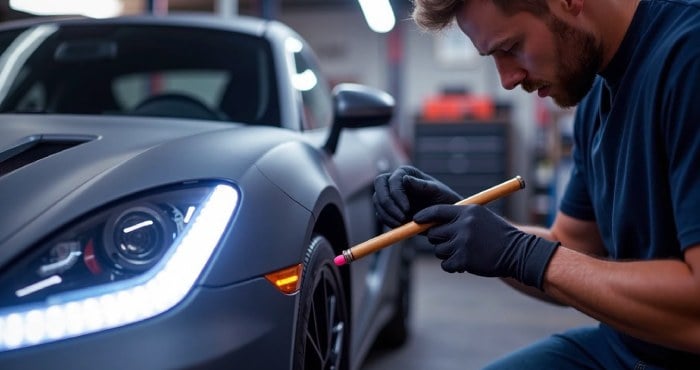
- Size and depth of the dent: Minor dents could be suitable for paintless repair, whereas more pronounced dents may necessitate filling and repainting.
- Condition of the paint: Any scratches or fractures in the paint can affect the chosen repair technique.
- Dent location: Dents situated in curved or less visible areas might need specialized equipment for effective repair.
Tools Used During Inspection
Technicians frequently rely on various instruments, including:
- Dent inspection lights: These specialized lights illuminate dents and flaws, aiding in precise evaluation.
- Magnifying lenses: These tools provide an enlarged view of surfaces, making it easier to inspect minor scratches and small damages.
- Paint thickness gauges: Instruments that assess the paint thickness on a vehicle, ensuring both quality control and repair readiness.
These tools guarantee a thorough evaluation prior to commencing any repairs.
Step 2: Selecting the Repair Method
Expert dent repair entails selecting the right approach:
- Paintless Dent Repair (PDR): Best suited for minor dents where the paint remains unchanged.
- Traditional Dent Repair: Necessary for more severe dents with paint issues, utilizing fillers and repainting.
The technique is determined by the assessment findings, guaranteeing the best restoration with as little disruption as possible.
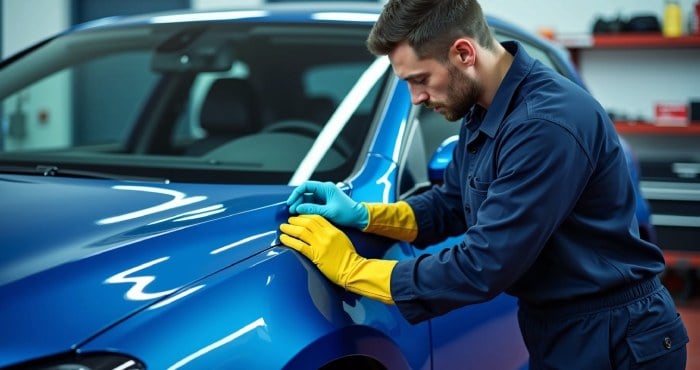
Step 3: Preparing the Work Area
Prior to commencing repairs, it’s essential to set up the workspace. Experts thoroughly cleanse the damaged area to eliminate any dirt, wax, and debris. This preparation guarantees:
- Enhanced visibility of any dents
- Lower chances of contamination during the repair process
- Better bonding for any fillers or paint applied.
Safety Precautions
Technicians use gloves, masks, and goggles for safety, especially during sanding or when working with chemical fillers. Adequate ventilation is essential to avoid breathing in any harmful fumes.
Step 4: Accessing the Dent
Gaining access to the dent is essential, particularly in paintless dent repairs. The approach taken varies based on where the dent is located:
- Panels might need to be detached to allow easier access.
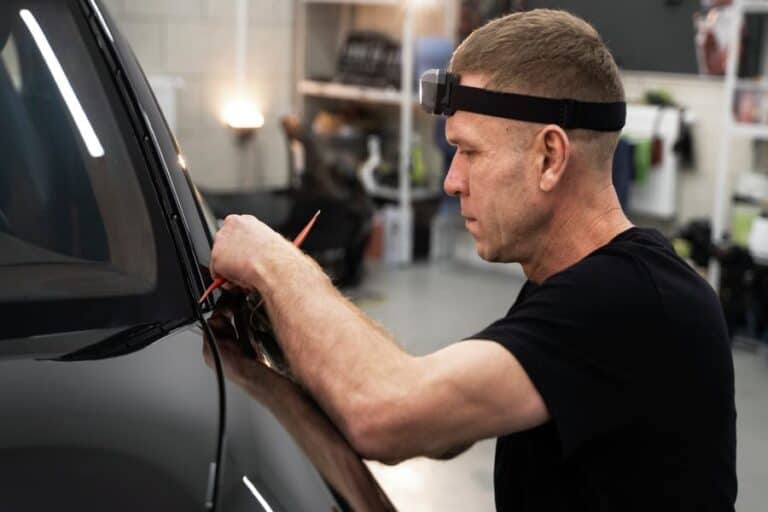
- Specialized tools or flexible rods can be used from behind the panel to target the dent.
- Occasionally, adhesive tabs are applied from the outside to help yank the dent out.
This method guarantees accurate management of the dent removal procedure.
Step 5: Dent Removal
1. Paintless Dent Repair Process
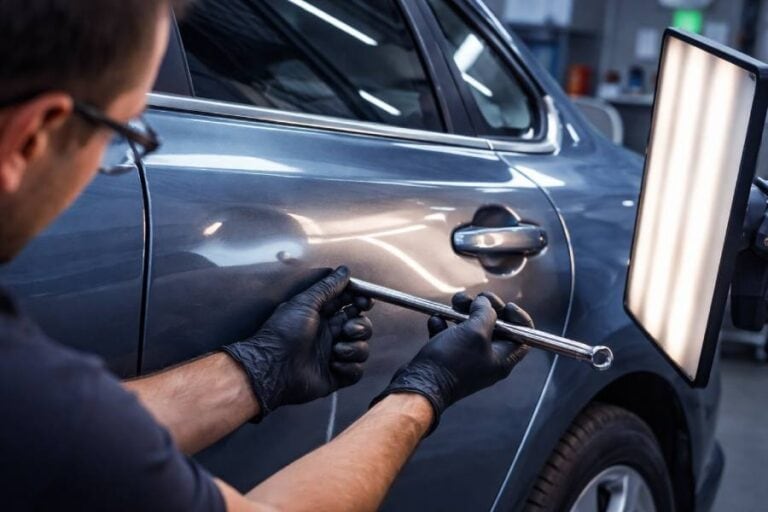
- For small dents that don’t harm the paint, Paintless Dent Repair (PDR) is the typical method used. The technician carefully manipulates the dent using specialized tools to restore its original shape.
- This technique requires gradual tweaks to prevent excessive adjustments.
- A light source is utilized to ensure the surface remains smooth and level.
Advantages of PDR
- Preserves the original paintwork
- Fast service
- Budget-friendly for minor dents
2. Traditional Dent Repair Process
When the paint is compromised or the dent is significant:
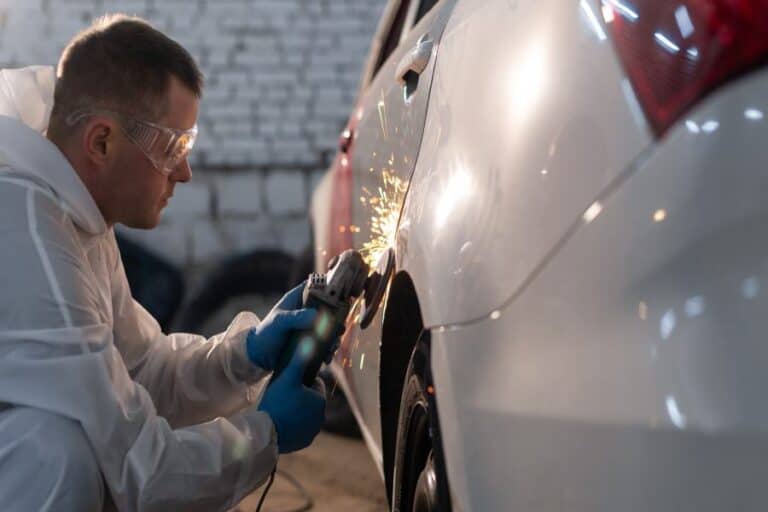
- The affected portion is sanded down and thoroughly cleaned.
- A body filler is then used to recreate the panel’s original contour.
- Once it sets, the filler is smoothed out to blend seamlessly with the adjoining area.
Tips for Smooth Filler Application
- Spread in delicate layers to avoid cracking.
- Utilize flexible sanding tools for smooth shaping.
- Merge the filler edges with the existing panel for a flawless finish.
Step 6: Priming and Painting
Once the dent has been fixed, the restored area is readied for painting.
- A primer is used first to enhance the bond of the paint and safeguard the metal underneath.
- A top-notch automotive paint is matched to the vehicle’s original color.
- Several coats of paint are then applied, concluding with a clear finish for shine and added protection.
Ensuring Color Match
Professional repair shops employ digital color-matching technology to ensure that the repaired sections blend seamlessly with the original paint.

Step 7: Curing and Drying
Effective curing is essential for achieving lasting durability in paint and filler projects. The materials must cure in regulated temperature and humidity settings to ensure they harden correctly and retain their quality over time.
While infrared lamps can expedite drying, it’s important to use them in a manner that maintains the finish’s quality. Hurrying the drying can lead to issues like cracks, bubbles, or an uneven texture, so it’s crucial to invest the necessary time and care for a perfect result.
Step 8: Polishing and Buffing
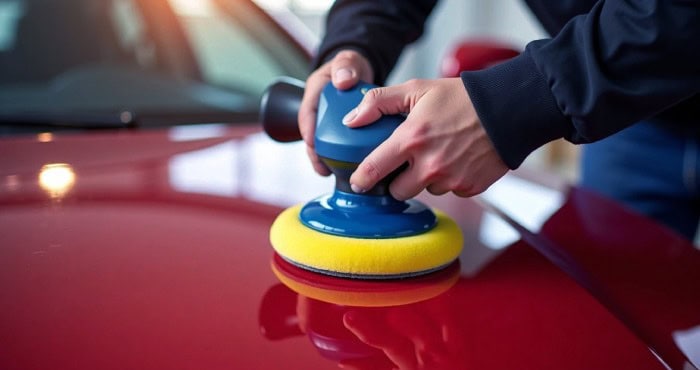
After the paint has completely cured, the last touches are added. The surface is polished to eliminate any small flaws or cloudiness.
- Buffing improves the luster and guarantees a seamless blend between the repaired section and the original finish.
- This process brings back the vehicle’s original glossy appearance.
Professional Polishing Techniques
- Polishers with dual-action for consistent pressure
- Microfiber fabrics to avoid scratches
- Polishing compound designed to address light swirl marks
Step 9: Final Inspection and Quality Check
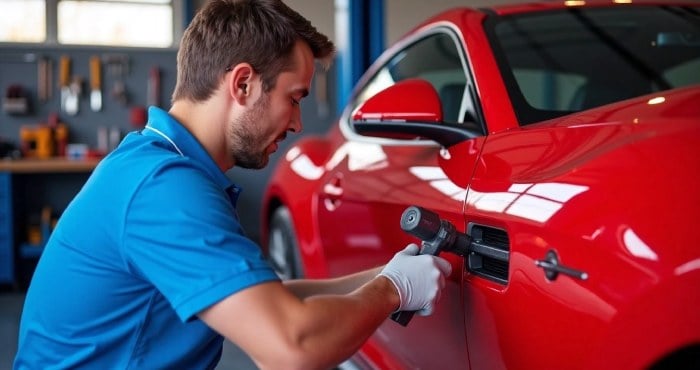
The final phase ensures that the repair aligns with industry standards. Technicians systematically examine the surface under various lighting conditions to spot any flaws. They evaluate smoothness, color uniformity, and alignment to ensure the repair integrates flawlessly with the vehicle’s overall look. Many auto shops also provide a warranty for dent repairs, giving car owners extra assurance and comfort.
Professional car dent restoration requires skill, patience, and precision to return your vehicle to its original condition. Trusting experts ensures a flawless, long-lasting finish that preserves both appearance and resale value.