How Minor Dent Repair Helps Preserve Your Vehicle’s Factory Finish
Minor dent repair is the process of correcting shallow, localized damage on a vehicle exterior without unnecessary sanding, repainting, or panel replacement. It is most commonly used for dings and dents caused by a parking lot ding, door ding, light hail damage, shopping carts, or low-speed contact that leaves the paint intact.
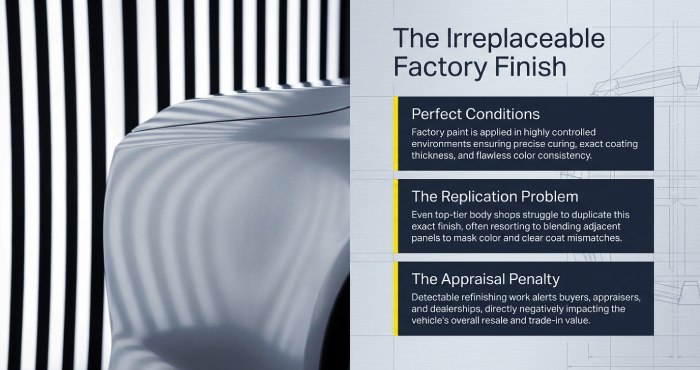
The main reason minor dent repair matters is simple: your vehicle’s original finish is difficult to duplicate. Factory paint is applied in controlled conditions with precise curing, coating thickness, and color consistency. Once a car panel is sanded and repainted, even an excellent body shop may have to blend adjacent panels to match the color and clear coat. That can affect car value, especially when a buyer, appraiser, or dealership detects refinishing work.
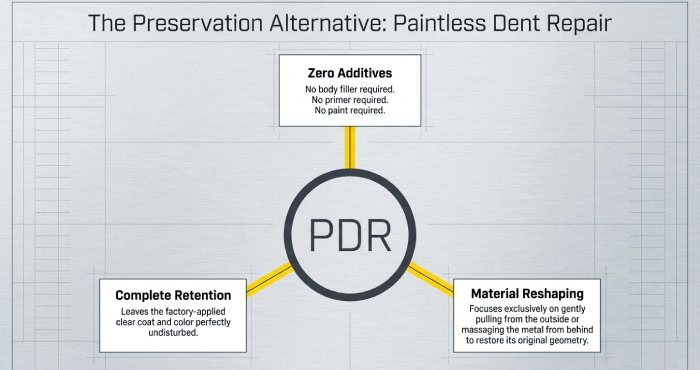
Minor dent repair is also different from traditional collision repair. A typical auto body repair may involve grinding, body filler, primer, paint, and clear coat. By contrast, paintless dent repair and paintless dent removal focus on reshaping the metal from behind or gently pulling it from the outside. In many cases, there is no paint required and no filler required, which makes it a cost-effective dent repair option for owners who want a quick repair with factory-quality results.
How Paintless Dent Repair Protects Original Paint and Clear Coat
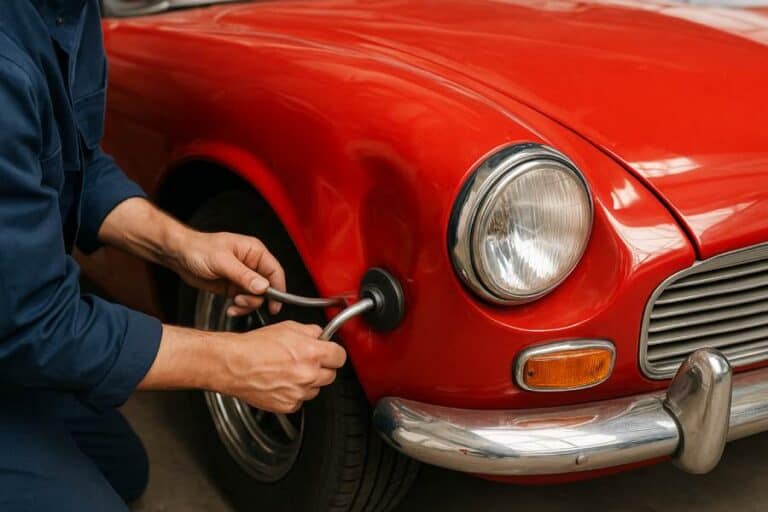
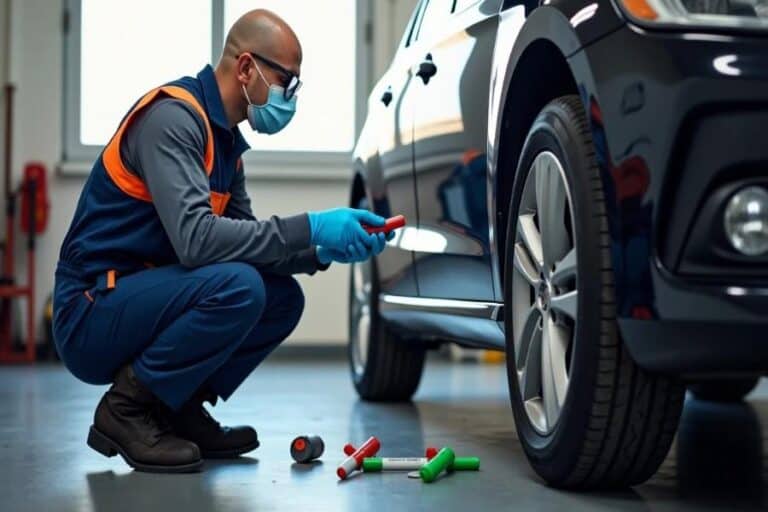
Paintless Dent Repair (PDR) protects the original paint by working with the existing finish instead of replacing it. A trained paintless dent technician uses specialized dent repair tools to massage the underside of the car panel or uses controlled pulling methods on the outside surface. The goal is to eliminate dents while maintaining the original finish.
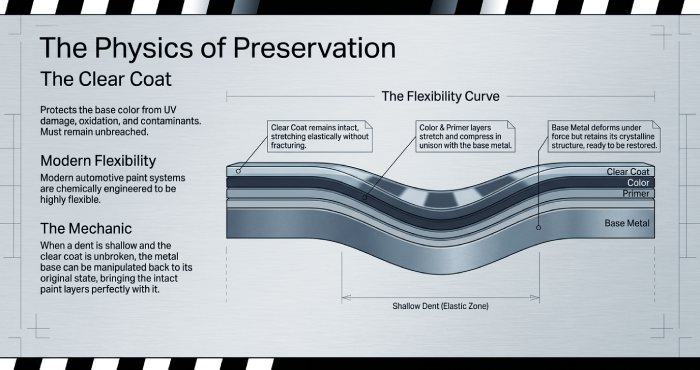
Paintless dent repair is effective because modern automotive paint systems are flexible. When a car dent is shallow and the clear coat remains intact, the metal can often be returned to shape without disturbing the painted surface. This makes paintless dent removal a long-lasting solution for many dings and dents that would otherwise send a driver to a body shop for sanding and repainting.
How Technicians Access the Dent
A repair specialist may access the back side of a dent through door openings, trunk areas, wheel wells, hood bracing, or interior trim gaps. Using precision dent repair tools, the technician applies small, controlled pushes to raise the low area. This type of auto dent removal requires lighting, experience, and patience because the technician must read the reflection on the panel and restore the surface gradually.
Push Tools, Pulling Tabs, and Reflection Boards
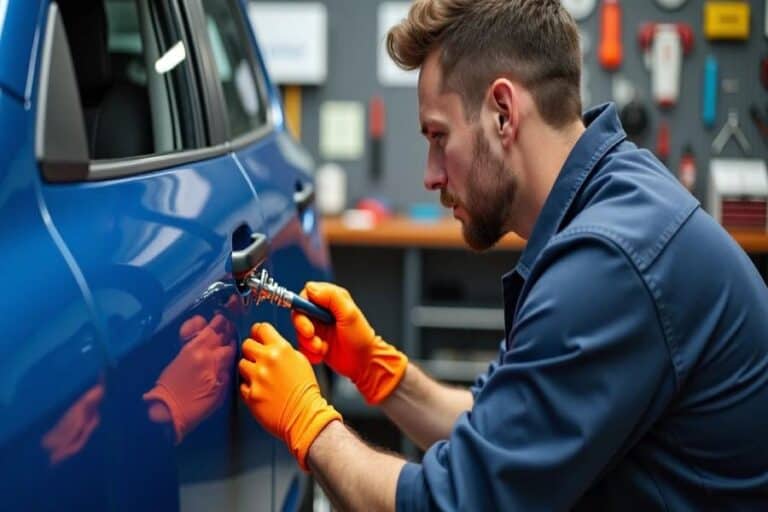
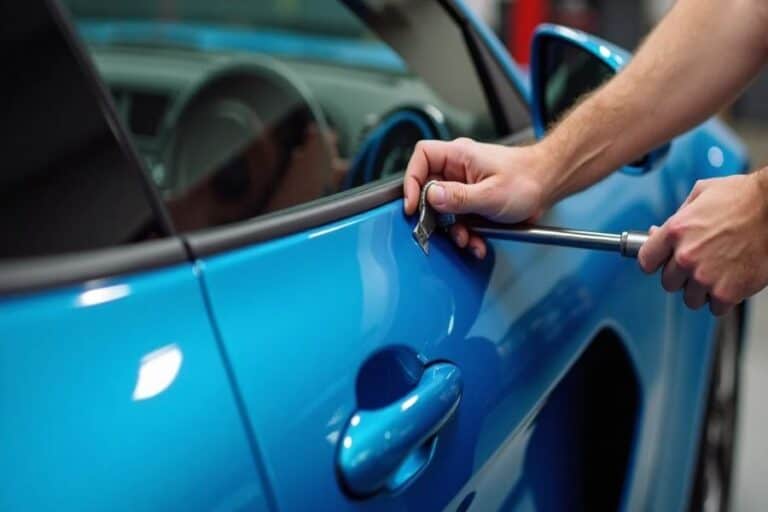
Common dent repair tools include metal rods, soft tips, knockdowns, tap-down tools, glue tabs, and LED reflection boards. A dent puller or hot glue dent repair setup may be used when rear access is limited. Unlike aggressive DIY dent repair methods, professional mobile dent repair uses controlled force to avoid high spots, cracked paint, or uneven texture.
Why Clear Coat Preservation Matters
The clear coat protects the base color from UV damage, oxidation, and contaminants. When paintless dent repair works properly, the clear coat remains undisturbed. That is why paintless dent removal is often preferred over traditional body shop refinishing for small car dent repair, door ding correction, and minor auto dent removal.
Common Types of Minor Dents That Can Be Repaired Without Repainting
Many everyday dents, including hail damage, door dings, parking lot dings, and other minor impact dents, can often be repaired with paintless dent repair if the paint remains intact. Small dents on hoods, doors, fenders, quarter panels, and roof rails are also commonly repairable, often with the convenience of mobile dent repair.
Dings, Dents, Creases, and Body Lines
Dings and dents vary in depth, diameter, and location. A shallow round dent is generally easier to correct than crease dent repair, where the metal has been pushed along a line. Body line dent repair is more technical because the factory crease or styling line must be rebuilt precisely.
Hail Damage and Auto Hail Repair
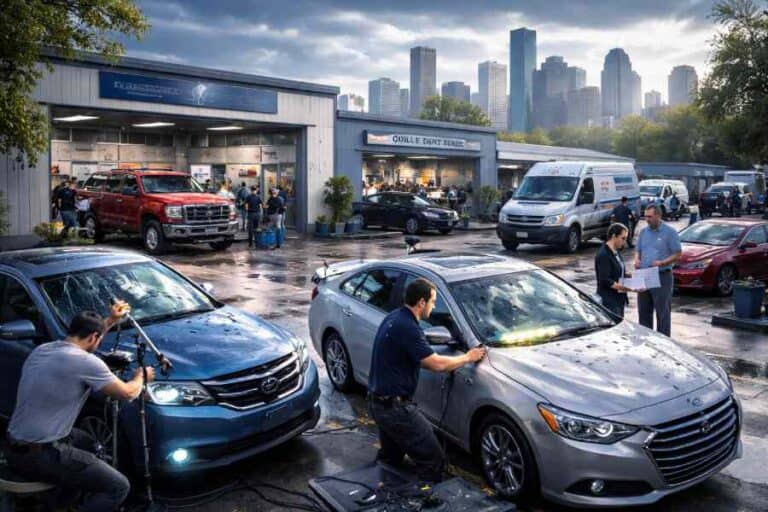
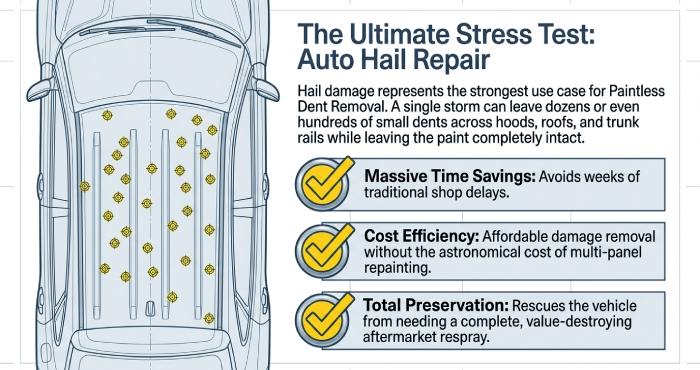
Auto hail repair is one of the strongest use cases for paintless dent removal. After hail damage, a vehicle may have dozens or even hundreds of small dents while the paint remains intact. In that situation, paintless dent repair offers time savings, damage removal, and affordable dent repair without repainting multiple panels.
When a Dent May Be Too Severe
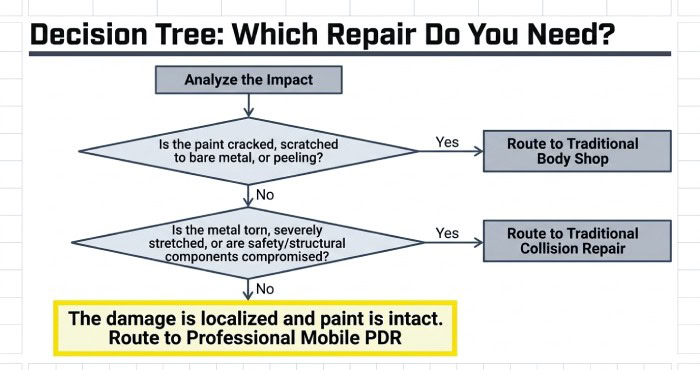
Deep dent repair may still be possible with PDR, but not always. If paint is cracked, metal is severely stretched, or the impact damaged structural components, a body shop may be necessary. Traditional collision repair may also be required when the vehicle exterior has torn metal, broken trim, or compromised safety systems.
The Value Benefits of Preserving OEM Paint for Resale and Longevity
- Preserves Vehicle Value: Keeping the original OEM paint helps maintain resale and trade-in value by preserving the factory finish.
- Builds Buyer Confidence: Vehicles repaired with paintless dent repair avoid repainting, overspray, and body filler, giving buyers greater confidence.
- Protects Factory Finish: Minor dent repair removes dents while keeping the original paint intact, making it ideal for leased, newer, and collectible vehicles.
- Enhances Appearance: Repairing small dents and dings gives the car a well-maintained look and prevents it from appearing neglected.
- Saves Time and Hassle: Mobile paintless dent repair offers convenient, on-site service with less downtime and often eliminates the need for a rental car.
When to Choose Professional Minor Dent Repair Over Traditional Bodywork
Choose professional minor dent repair when the paint is intact, the dent is accessible, and the goal is to preserve the original finish. A qualified repair specialist can inspect the car dent, explain whether paintless dent repair is appropriate, and recommend the best approach for the car panel.
Professional auto dent removal is usually the right choice for dings and dents from doors, carts, hail, and minor impacts. It is also ideal when you want affordable dent repair, a quick repair, and no unnecessary refinishing. Mobile dent repair is particularly convenient because on-site repairs allow the technician to complete small car dent repair at your home, office, or dealership.
Traditional body shop repair becomes the better option when the damage includes torn paint, rust, deep metal stretching, or collision-related structural issues. In those cases, body filler, sanding, repainting, or panel replacement may be unavoidable. However, for many cosmetic dents, paintless dent removal offers a cleaner and more preservation-focused alternative.