How PDR Technicians Decide If a Dent Can Be Repaired Without Paint
What Paintless Dent Repair Is and When It’s Considered
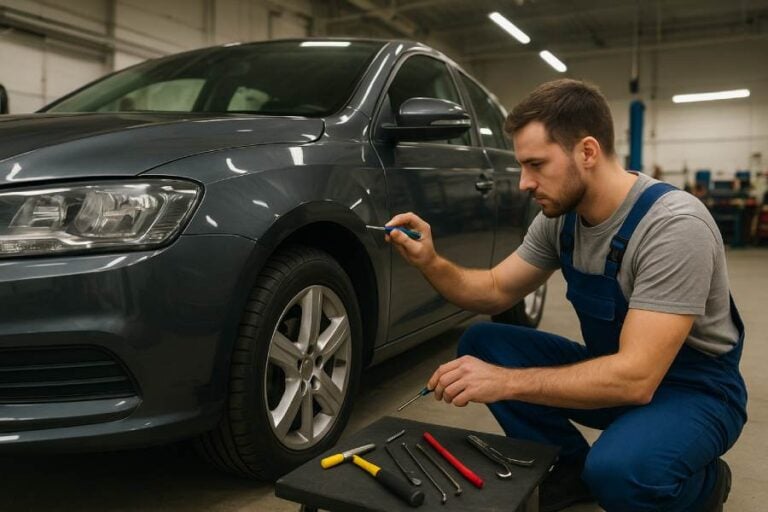
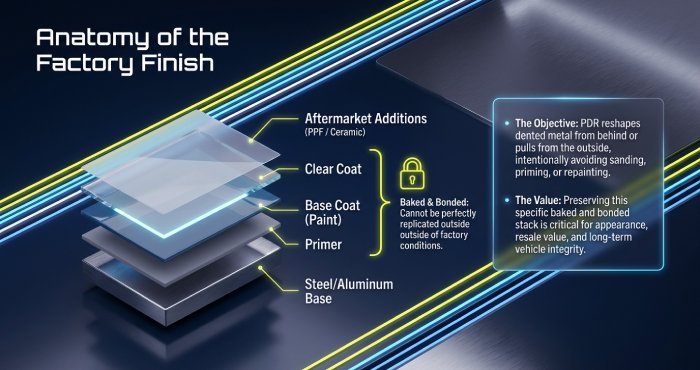
Paintless dent repair is a specialized method for reshaping dented metal or certain flexible panels without sanding, body filler, priming, or repainting. Also called PDR or paintless dent removal, it is most often used for minor dents, parking-lot dings, hail damage, and shallow impact marks where the car paint remains intact. The goal is to restore the panel while preserving the factory finish, which is important for appearance, resale value, and long-term value preservation.
For drivers comparing options, Paintless Dent Repair is often considered when the damage has not cracked the paint, stretched the metal too severely, or compromised the panel structure. Technicians may also recommend dent repair without paint when the dent is accessible and the original car paint can be saved.
Why PDR Protects the Factory Finish
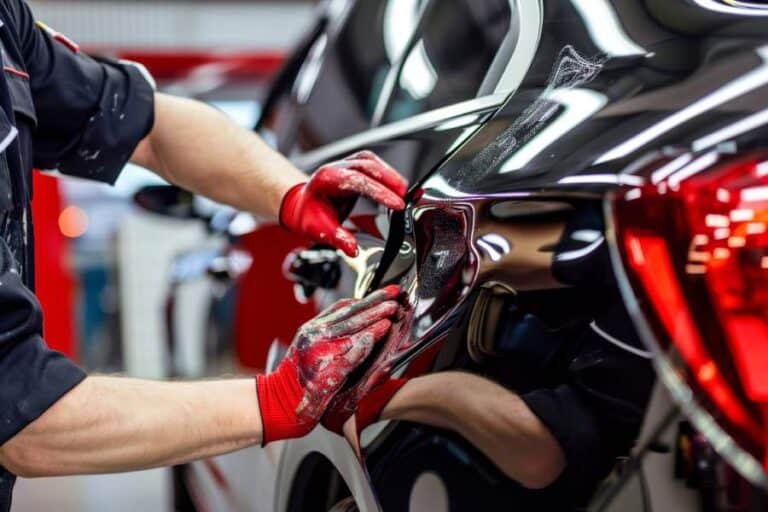
A major advantage of paintless dent repair is that it protects the factory finish. Factory-applied car paint is baked and bonded under controlled conditions, making it difficult to duplicate perfectly in a body shop. Traditional dent repair often requires sanding, repainting, blending adjacent panels, and applying body filler. By contrast, PDR and paintless dent removal focus on moving the metal back into shape from behind or pulling it from the outside.
Common Cases Where PDR Works Well
Paintless dent repair is commonly used for minor dents and dings caused by shopping carts, car doors, hail, or low-speed contact. A small ding repair on a Toyota door near the Mall at Millenia, for example, may be an ideal PDR candidate if the car paint is not cracked. Paintless dent removal is also useful during car reconditioning, lease returns, and pre-sale auto detailing because it improves appearance without repainting.
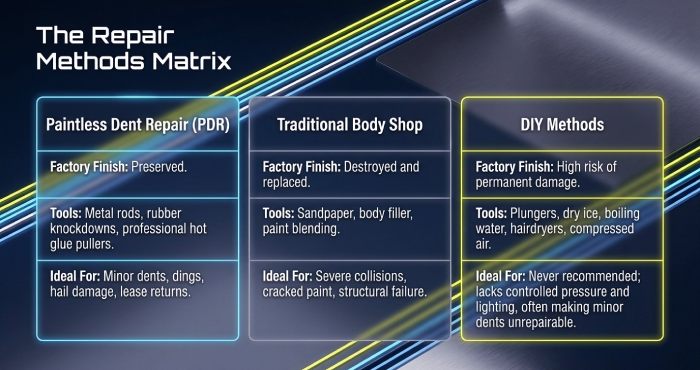
However, PDR is not the same as DIY dent repair. While YouTube videos may promote plunger dent removal, the dry ice method, the boiling water method, hairdryer dent repair, or the compressed air method, a certified technician uses professional tools, lighting, training, and controlled pressure to avoid making minor dents worse.
Inspecting Paint Condition, Cracks, and Surface Damage
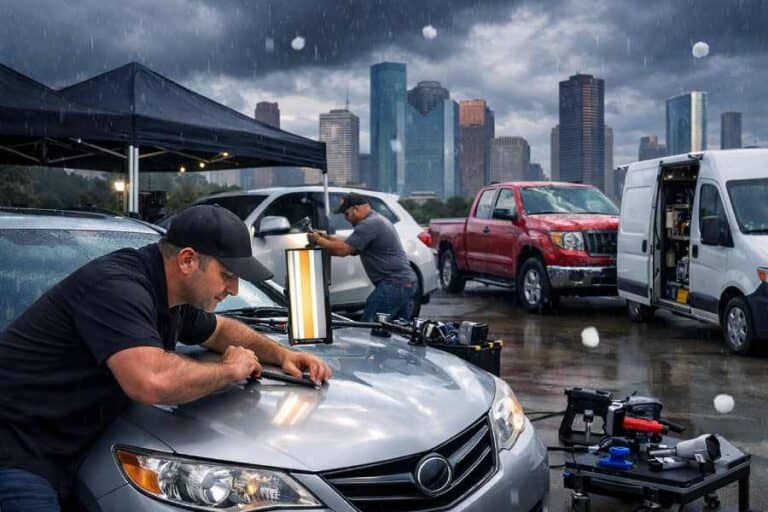
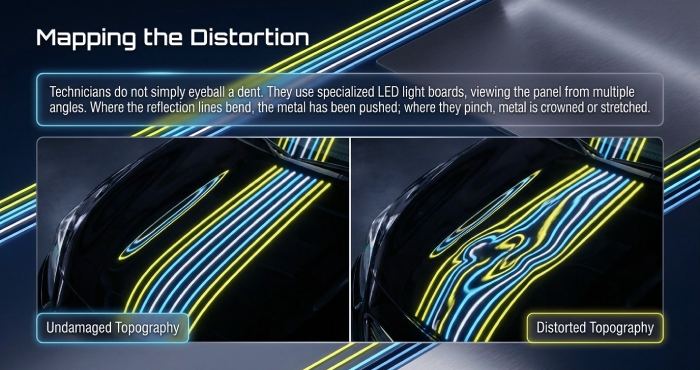
The first step is checking whether the paint remains intact. PDR works best when the paint is flexible and undamaged. Technicians use a Light Board for inspection, viewing the dent from multiple angles to identify distortion, cracks, crowns, and stretched metal. This helps determine whether PDR is suitable or traditional repair is needed.
Paint Cracks, Scratches, and Clear Coat Issues
A dent with no paint break is usually a stronger candidate for paintless dent removal. But if there are scratches, technicians must decide whether scratch removal, paint correction, or paint touch-up will be needed after the dent is reshaped. Light transfer marks may come off with a Clay Bar, Polishing Compound, or auto detailing process. Deeper scratches may require paint touch-up or traditional dent repair.
Paint protection can also affect the inspection. Paint Protection Film may hide or absorb some impact marks, while Ceramic Coating or Paint Sealant may make surface defects easier to see under inspection lights. Even with paint protection, the technician must confirm that the factory finish underneath has not fractured.
Why Paint Damage Changes the Repair Plan
If car paint is broken, a body shop may recommend repainting to prevent corrosion and restore appearance. Once repainting is required, traditional dent repair may become the better option, especially if body filler is needed for panel restoration. Paint damage prevention is one reason professional dent repair is preferred over aggressive DIY dent repair methods that use a Plunger, Dry Ice, Boiling Water, Hairdryer, or Compressed Air without controlling panel stress.
Evaluating Dent Size, Depth, Location, and Panel Material
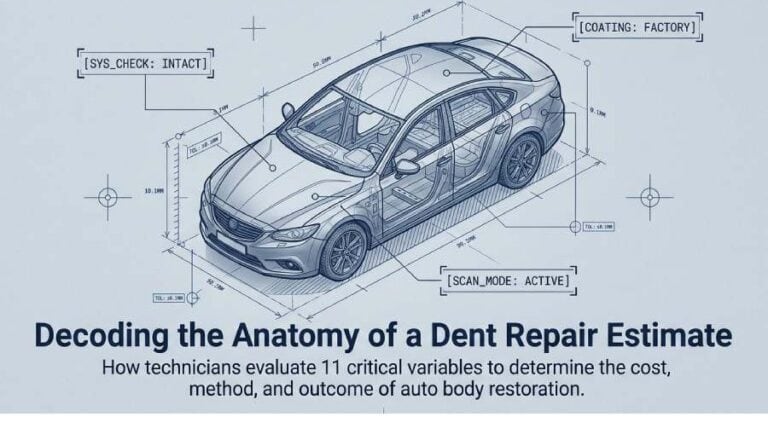
After paint inspection, technicians evaluate dent size, depth, location, and the type of panel involved. Paintless dent repair is highly effective on many minor dents and dings, but not every dent is a good candidate. A wide, shallow dent may be easier to repair with PDR than a small, sharp, deep dent that has stretched the metal.
Size and Depth of the Dent
Small, shallow dents are often suitable for PDR, while larger, deeper, creased, or sharp body-line dents may require more advanced techniques. Technicians carefully reshape the metal using PDR tools, metal rods, rubber knockdowns, and rubber mallets rather than simply popping the dent out.
Panel Material and Vehicle Design
PDR can work on steel and aluminum panels, although aluminum requires specialized handling. Technicians also check plastic bumpers, panel bracing, reinforcements, and access points because areas near edges, rails, or structural supports can make dent repair more difficult.
Assessing Tool Access Behind the Damaged Panel
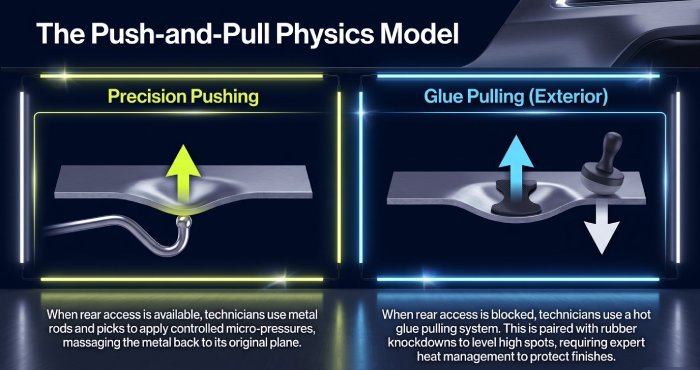
Tool access is one of the most important factors in deciding whether PDR will work. Paintless dent repair typically relies on reaching behind the damaged area with rods, picks, and other professional tools. If a technician can position a Metal Rod behind the dent and control pressure precisely, the chances of successful paintless dent removal increase.
When rear access is limited, technicians may carefully remove interior trim, tail lamps, liners, or access plugs to reach the damaged area. This allows them to position their PDR tools correctly while minimising the risk of damaging clips, wiring, or other components. Once the repair is complete, the removed parts are properly reinstalled and checked.
Glue Pulling When Rear Access Is Limited
If there is no safe access from behind, technicians may use a professional glue pulling system. Glue pullers, dent tabs, and a hot glue gun allow controlled pulling from the outside of the panel. Unlike basic suction cups or inexpensive dent repair kits from auto parts stores, professional glue pulling equipment provides the precision needed to achieve a clean, factory-quality finish.
A professional glue puller is used with careful heat management, release agents, and repeated fine adjustments. The technician may also combine pulling with rubber knockdown techniques to level high spots. This controlled approach helps minimize the risk of paint damage, particularly when working on older or more delicate vehicle finishes.