How Houston’s Heat and Humidity Affect Vehicle Dent Repairs
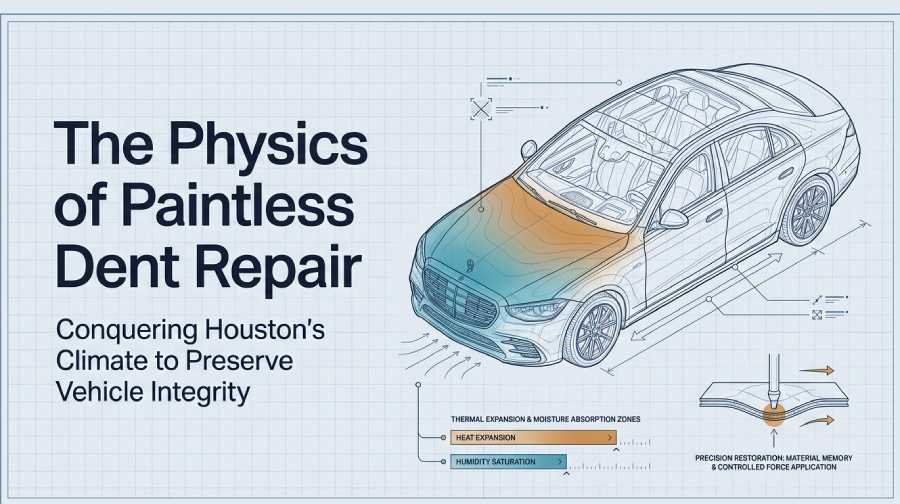
The sweltering heat and elevated humidity levels in Houston can greatly influence the process of repairing vehicle dents. These factors can alter metal expansion, affect the condition of the paint, and influence the timing of repairs. By comprehending how these climatic conditions affect dent removal, vehicle owners can make better choices, leading to more durable and high-quality repair outcomes.
Why Houston’s Climate Matters for Dent Repair
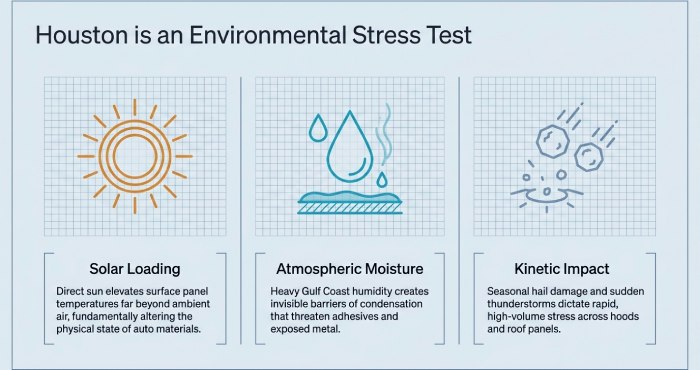
Houston is a demanding environment for any automobile. Long stretches of intense sun, heavy Gulf Coast humidity, sudden thunderstorms, and seasonal hail damage all influence how a vehicle panel responds during dent repair. A car or truck parked outdoors can experience surface temperatures far above the air temperature, and that heat changes the way metal, paint, trim pieces, adhesives, and inner panels behave during the repair process.
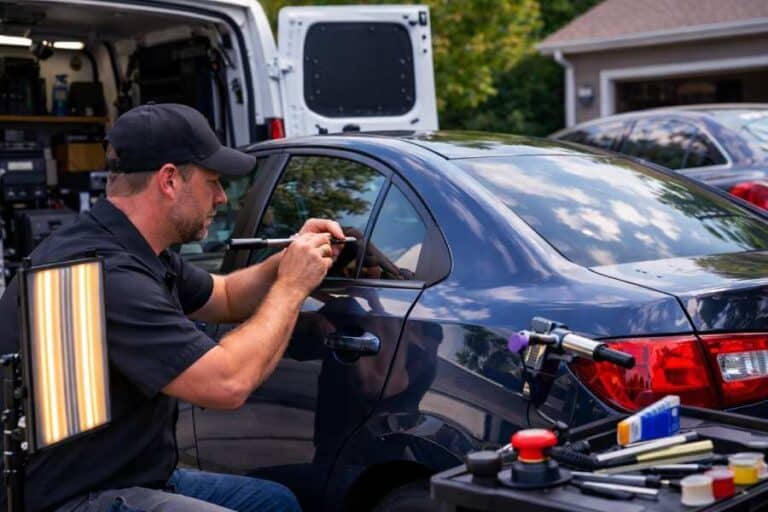
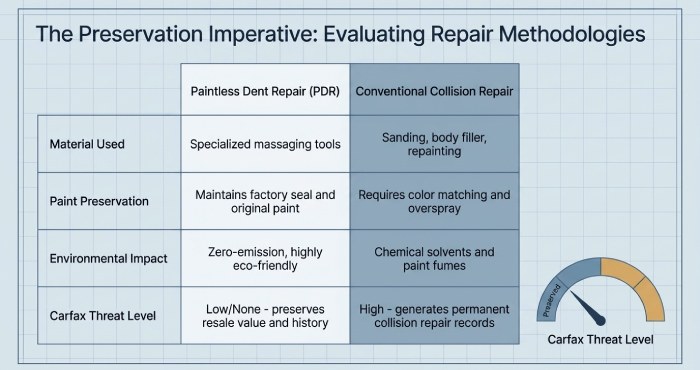
For Houston drivers, climate is especially important when choosing between traditional collision repair and paintless dent repair. Paintless dent repair, often called PDR, is a highly controlled dent removal method that uses specialized tools to massage a damaged panel back toward its original position without body filler, no repainting, no overspray, and no color matching. That makes paintless dent removal a cost-effective and environmentally friendly option for door dings, minor creases, hail damage repair, and many forms of minor collision damage.
Unlike conventional body repair, which may involve sanding, refinishing, body filler, and repainting, PDR protects the original paint and can help preserve higher value in the automobile. This matters to owners who care about resale history, because avoiding unnecessary collision repair may also reduce the chances of a repair-related entry appearing in records associated with Carfax, where many buyers look for accident and service history. Some customers even worry when they see a Carfax Logo during vehicle shopping because it reminds them how visible a major repair can become.
For drivers researching Paintless Dent Repair Houston, the key is understanding that Houston’s climate does not make PDR less effective; it simply makes skill, timing, temperature control, and experience more important.
How Extreme Heat Affects Vehicle Panels and Paint
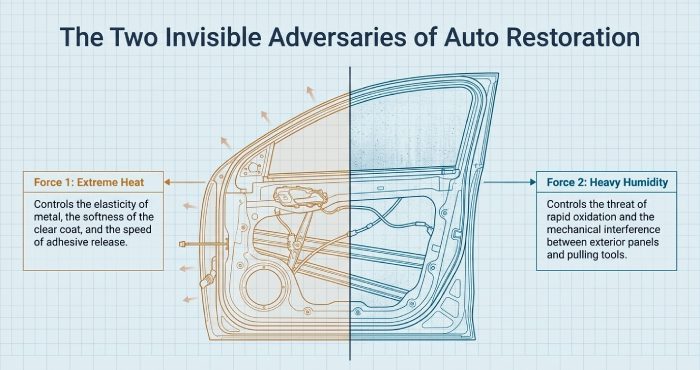
Houston heat can be helpful or harmful depending on how it is managed. In paintless dent repair, controlled warmth can make a vehicle panel slightly more flexible, allowing a trained technician to work the metal gradually during dent removal. However, uncontrolled heat from direct sun can create uneven expansion across a fender, hood, door, or quarter panel. That can make dent repair more unpredictable, especially on sharp door dings, body style line damage, and minor creases near edges or window openings.
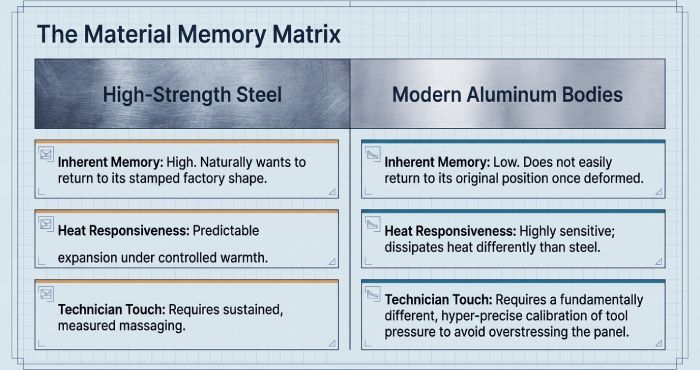
A repair technician must understand how different materials react. Steel panels may respond differently than aluminum bodies, and modern automobile designs often combine multiple metals, reinforcements, adhesives, and inner panels. Aluminum bodies require a different touch because aluminum has less memory than steel and may not return to its original position as easily. On a hot day, a technician performing PDR has to read the panel carefully, control tool pressure, and avoid overstressing the original paint.
Paint is another concern. Factory finishes are durable, but extreme heat can soften clear coat slightly, especially on darker vehicles that absorb more solar energy. During paintless dent removal, this can influence how the technician uses specialized tools, tap-downs, reflection lights, and glue pulling. Glue pulling relies on adhesive tabs attached to the exterior surface, and if a panel is too hot, the adhesive may release too quickly or pull inconsistently. If the surface is too cool, the adhesive may become too rigid. Houston heat makes proper setup essential.
Why Heat Changes the Repair Process
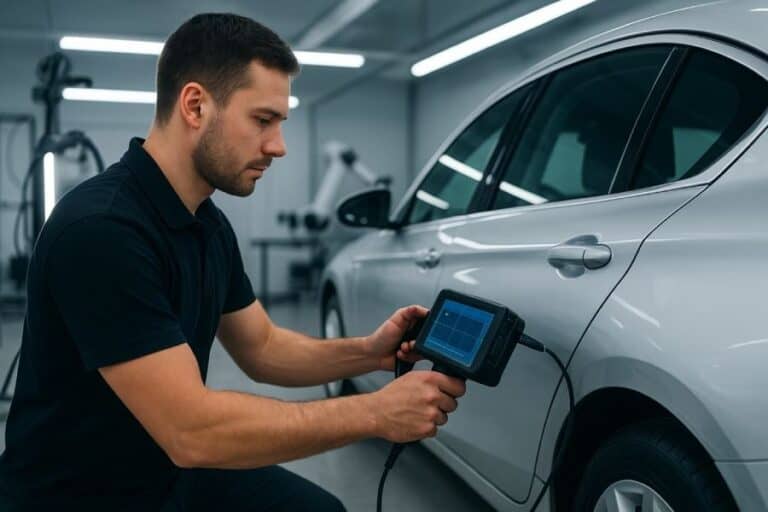
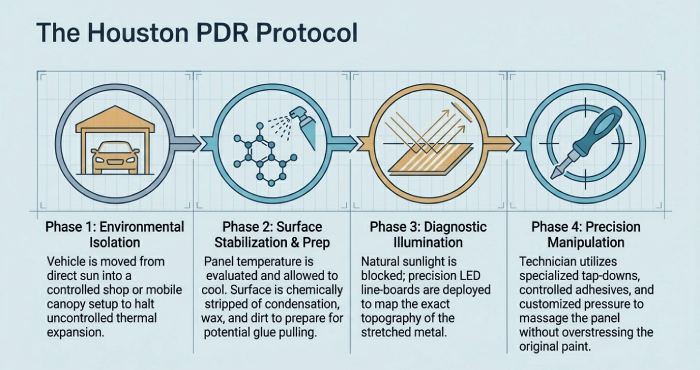
The repair process for dent repair in Houston often begins with temperature evaluation. A professional may move the vehicle into shade, a controlled shop, or a mobile services setup with canopy protection before beginning ding repair. This helps stabilize the panel and paint so the technician can see the true shape of the damage.
Heat can also make damage appear slightly different throughout the day. Door dings and minor creases may look more pronounced in morning shade and less obvious under bright afternoon glare. That is why experienced PDR technicians use professional lighting rather than relying on natural sunlight alone. Precision lighting reveals crowns, lows, stretched metal, and subtle distortion that must be corrected during paintless dent removal.
For severe hail damage, heat management becomes even more important. A hood or roof with dozens of dents requires repeated, controlled movements across the panel. Without proper technique, the repair cost can rise because the work becomes slower and more complex.
How Houston’s Humidity Affects Dent Repair and Corrosion Prevention
The Effectiveness of Paintless Dent Repair in Humid Environments
Humidity poses a significant challenge in Houston. While moisture in the air doesn’t hinder paintless dent repair (PDR), ding repair, or dent removal directly, it does have implications for planning and long-term vehicle protection. When the original paint remains intact, paintless dent removal is particularly effective, as the factory finish continues to safeguard the underlying metal. This preservation of the original corrosion-resistant layer is one of the key benefits of PDR, allowing for the correction of door dings, light creases, and hail damage without compromising the vehicle’s exterior.
The Need for Assessing Paint Integrity
The risk of corrosion escalates when the paint is damaged — be it cracked, chipped, or otherwise compromised. For instance, a dented fender from a minor accident may seem like an easy fix, but if the paint has been damaged, moisture can penetrate to the bare metal. In Houston’s humid surroundings, this exposed metal can rapidly oxidize. A skilled technician will examine the panel prior to suggesting paintless dent repair. If the paint damage is extensive, traditional body repair methods might be necessary to restore both the vehicle’s appearance and its protective qualities.
How Humidity Influences Glue-Pulling Methods
Humidity also plays a role in glue-pulling techniques. Moist air can affect adhesive effectiveness, particularly when combined with factors like condensation, wax, silicone, or dirt on the vehicle’s surface. To achieve successful PDR outcomes, technicians need to meticulously clean the panel and use adhesives tailored to the current temperature and humidity. Glue-pulling is especially advantageous when back access is limited by structural components such as bracing or trim panels. However, diligent surface preparation becomes even more essential in the humid conditions prevalent in Houston.