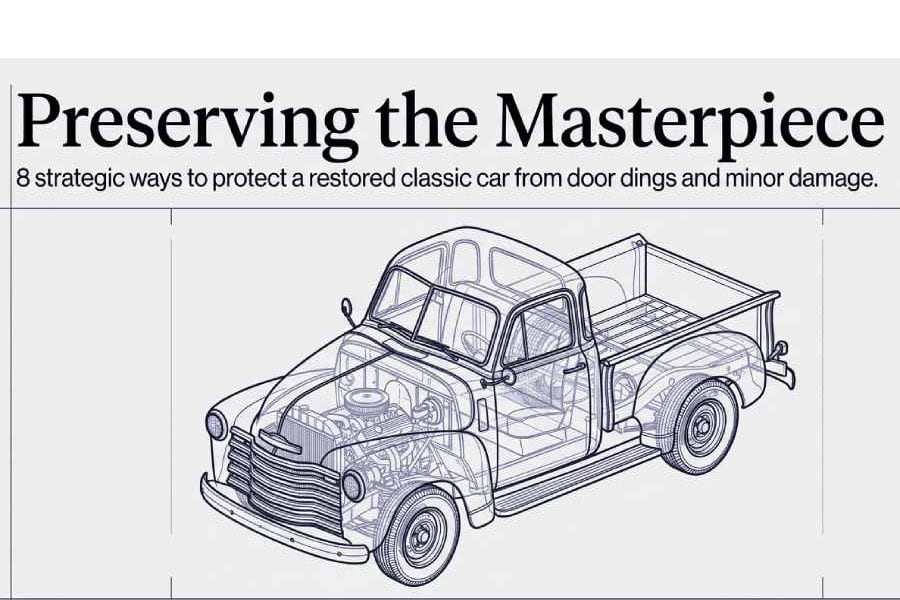
8 Smart Ways to Protect a Restored Classic Car From Door Dings and Minor Damage
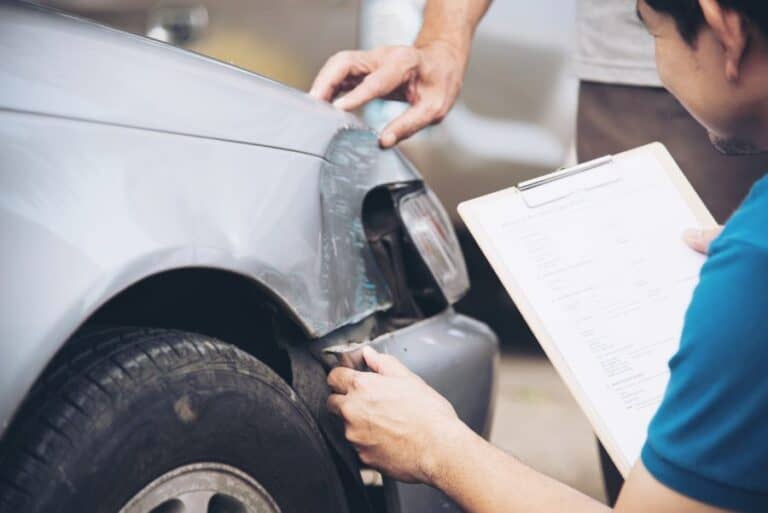
A finished restoration deserves a protection plan, not just a good wax. Whether you own a restored pickup, a classic pickup, a Model A Roadster Pickup, a Chevy Kustom, a 1953 Chevy Chicken Truck, or an old truck built as a custom project, minor damage can quickly become a body shop nightmare if it is ignored. Door dings, shelf bumps, tool cart marks, and garage mishaps often affect a body panel, roof panel, rear body panel, or fender long before the car ever sees major collision repair.
Protect the Car Before Damage Happens
To safeguard your vehicle from potential damage, begin by implementing wise parking choices, ensuring adequate storage, and maintaining sufficient space around it during regular use. Adopting straightforward practices such as opting for safer parking locations, employing protective vehicle covers, and installing garage bumpers can greatly lower the chances of dents and expensive repairs.
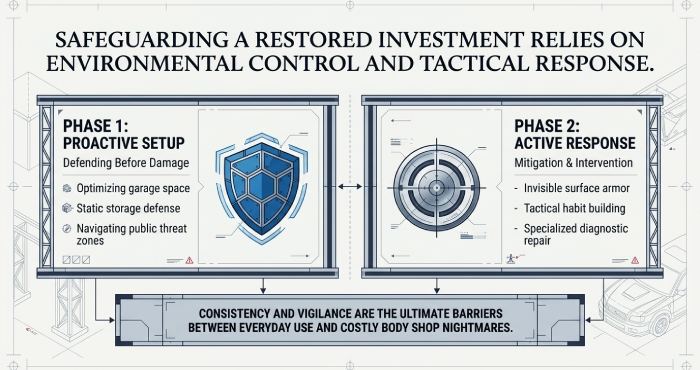
Parking, Storage, Garage Setup, and Work Clearance
- Way #1: Choose Safer Parking Spots to Reduce Door Ding Risk
The easiest way to avoid dent repair is to park wisely by staying away from tight spaces, cart corrals, and high-traffic areas where doors can hit your car. Give extra space in crowded lots and at events so people don’t accidentally bump your panels. Also avoid parking under trees since falling branches or debris can cause dents that may require paintless dent repair or panel work. - Way #2: Use Padded Car Covers and Door Guards for Storage Protection
Even in storage, protect your vehicle with a well-fitted padded cover to reduce minor contact damage and dust scratches. Add door guards or soft barriers if other objects or vehicles are nearby. Keep tools, bins, and heavy items away from the car so delicate panels and painted surfaces don’t get scratched or dented accidentally. - Way #3: Install Garage Wall Bumpers and Parking Guides
Simple garage tools like wall bumpers, wheel stops, or parking guides can prevent accidental bumps when pulling in or opening doors. These additions help protect tight garage spaces where fenders or rear panels are most at risk. A well-organized garage setup reduces the chance of costly dent repair from everyday movement. - Way #4: Keep Enough Clearance Around the Car During Maintenance and Detailing
Most small dents happen during routine maintenance, so always keep enough space around the vehicle when working on it. Avoid leaning tools or equipment against panels and be careful with jacks, creepers, and tool belts. Extra caution is especially important on repaired or reshaped metal, which can be more sensitive to pressure or impact.
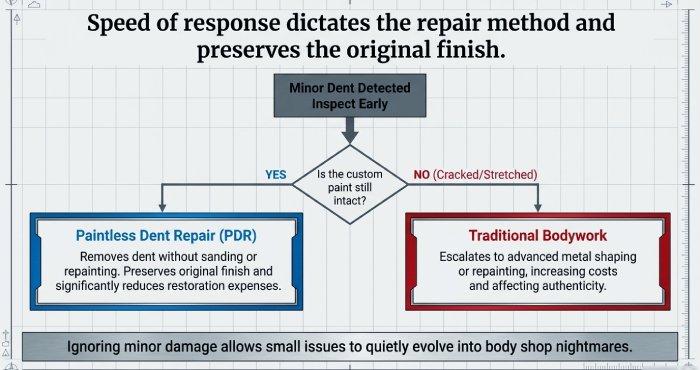
Respond Quickly When Minor Damage Appears
Addressing minor damage promptly can stop small dents, scratches, or chips from escalating into costly repairs later on. Taking action early also improves the likelihood of using paintless dent repair, which maintains the original finish and reduces restoration expenses.
Film, Driving Habits, Early Inspection, and Specialist Support
- Way #5: Apply Paint Protection Film to Vulnerable Panels
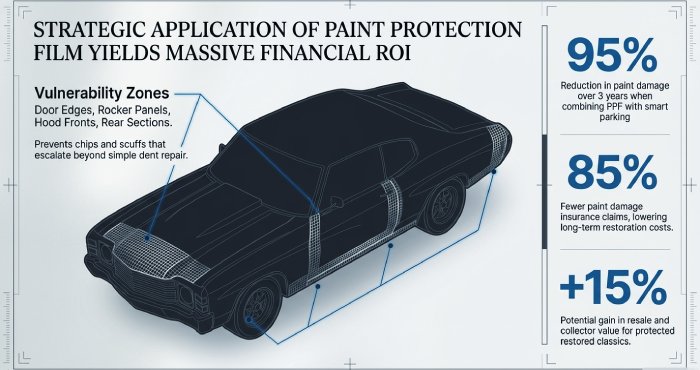
Paint protection film can help protect high-impact areas like door edges, rocker panels, hood fronts, and rear sections from chips, scuffs, and light abrasion. While it won’t stop major dents, it can prevent surface damage that might otherwise require repainting along with dent repair. It’s especially useful for older or custom paint jobs where preserving the finish is critical, since cracks or chips can escalate repair needs beyond paintless dent repair.
- Way #6: Build Safe Driving and Event Habits Around Crowds and Tight Spaces
Classic cars are more vulnerable in public settings, so extra caution is needed at shows, gas stations, and events where people may get too close. Keep space around the vehicle and be mindful of children, bags, bikes, and equipment that can bump panels. Choosing wider routes and avoiding tight turns also helps reduce the risk of accidental scrapes or collision damage. - Way #7: Inspect Small Dents Early and Use Paintless Dent Repair When Possible
Checking dents early allows you to fix minor damage before it worsens, and paintless dent repair is often the best option when paint is still intact. Skilled technicians can remove dents without sanding or repainting, helping preserve the original finish. However, more severe damage like stretched metal or cracked paint may require traditional bodywork or advanced metal shaping techniques instead. - Way #8: Partner With a Classic Car Dent Repair Specialist for Ongoing Preservation
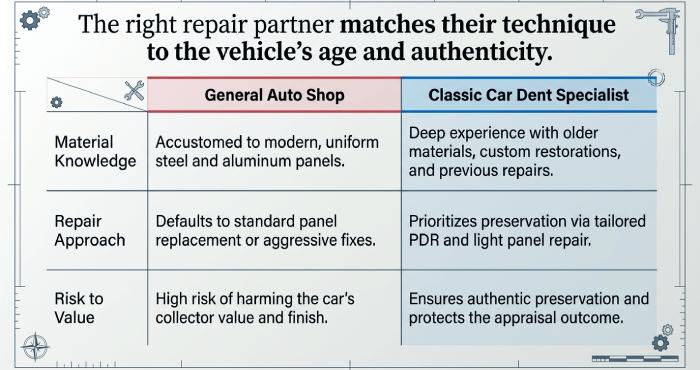
Working with a Classic car dent repair specialist helps ensure your vehicle is repaired with the right approach for its age and condition. They can decide whether paintless dent repair, light panel repair, or full body shop work is needed depending on the damage. Their experience with older materials, previous repairs, and custom restorations helps prevent unnecessary or overly aggressive fixes that could harm the car’s value and finish.
Key Statistics on Protecting a Restored Classic Car From Door Dings
| Protection Insight (Latest Data) | Statistic / Finding | What It Means for Classic Car Protection |
| Door dings frequency in parking environments | Over 25% of vehicles experience minor paint damage within the first year | Even carefully parked classic cars are highly likely to suffer cosmetic damage without protection layers |
| Effectiveness of layered protection (PPF + habits) | Protected vehicles show up to 95% less paint damage over 3 years | Paint protection film combined with smart parking dramatically reduces ding-related repairs |
| Insurance claim reduction with paint protection film | Vehicles with protection report ~85% fewer paint damage claims | Strong financial incentive—fewer repair claims and lower long-term restoration costs |
| Value impact of protective measures | Cars with PPF can retain or gain up to 15% higher resale value | Protecting restored classics directly improves collector value and appraisal outcomes |
| Parking lot risk concentration | High-risk areas (tight stalls, entrances, carts zones) account for the majority of door ding incidents | Where you park matters as much as physical protection methods |
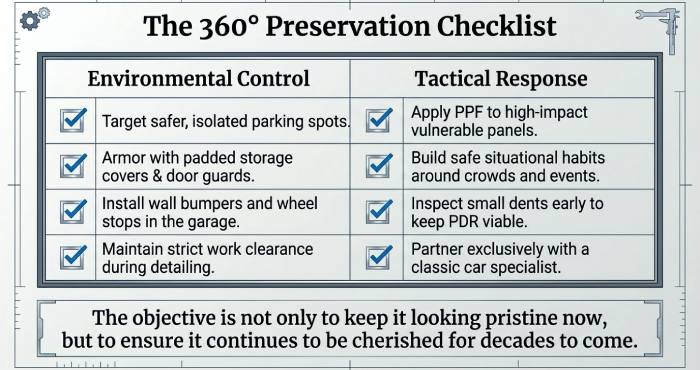
Safeguarding a restored classic car from minor dents and damage relies more on vigilance and consistency than anything else. After putting in the effort to restore the vehicle, even minor bumps can detract from its authenticity and worth. Therefore, adopting habits such as parking carefully, using protective gear, and conducting routine checks can be incredibly beneficial. By implementing smart prevention techniques and exercising extra care in daily use, you can maintain both the aesthetic appeal and investment value of your classic car for years. Ultimately, the objective is not only to keep it looking pristine now but also to make sure it continues to be cherished for decades to come.