Classic Car Dent Repair: How To Fix Dents Without Damaging Original Paint
Vintage automobiles require meticulous dent restoration to maintain their originality, worth, and factory finish. In contrast to contemporary cars, older models have unique panels and coatings that necessitate specialized methods to fix imperfections without resorting to sanding, fillers, or repainting. This guide outlines how to restore dents effectively while safeguarding the distinctiveness and integrity of your classic vehicle.
Assessment, Setup, and Paint-Safe Dent Techniques
1. Assessing the Dent and Paint Condition
On a classic car or antique car, the first step in dent repair is a disciplined assessment. This is where you avoid the mistakes that cause cracks, micro-fractures, or permanent surface distortion.
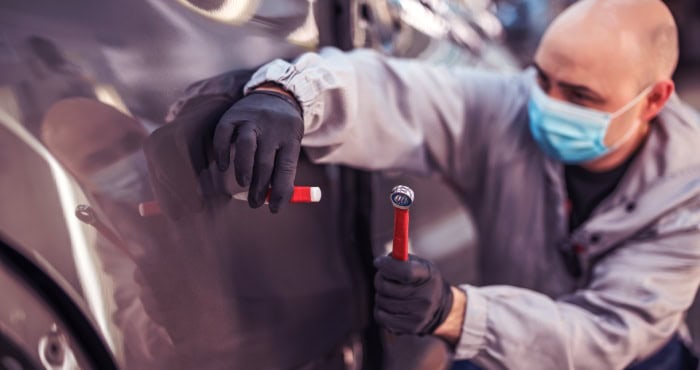
- Metal Type and Construction: Determine the metal and structure of the panel; if it features thick classic panels or double-skin sections, it may restrict tool access and encourage the use of glue pulling rather than standard PDR methods.
- Paint Condition and Composition: Older, brittle paint or thick layers of repainting increase the likelihood of cracks. If heat application causes any checking or color shifts, cease work immediately.
- Prior Repairs and Use of Lead: Areas with lead or substantial filler complicate metal movement, making PDR ineffective in those spots.
- Rust and Corrosion Issues: Presence of rust, blisters, or holes near the dent renders the panel unsuitable for safe PDR techniques.
- When to Halt Work: Cease PDR right away if you notice paint peeling, hear cracking noises, or if the metal begins to exhibit an oil-canning effect.
a. Paint and Metal Diagnostics on Classic and Antique Panels
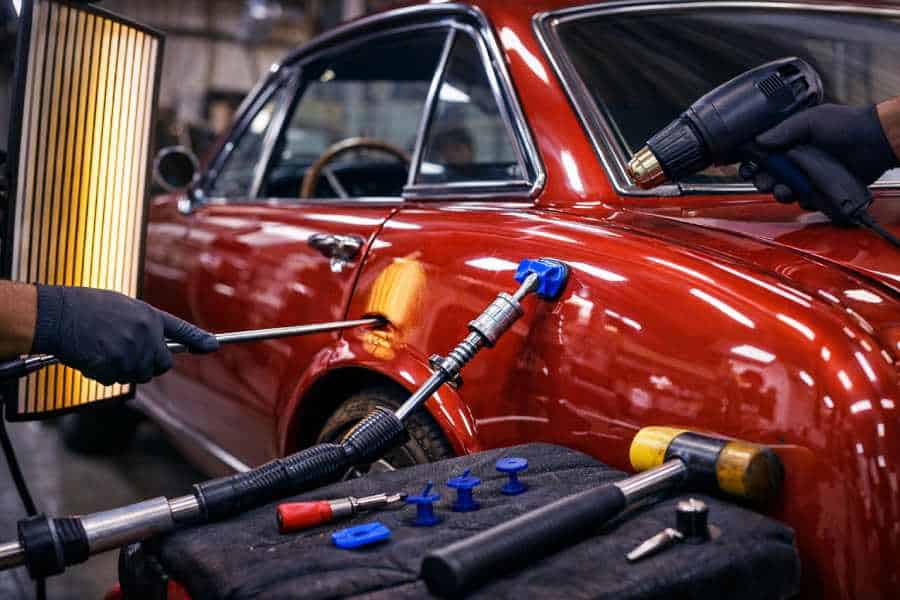
In Paintless Dent Repair, effective lighting is essential. Utilizing a stationary light and a line board helps to expose any movement in the metal and identifies minor crowns. For areas with curves, such as fenders or wheel wells, use soft, gradual pressure to carefully work on the crowns.
2. Tools, Setup, and Procedures That Preserve Original Paint
Traditional PDR tools are the backbone of safe dent repair on classic car panels. Combine them with a clean environment, controlled heat, and careful access.
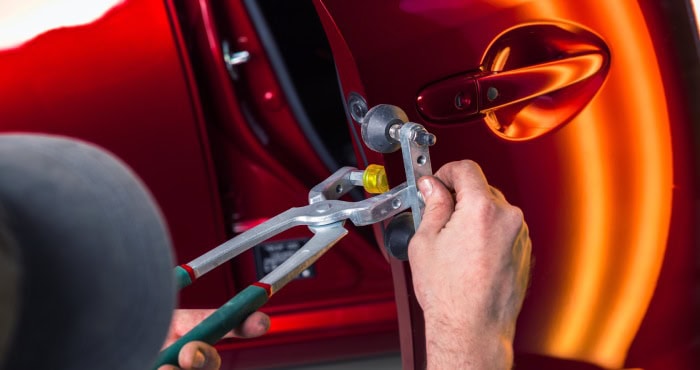
a. PDR Rods vs. Glue Pulling, Access, and Crown Control
- Classic PDR instruments: Employ rods and knockdowns to accurately push dents from behind, enabling access to doors and panels without the need for drilling.
- Glue pulling method: In situations where access from the rear is limited, top-quality glue tabs facilitate safe and controlled pulls, especially beneficial for delicate vintage paintwork.
- Adhesive guidelines: Avoid using structural panel adhesives for paintless dent repair, as these products are intended solely for body repairs and panel replacements.
- Resources for professionals: Reputable auto body shops and select educators on platforms like YouTube provide reliable methods that help maintain the integrity of original classic finishes.
b. Heat, Masking, Lighting, and Reflection Control
- Temperature Management: Maintain the panel temperature between 100–140°F to minimize the chance of old paint cracking while preventing it from becoming excessively soft.
- Surface Preparation and Protection: Apply low-tack tape and protective coverings on trim pieces, and apply a light coat of wax on surfaces to facilitate the clean removal of glue tabs.
- Illumination: Utilize a portable line or fog board to effectively identify dents, raised areas, and contours, particularly on thicker classic panels.
Step-by-step techniques that preserve paint (using traditional PDR tools and glue pulling)
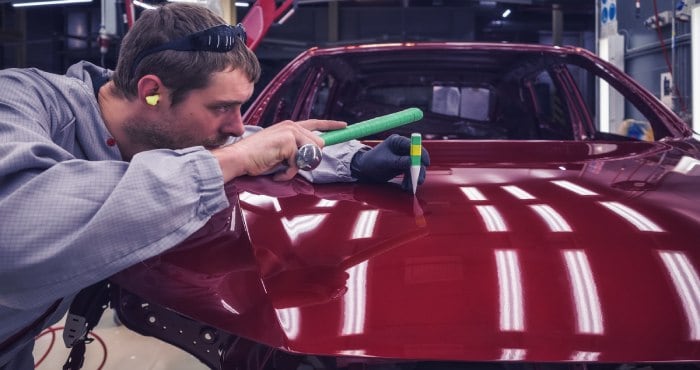
- Surface preparation: Wash and decontaminate the area. Clay if needed. Identify any prior block sanding marks that might signal filler. Mark crowns with a grease pencil.
- Access and tool selection: Choose PDR tools according to accessibility: employ a whale tail for the fender lip of a Chevy, and utilize glue pulling for an old roof brace.
- Controlled warming: Gently heat the panel, especially on older lacquer. Keep moving; avoid hotspots on edges.
- Crown relief: Before pushing the center, soften crowns. Use a soft-tip tap-down to allow the dented metal to “flow” back. On thick metal panels, this is critical; without crown relief, you’ll create a stubborn center high.
- Pushing from behind: Using leverage and micro-movements, push from behind the lowest point, spiraling outward. Read reflections constantly. Short pushes avoid stretching.
- Glue pulling: For inaccessible dents, select a tab that matches the dent footprint. Small tabs for tight lows; larger for shallow, broad dents. Moderate pull, then release promptly. Alternate pulls and tap-downs to calibrate metal movement.
- Tap-down and “reading reflections”: After each push or pull, tap down highs. Use a plastic or rubber tip to protect paint. The reflection line should straighten uniformly; this is your non-negotiable feedback loop in paintless dent repair.
- Edge and bodyline work: On bodylines, use specialized tips and ultra-fine pushes. If the line is stretched from impact, PDR can improve it but may not yield 100% damage removal without minimal body filler later.
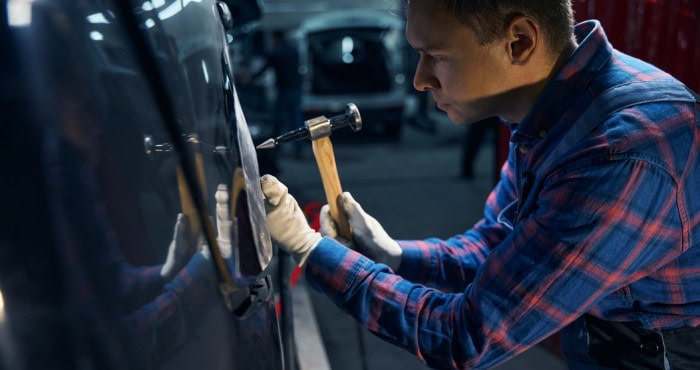
Classic-specific challenges and workarounds
- Thin vs. thick metal panels: Some doors and decklids feel thin, while quarter panels around arches are stout. Adjust push force and tab size accordingly; thicker steel can accept firmer pushes, but still demands crown relief.
- Chrome/trim and emblems: Remove trim only if fasteners are accessible without drilling holes. Protect brightwork with felt guards.
- Double-skin and braced zones: Expect limited tool paths; lean on glue pulling and tap-down cycles.
- Lead seams and old repairs: If lead or heavy bondo is present, aim for “blend” improvements. Full straightening may require metalwork, body filler, block sanding, and repaint—outside the scope of PDR.
- Old lacquer/enamel: Keep heat lower and more uniform. Any sign of checking means stop and reassess.
Finishing and preservation
Utilize mild citrus-based adhesives or alcohol to eliminate glue without affecting the integrity of old paint. Use a fine polish with a soft applicator to enhance clarity without diminishing the original finish.
Protect seams from rust by applying a non-staining wax or a ceramic spray that is safe for classic cars. Additionally, take before and after photos, note any areas needing filler, and document PDR techniques to aid in future restoration choices.
When to call a pro:
If you encounter oil-canning, paint checking, inaccessible double-skin dents, or large complex crowns, consult an auto body shop experienced in classic car and antique car work. Shops like Lakeside Autobody or Foothill Paint and Fabrication can integrate PDR with selective panel repair. For mobile specialists, schedule Paintless dent repair (pdr). Trainers like Dent Time, Dent Tamers, Wipe Out P.D.R., and Carter Auto Restyling offer advanced instruction for DIY dent repair enthusiasts.