
How Mobile Dent Repair Houston Handles Dents on Vehicles With Aftermarket Body Kits
Why Aftermarket Body Kits Require Specialized Dent Repair
Vehicles with aftermarket body kits are not repaired the same way as a stock sedan, truck, or SUV. Splitters, side skirts, fender flares, custom bumpers, widebody panels, vents, and spoilers can change access points behind the damaged area. That matters because paintless dent repair depends on controlled pressure, clean tool access, and a careful reading of the metal or panel movement.
In Houston, modified vehicles can include pickup trucks with aftermarket fender flares, lowered imports, and cars equipped with custom aerodynamic components. Each configuration presents different considerations when assessing dent damage and repair access.
For owners who want Paintless Dent Repair instead of conventional auto body repair, the repair process must be precise. A poor approach can disturb custom paint, crack fiberglass, lift a wrap, or shift a body kit panel out of alignment. That is why experienced repair specialists evaluate whether the damage is PDR-eligible before beginning dent removal.
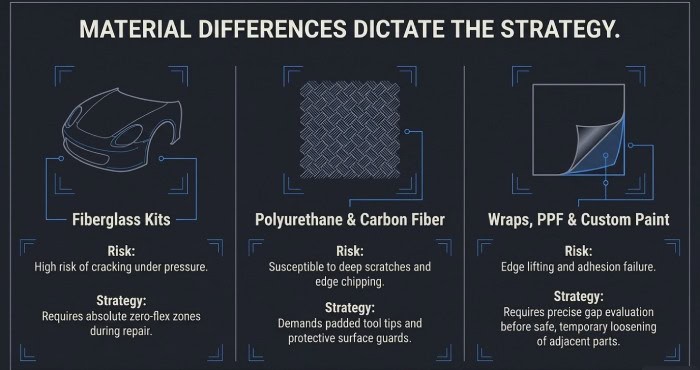
Material Differences Change the Repair Strategy
Fiberglass, polyurethane, and carbon fiber body kits require careful handling during mobile dent repair to prevent cracks, scratches, and chips. Technicians use specialized tools and protective guards to protect surrounding panels, paint, and custom finishes.
Initial Mobile Inspection: Identifying Kit Materials, Fitment, and Damage Severity
A proper initial inspection is the foundation of quality mobile dent repair in Houston. During the on-site inspection, the technician evaluates the body kit material, mounting points, panel gaps, wrap edges, and condition of the damaged metal panel. These checks help determine whether the dent can be accessed and repaired safely. This free evaluation helps determine whether paintless dent repair, crease repair, or traditional collision repair is the right path.
A dedicated guide to mobile dent repair houston explains how repairs can be done at your location for convenience. This is especially valuable for modified vehicles, because transporting a low car to a body shop may require a flatbed or rental car.
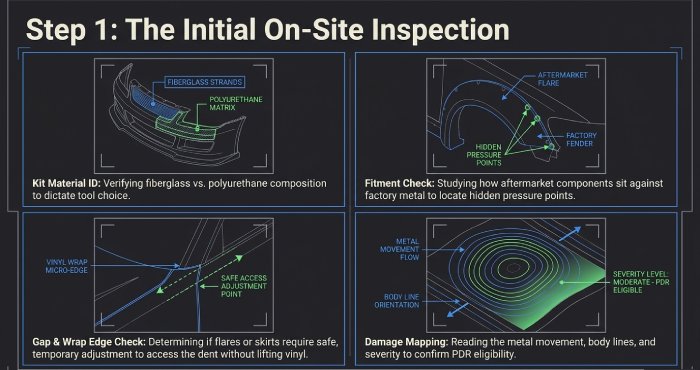
Fitment, Access, and Damage Mapping
The technician studies how the aftermarket part sits against the factory panel. Poor fitment can hide pressure points or make door dings and dings and dents more difficult to reach. In the Houston area, heat, road debris, and frequent storms also contribute to hail damage repair needs on modified vehicles.
Checking Gaps, Mounts, and Wrap Edges
Before any car dent repair begins, the technician inspects whether flares or side skirts need partial loosening. In some cases, fast turnaround is possible without removing anything. In others, safe access requires temporary adjustment to protect the original paint and factory finish.
Evaluating Dents, Creases, and Body Lines
Not all dents are equal. Shallow door dings, hail damage repair dents, and soft dings and dents may be ideal for paintless dent repair. Deeper body-line dents, sharp creases, and minor collision dents may require a more advanced auto dent repair approach. The technician also determines whether no fillers and no color-matching are realistic.
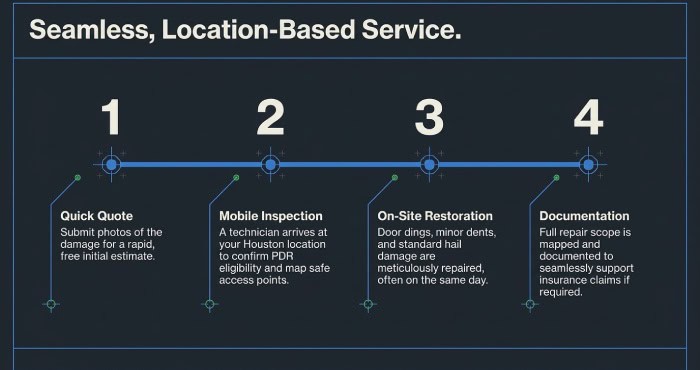
Quick Quote and Free Estimate Details
Many Houston mobile dent repair providers offer a quick quote using photos, but aftermarket body kit vehicles often need a closer look. A free estimate may include the dent count, location, PDR-eligible status, access difficulty, and whether same-day repair is possible.
Paintless Dent Repair vs. Traditional Methods for Modified Vehicles
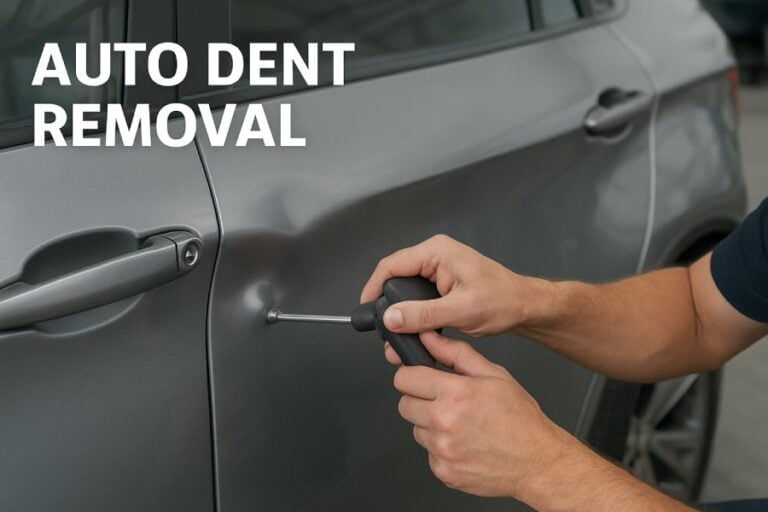
Paintless dent repair is often preferred for modified vehicles because it helps preserve original paint, factory finish, retained value, and vehicle value retention. Unlike traditional auto body repair, PDR uses specialized tools to massage dents from behind the panel or pull them from the outside when access is limited.
When PDR Is the Better Option
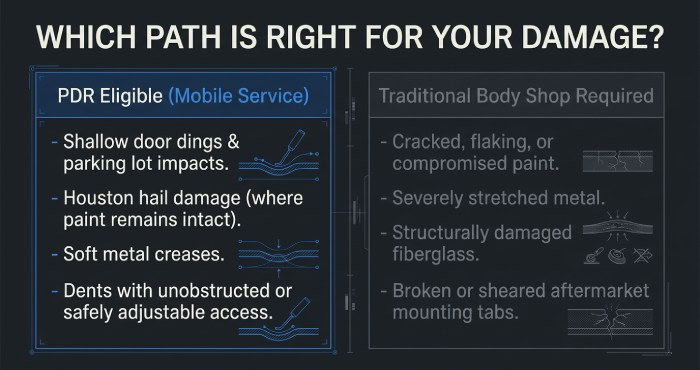
Paintless dent repair is typically best for door dings, hail damage repair, soft creases, and dings and dents where the paint has not cracked. It is also a cost-effective choice for car dent repair because it usually provides a fast response, flexible schedule, affordable dent repair, and a fast turnaround.
Preserving Original Paint and Factory Finish
When the original paint remains intact, PDR can restore the panel while keeping the car’s original finish untouched. That is why many Houston enthusiasts prefer mobile dent repair over a body shop visit for small dents.
When a Body Shop or Collision Repair Is Necessary
If the damage involves cracked paint, stretched metal, damaged fiberglass, or broken mounting tabs, conventional body repair or component replacement may be necessary. A reputable mobile dent repair technician will explain when auto dent repair can be handled on-site and when a body shop is the safer recommendation.
Protecting Custom Paint, Wraps, Splitters, Side Skirts, and Fender Flares During Repairs
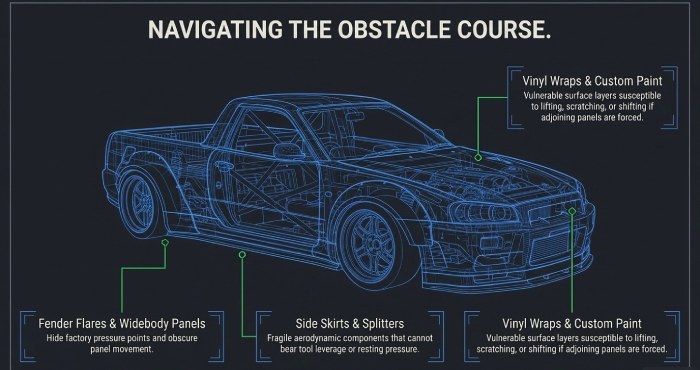
Modified vehicles often include custom paint, vinyl wraps, PPF, decals, ceramic coating, splitters, side skirts, diffusers, and fender flares. Protecting these parts is just as important as removing the dent. In Houston, where many vehicles face hail damage repair, parking lot door dings, and dings and dents from daily driving, a careful protection plan prevents secondary damage.
Safeguarding Adjacent Custom Components
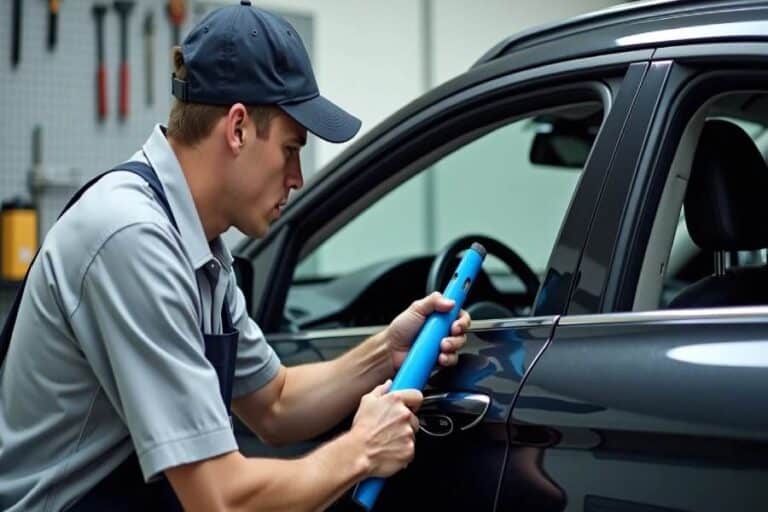
Technicians use lighting boards, padded tool tips, controlled leverage, and soft panel contact points. During mobile dent repair, they avoid placing pressure on fragile aero pieces. This is critical when repairing a Silverado with aftermarket flares, a lowered coupe with carbon splitters, or a wrapped vehicle in Greater Houston.
What Houston Drivers Can Expect From the Repair Process
The repair process usually begins with photos, a quick quote, or a free estimate. During the on-site appointment, the technician inspects the damage and confirms whether it qualifies for PDR. If suitable, the mobile dent repair specialist uses specialized tools to remove dents while protecting the body kit and original paint.
Many door dings, minor dents, and hail damage repairs may be completed the same day. However, extensive hail damage may require additional time. Proper documentation of the affected areas and repair scope can also help support insurance claims.
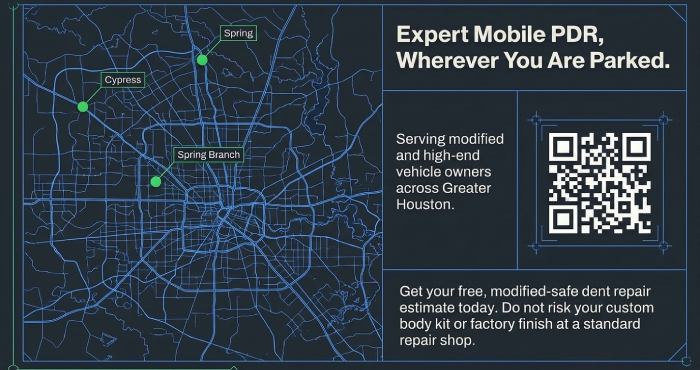
With mobile dent repair available at your location, drivers in Cypress, Spring, Spring Branch, and across Greater Houston can avoid unnecessary trips to a repair shop. This convenience is particularly helpful for modified vehicles that may be difficult to load, position, or transport.