9 Expert-Approved Auto Dent Removal Hacks Using PDR Tools
Whether you’re a beginner chasing door dings or a seasoned craftsman tackling side damage on a BMW Mini, the following expert tips focus on paintless dent removal techniques that deliver a flawless repair without painting. Each hack distills what pros teach in a repair tutorial, the kind you’ll see from Learn PDR Online, Real World PDR Training, or Autoelite on YouTube. These techniques align with modern auto collision repair standards and are designed for DIY dent repair, shop-level auto body repair, and general auto dent removal alike.
1. Read the metal—use a PDR line board or LED fog light to map lows, highs, crowns, and tension lines before touching the panel
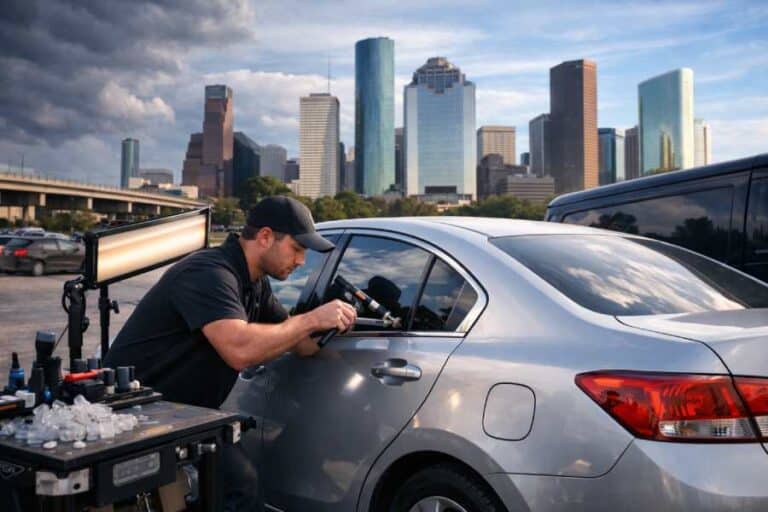
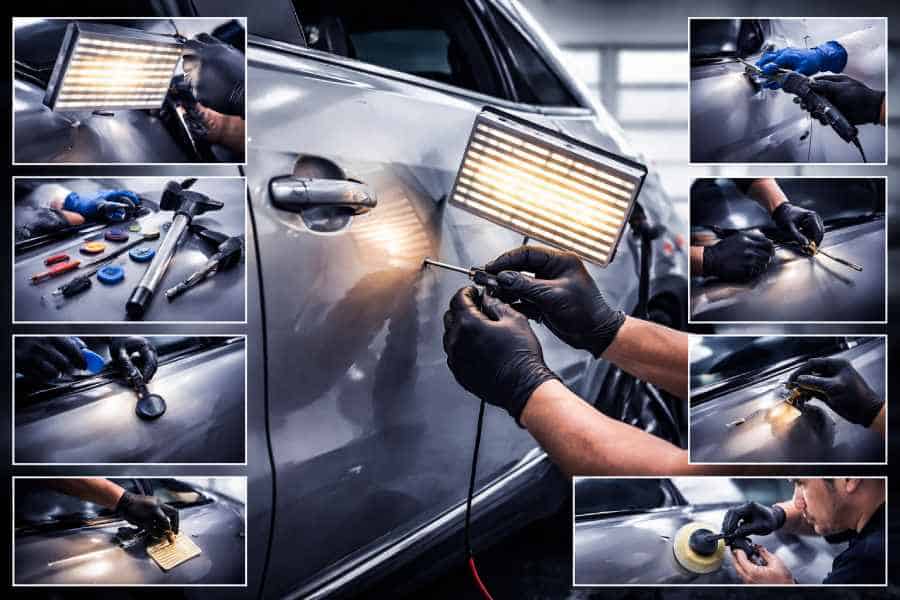
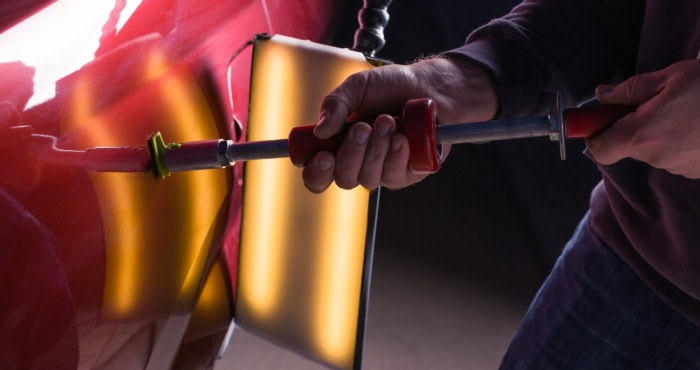
The process of professional car dent repair starts with thorough diagnostics. Employing tools like a PDR line board or LED light highlights the areas of distortion, crown spots, and tension lines, allowing for precise mapping of the metal. This approach guarantees that the repair focuses on the real dent rather than just its outline, which is crucial for effective paintless dent removal. Specialists such as MasterOfNone, Stoney Ridge Farmer, and Old Headlights emphasize that managing lighting, assessing the metal, and strategizing the push path are vital for achieving a perfect, paint-free finish.
2. Prep and protect—decontaminate with isopropyl alcohol, mask edges, and use window guards/wedges for safe tool access
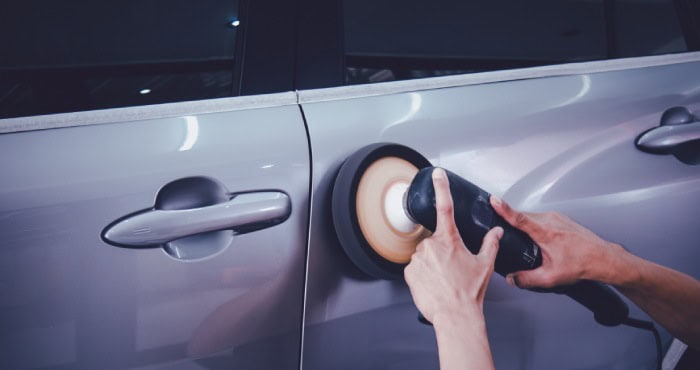
Surface prep protects the vehicle exterior and your repair results. Clean with isopropyl alcohol so glue pulling works consistently and to avoid dragging dirt under tips. Mask edges and body lines to prevent marring during dent pulling. Use window guards, wedges, and shields to create safe access for rods and whale tails without scuffing trim. This professional repair prep step is standard in auto collision repair and no paint dent repair because it reduces unintended body damage while you fix your dent efficiently.
3. Warm the panel smartly—apply controlled heat (heat gun/induction) to restore metal memory and prevent paint cracking
Utilize a heat gun or induction heater at a regulated temperature to maintain paint flexibility and ensure the metal can react appropriately prior to applying force. Consistently heating the area at a moderate level aids in preserving the metal’s shape, reduces the risk of cracking, and facilitates a seamless and reliable process for fixing dents, even on aluminum or stretched surfaces.
4. Start with glue pulling when there’s no backside access—match tab shape, glue type, and pull direction to the dent
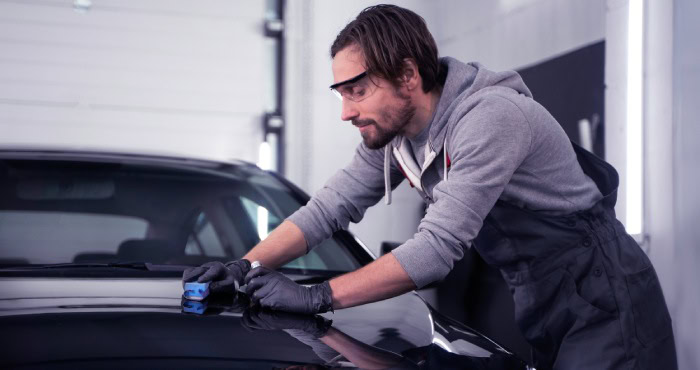
Glue pulling is an essential technique in Paintless Dent Repair (PDR) for situations where access from the rear or support is restricted. This method works well for DIY projects on narrow or confined panels. By utilizing a dent removal kit equipped with tabs, hot glue, and a mini lifter, you can effectively and swiftly repair dents without the need for repainting, provided you apply careful tapping.
- Tab Choice. Select tabs that are wide to match the shape of the dent for broader areas, and smaller for precise spots.
- Adhesive Selection. Opt for high or medium-tack adhesive depending on the temperature to ensure a neat removal.
- Tension Strategy. Pull in alignment with the dent lines, making necessary adjustments to bypass elevated areas or unnecessary attempts.
Ambient and substrate cues
- Aluminum needs tighter glue timing and more frequent cooling.
- High-crown panels demand lighter, more incremental pulls.
Tab care for consistent grip
Keep tabs clean, flat, and free of glue residue to keep repair results predictable.
5. Choose the right puller—bridge lifter for controlled lifts, slide hammer for energy pulls to reduce stretch risk
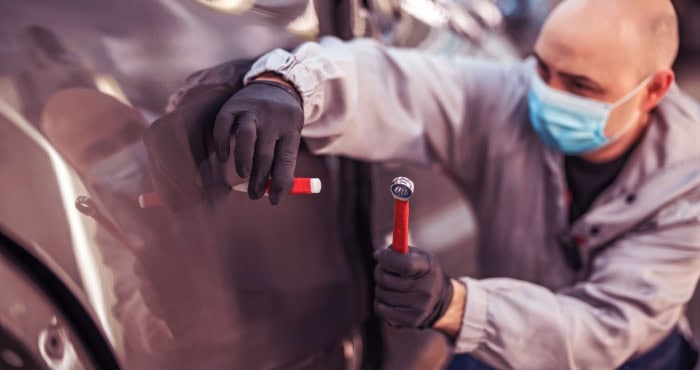
Pair your dent removal tool with the appropriate pulling device. use a bridge lifter for exact, paint-friendly lifts on door dents, and opt for a slide hammer to relieve tension in constrained crown areas. Experts frequently alternate between these tools to achieve a balance of control and mobility, particularly with intricate dents.
6. Control crowns and tension first—use a knockdown and tap hammer to relax the metal before heavy pushes or pulls
Prior to applying any significant pressure, identify and stabilize the crown spots. Use a smooth knockdown and a gentle tapping hammer to alleviate stress. This initial relaxation of tension helps avoid excessive stretching, accelerates the paintless dent repair process, and frequently transforms a near repaint situation into a perfect, factory-quality finish.
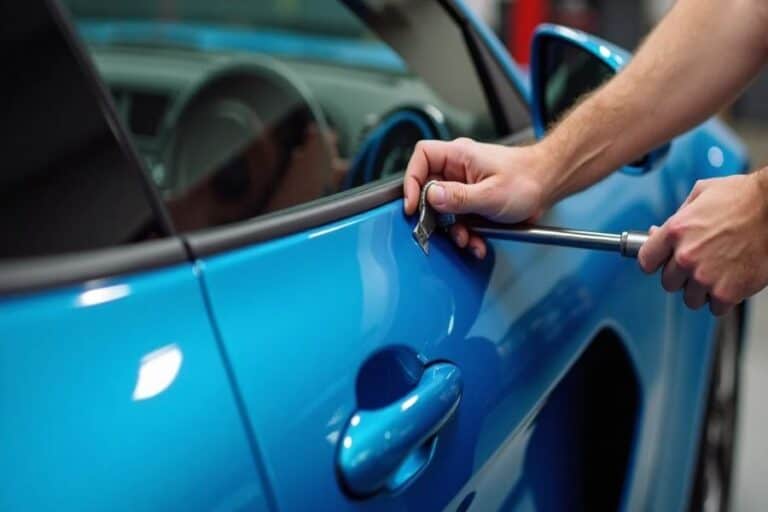
7. Push with precision—leverage PDR rods, whale tails, and soft tips with stable bracing for clean, non-textured pushes
Direct access allows for the most accurate dent restoration, beginning with gentler tools and progressing to more pointed ones when necessary. Employing rods and whale tails with careful nudges and adjustments ensures a smooth finish, elevating a simple dent repair to a professional standard.
8. Go big with cold glue—tackle large, shallow dents and dirty panels with high-grip cold glue and a mini lifter
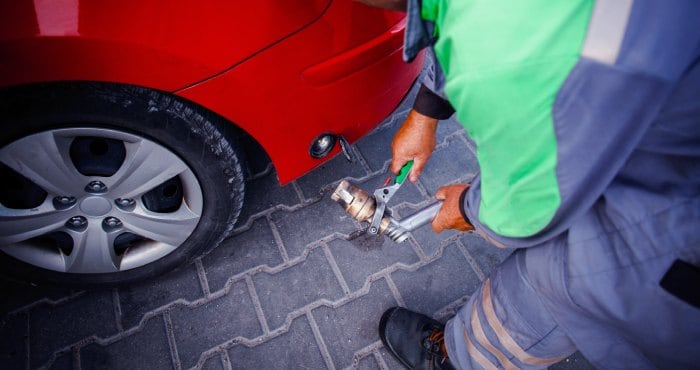
Cold glue is most effective for repairing large, shallow dents and surfaces with minor contamination, where hot glue might not perform as well. It enables quick and tidy lifts. When used with a mini lifter, it maintains the original paint and texture, enhancing the efficiency of dent repairs in the field or on the roadside, particularly for trucks and challenging surfaces.
9. Finish like a pro—cross-check lighting, micro-push and blend highs, cool the panel, clean glue with alcohol, and polish
A flawless dent repair requires precise finishing, blending texture, cooling the panel, cleaning adhesives, and refining the gloss.
- Validation. Turn the vehicle and lights to examine the panel from every perspective for an impeccable result.
- Detailing. Utilize an ultrafine applicator to address small imperfections and seamlessly merge sections for uniformity in shine.
- Cool down and clean. Allow the panel to reach a cooler temperature and eliminate any traces of hot glue for a tidy appearance.
- Enhance and seal. Use premium polish to refine the surface and elevate the quality of the repair.
- Conclusive check. Ensure the OEM shape is perfect and take before-and-after photos for records.
Purchase high-quality dent removal tools from reputable brands such as Dent-Remover and Dent-Remover Ltd. You can find these products on Amazon or choose to support educators through Spreadshop. Enhance your Paintless dent repair abilities with training from Learn PDR Online and Real World PDR Training. Utilizing tutorials from content creators like Old Headlights, MasterOfNone, and Stoney Ridge Farmer will enable you to repair dents effectively and neatly, without the need for repainting.